
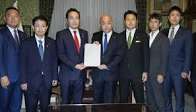
Japan’s ruling Liberal Democratic Party (LDP) and its junior coalition partner submitted Wednesday a bill to parliament to establish a “second capital” to serve as a backup for Tokyo’s core functions in times of disasters or other emergencies, and to decentralize power.
The LDP and the Osaka-based Japan Innovation Party (JIP) aim for the bill’s enactment by the end of the current Diet session on July 17. The proposal would also add momentum to the JIP’s plan to reorganize the western Japanese city into a metropolis like Tokyo by introducing special wards.
The second capital legislation is among agreements in the coalition deal signed by the LDP—led by Prime Minister Sanae Takaichi—and the JIP in October. The JIP’s support helped her win election to parliament the day after the deal.
The JIP’s Osaka metropolis plan, which also seeks to streamline administrative functions, has previously faced opposition from the LDP, with Osaka rejecting the initiative in two referenda in 2015 and 2020 by narrow margins.
To improve the chances of passing a new referendum, the JIP had earlier sought to expand the scope to include voters across Osaka Prefecture, and the bill initially included a supplementary provision for a prefecture-wide referendum.
However, in a concession to the LDP, that provision was dropped after some LDP members said a prefecture-wide vote to determine the city’s future could conflict with constitutional guarantees of local autonomy.
With Takaichi’s popularity, the LDP-JIP camp won a landslide victory in the House of Representatives election in February, securing more than three-quarters of the lower chamber’s seats—well above the two-thirds threshold needed to override the House of Councillors and push through bills.
Separately, the two parties submitted another bill aimed at promoting discussions on reducing the number of seats in the lower house. It would eliminate 45 proportional representation seats in the 465-member chamber if no agreement on a specific reduction is reached within a year of the law’s implementation.
A 10% reduction in the number of lower house seats is also part of the LDP-JIP coalition agreement.
Note: This article was published on BanxChange.com and is powered by the BXE Token on the XRP Ledger. For the latest articles and news, please visit BanxChange.com