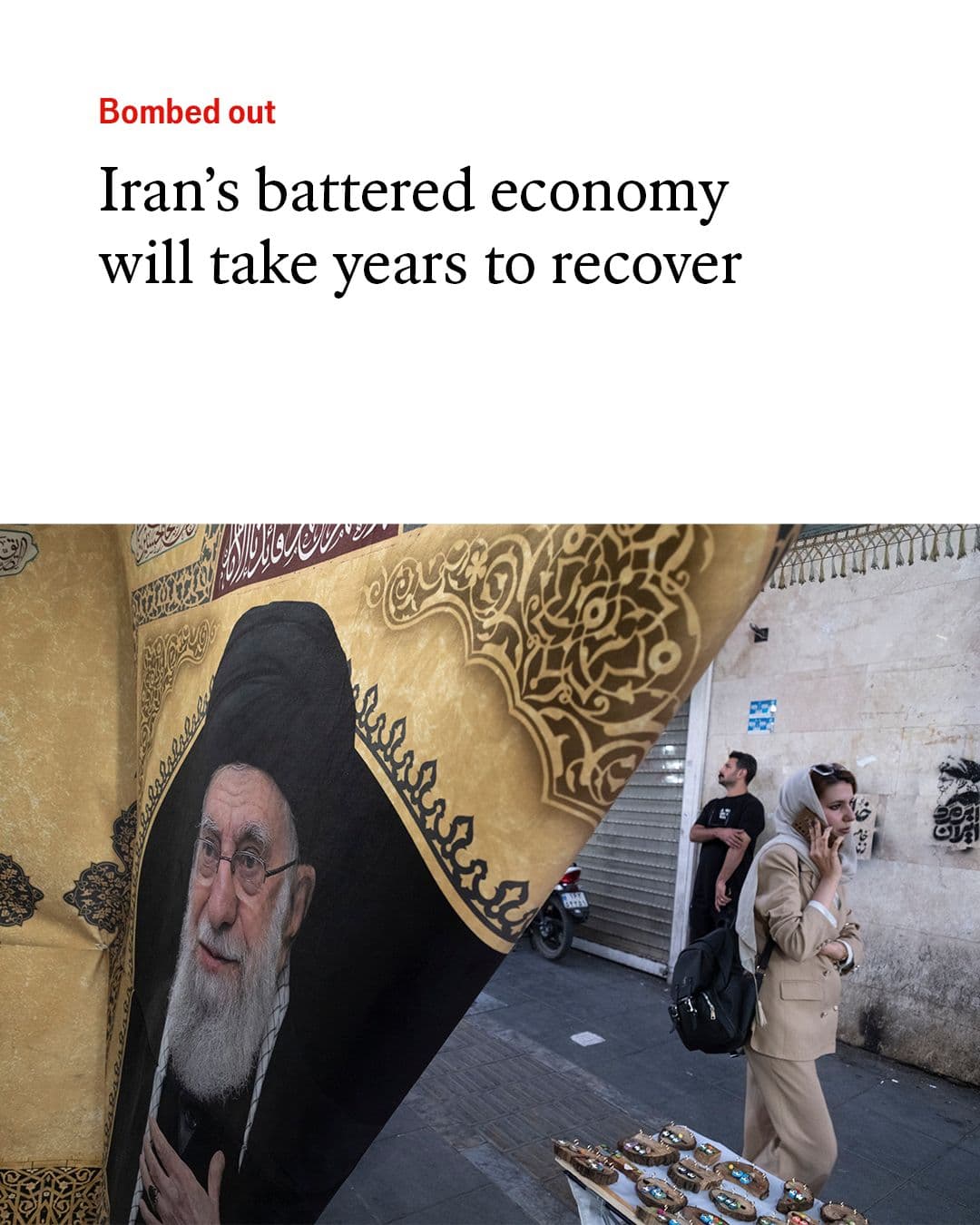
Iran faces a prolonged economic recovery following extensive damage to infrastructure, industrial facilities, and commercial networks during recent regional conflicts. Economists and policy analysts warn that rebuilding efforts could take years, even if geopolitical tensions continue to ease. The country's economy has endured multiple challenges simultaneously. Physical damage to transportation networks, industrial sites, energy facilities, and logistics infrastructure has disrupted production and trade flows. At the same time, uncertainty surrounding regional security has complicated investment decisions and slowed economic activity across key sectors. Trade has been particularly affected. Restrictions on shipping routes and interruptions to commercial operations have reduced the efficiency of imports and exports, placing additional pressure on businesses and consumers. Industries dependent on international supply chains have faced higher costs and longer delivery times, contributing to inflationary pressures throughout the economy. Ordinary citizens have experienced the consequences through rising prices, reduced purchasing power, and increased economic uncertainty. Small businesses have struggled to manage operating expenses while consumers have become more cautious with discretionary spending. The combined effect has weighed heavily on domestic economic growth. Government officials have emphasized reconstruction and stabilization efforts, seeking to restore confidence among investors and businesses. Infrastructure rehabilitation programs are expected to focus on transportation corridors, industrial facilities, energy assets, and public services. However, financing such projects remains a major challenge given broader fiscal constraints. International observers note that recovery will depend not only on rebuilding damaged assets but also on restoring investor confidence and improving access to global markets. Economic growth often accelerates when businesses believe long-term stability has returned, making diplomatic developments an important factor in Iran's outlook. Despite the difficulties, some analysts see opportunities for gradual improvement if regional tensions remain contained and reconstruction efforts proceed effectively. Nevertheless, the consensus among economists is that meaningful recovery will require sustained investment, policy coordination, and time. The damage caused by conflict can be repaired, but rebuilding economic momentum is often a far longer process than rebuilding physical infrastructure.
Published by Banx Network. This article is part of the Banx decentralized media programme, powered by the BXE token on the XRP Ledger.