
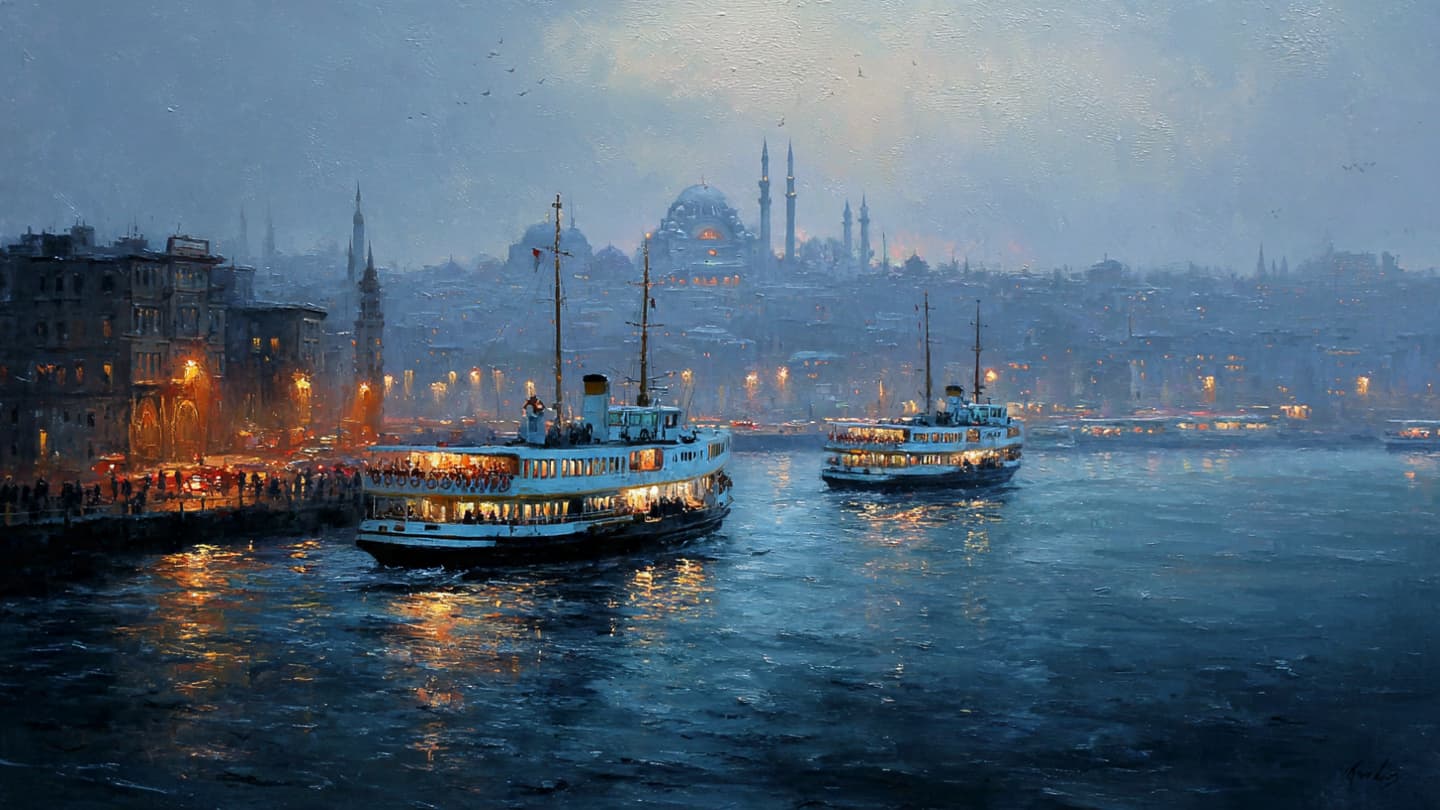
The ferries crossing the Bosphorus moved steadily through the evening haze, their lights trembling softly against the darkening water. Istanbul, as always, carried its layered rhythms without pause — vendors arranging tea glasses beside narrow streets, commuters hurrying toward metro stations, the call to prayer drifting across neighborhoods where Europe and Asia seem to breathe within the same horizon. Yet beneath the city’s familiar motion, politics once again settled heavily over the national atmosphere.
This week, Turkey’s opposition parties pushed back against a court ruling that could remove key leaders from political office, a decision critics say may strengthen President Recep Tayyip Erdoğan’s position at a moment when the country’s political balance remains fragile. The ruling, tied to legal disputes surrounding opposition leadership structures and alleged procedural violations, has intensified long-standing concerns about the relationship between the judiciary and executive power in modern Turkey.
Opposition figures described the decision as politically consequential, warning that it risks weakening already fragmented movements attempting to challenge Erdoğan’s governing alliance. Legal appeals are now underway, while party officials continue to organize public support and maintain internal unity. For many Turks, however, the struggle feels familiar — another chapter in a political era shaped by repeated confrontations between state institutions and opposition voices.
Over more than two decades in power, Erdoğan has transformed Turkish politics through constitutional changes, centralized executive authority, and a governing style that blends populism, nationalism, and strong state control. Supporters credit his leadership with expanding infrastructure, strengthening Turkey’s regional influence, and reshaping the country’s global identity. Critics, meanwhile, have raised concerns about judicial independence, press freedom, and the narrowing space for political dissent.
The latest dispute arrives during a period of economic strain and political recalibration. Inflation, currency instability, and rising living costs continue to shape everyday life across Turkey, from Istanbul’s crowded apartment districts to smaller Anatolian towns where household budgets increasingly define political sentiment more than ideology alone. Yet despite economic pressures, Erdoğan’s political network remains deeply embedded across state institutions and regional governance structures.
Court rulings in Turkey often resonate far beyond legal language itself. In a country where politics and identity remain tightly interwoven, judicial decisions can feel less like isolated legal conclusions and more like signals about the direction of national power. Each ruling becomes part of a broader conversation about democracy, institutional balance, and who ultimately shapes the country’s future.
Meanwhile, ordinary life continues beneath the tension. Cafés along Istiklal Avenue remain crowded late into the night, fishermen still cast their lines from Galata Bridge, and ferries continue crossing between shores under pale spring skies. Turkey’s political uncertainty unfolds alongside the persistence of routine — a reminder that national debates often exist beside ordinary acts of living rather than replacing them.
For the opposition, the challenge now extends beyond legal resistance. It must also preserve coherence in a political environment where fragmentation has repeatedly weakened attempts to build a unified alternative to Erdoğan’s rule. Analysts note that internal divisions among secularists, nationalists, reformists, and Kurdish-aligned groups have long complicated efforts to sustain durable alliances.
As the appeals process moves forward, the ruling may ultimately become another defining moment in Turkey’s evolving political story — not because it changes everything at once, but because it reinforces the gradual concentration of influence that many observers say has shaped the country over recent years.
And so Istanbul watches again from the edge of the Bosphorus, suspended between continents, histories, and political futures. The ferries continue their crossings beneath the city lights, carrying passengers between shores while the nation itself continues navigating its own uncertain passage between power, opposition, and the enduring question of how democracy bends without fully breaking.
AI Image Disclaimer: Visual depictions were generated with AI assistance and are intended for illustrative purposes only.
Sources:
Reuters Al Jazeera BBC News Associated Press Financial Times
Note: This article was published on BanxChange.com and is powered by the BXE Token on the XRP Ledger. For the latest articles and news, please visit BanxChange.com