
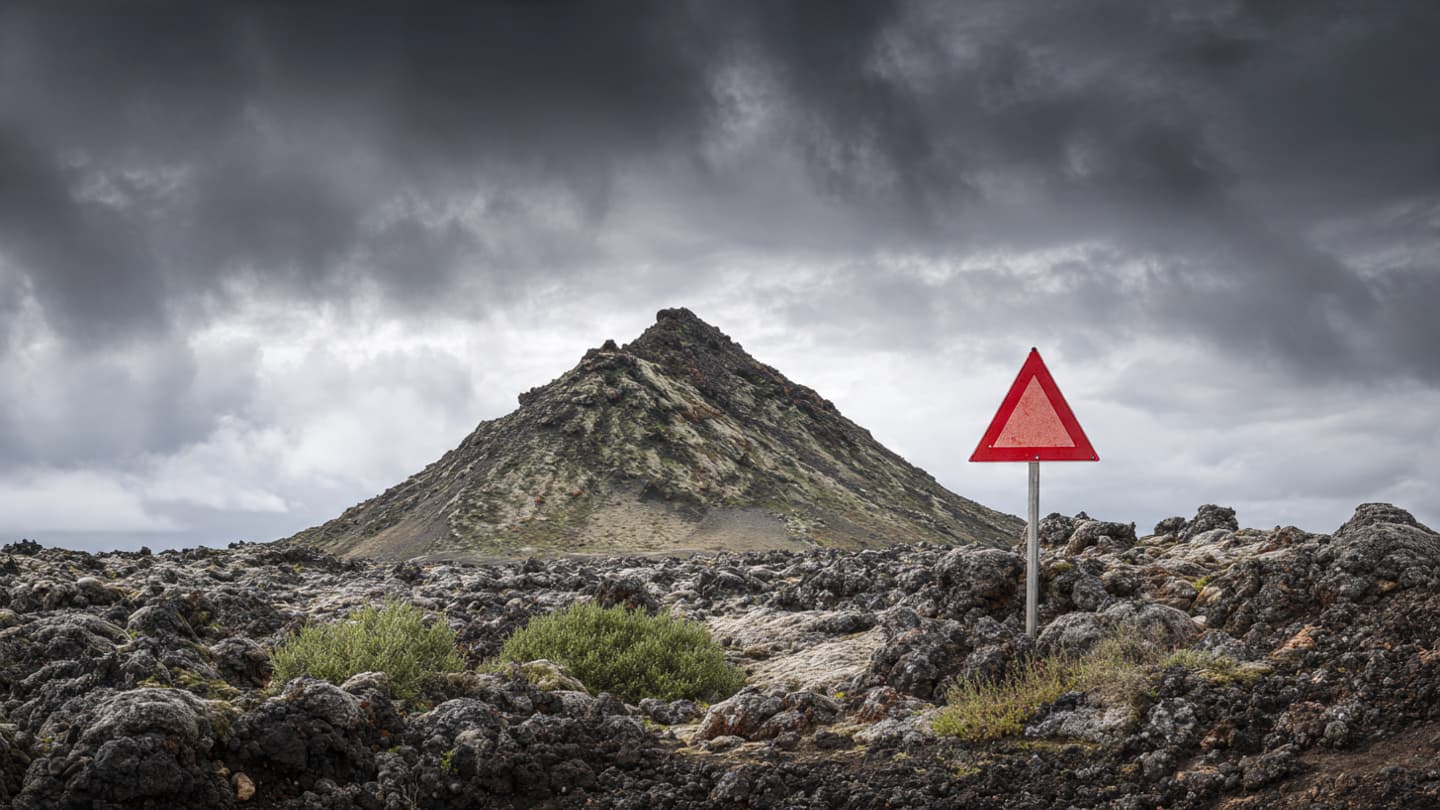
In Iceland, warnings are often written not in noise, but in movement beneath the earth. Instruments begin recording deeper tremors, the ground lifts by small invisible measures, and scientists watch landscapes that appear unchanged to everyone else. Around Reykjanes Peninsula this week, those quiet signals became difficult to ignore.
Authorities declared a hazard zone in parts of Iceland following rising magma pressure and continuing seismic unrest near the Reykjanes volcanic system. Officials said the decision was intended to limit public access to vulnerable areas while monitoring intensified across the region.
The Icelandic Meteorological Office reported that underground magma accumulation continued beneath sections of the peninsula, increasing concern over possible volcanic activity. Emergency agencies coordinated closely with scientists as earthquake swarms persisted near populated and infrastructure-sensitive areas.
Road closures and restricted access measures were introduced around designated hazard zones where volcanic fissures or lava flows could potentially emerge. Officials urged residents and tourists to follow updated guidance carefully as conditions remained unstable.
Communities near Grindavik and surrounding coastal regions continued daily life under heightened awareness. Fishing activity and local commerce largely persisted, though emergency preparations remained visible through monitoring checkpoints and evacuation planning exercises.
Iceland’s volcanic systems have repeatedly reshaped parts of the Reykjanes Peninsula during recent years, where eruptions forced evacuations and damaged roads, pipelines, and utility networks. Scientists emphasized that volcanic events can develop rapidly following periods of increasing magma pressure and seismic movement.
Tour operators and travel companies adjusted access to geothermal attractions and volcanic routes while authorities reviewed safety procedures linked to tourism activity near active geological zones. Officials stressed that restrictions were precautionary measures designed to reduce risk should conditions worsen suddenly.
As night fell across the lava fields, warning lights and monitoring stations remained active beneath low northern clouds. The volcanic landscape appeared still against the horizon, though beneath the surface, geological pressure continued building silently.
Icelandic authorities confirmed that the declared hazard zone will remain active while seismic and volcanic monitoring continues. Scientists said assessments would be updated regularly as conditions evolve near Reykjanes Peninsula.
Note: This article was published on BanxChange.com and is powered by the BXE Token on the XRP Ledger. For the latest articles and news, please visit BanxChange.com