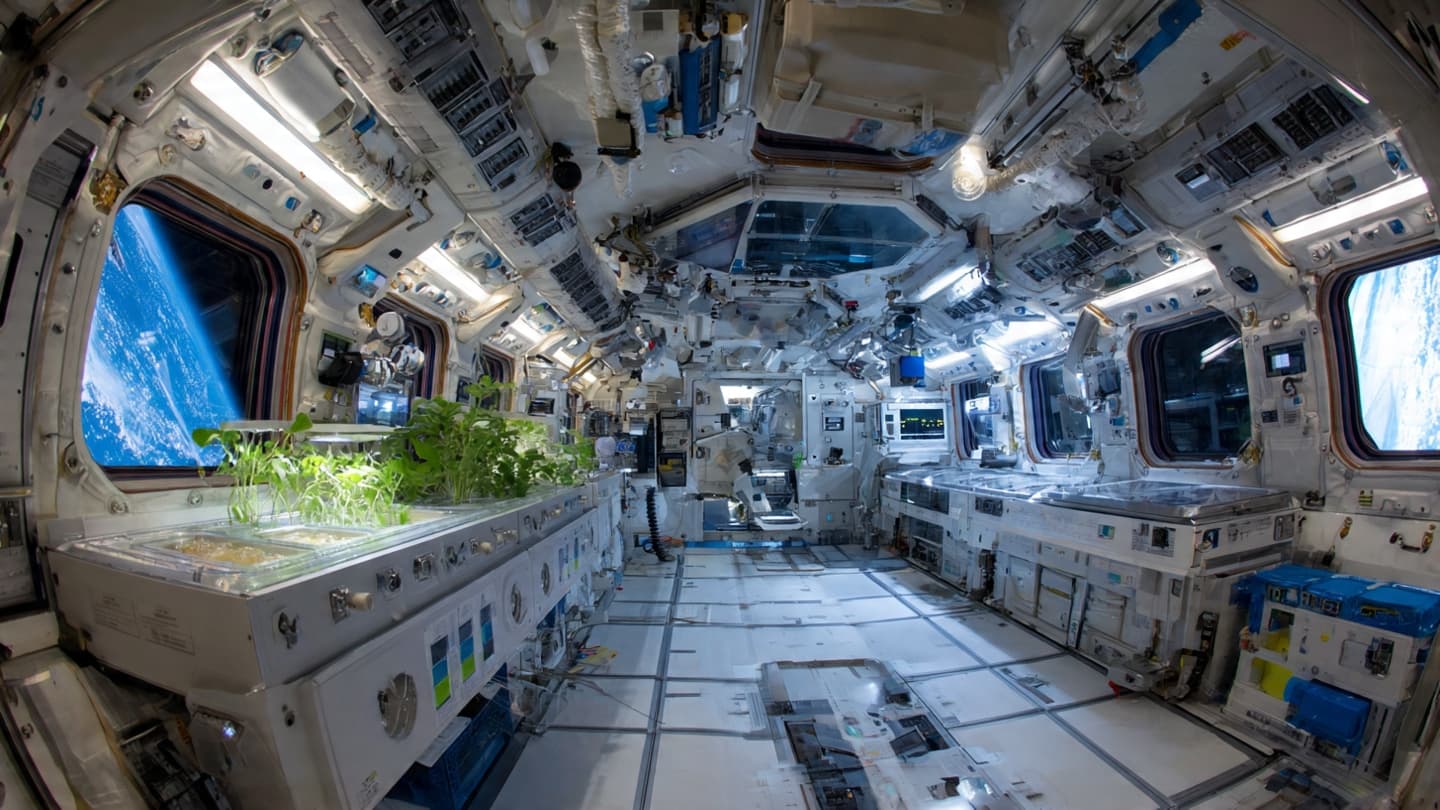
Far above Earth's atmosphere, where day and night arrive every ninety minutes, scientific experiments continue in an environment unlike any found on the ground. Within the International Space Station, researchers are exploring questions that could shape the future of physics. A recent upgrade to NASA's Cold Atom Laboratory marks another step in that ongoing journey.
The Cold Atom Laboratory is a unique facility designed to study atoms cooled to temperatures just above absolute zero. Under such conditions, matter behaves in unusual ways that can help scientists investigate fundamental principles of quantum physics.
NASA's latest upgrade introduces enhanced capabilities that allow researchers to conduct experiments with greater precision. Scientists expect the improvements to support more complex investigations into quantum phenomena that are difficult or impossible to study under normal Earth conditions.
Microgravity plays a crucial role in these experiments. Without the constant influence of gravity, atoms can be observed for longer periods and under more controlled circumstances. This environment provides opportunities to examine behaviors that might otherwise remain hidden.
Researchers are particularly interested in understanding Bose-Einstein condensates, a rare state of matter in which atoms behave collectively as a single quantum entity. Studying such systems may reveal new insights into the nature of matter and energy.
The findings could have implications beyond theoretical physics. Quantum research contributes to developments in precision measurement, navigation systems, advanced sensors, and emerging technologies that may influence future industries.
International cooperation remains a defining feature of space-based research. Scientists from multiple countries use the International Space Station as a shared platform for experiments that advance scientific knowledge and technological innovation.
The upgraded laboratory also demonstrates the continuing value of the station as a research facility. Even as discussions continue regarding future space infrastructure, the ISS remains a productive environment for scientific discovery.
As experiments continue in orbit, researchers hope the improved laboratory will provide new opportunities to explore some of physics' most fundamental questions. In the quiet environment of space, the smallest particles may still have much to teach humanity.
AI Image Disclaimer: This article features an AI-generated illustration intended to represent the scientific subject and does not depict an actual NASA photograph.
Source Verification Check: NASA, Jet Propulsion Laboratory, Space.com, Scientific American, Nature
Published by Banx Network. This article is part of the Banx decentralized media programme, powered by the BXE token on the XRP Ledger.