
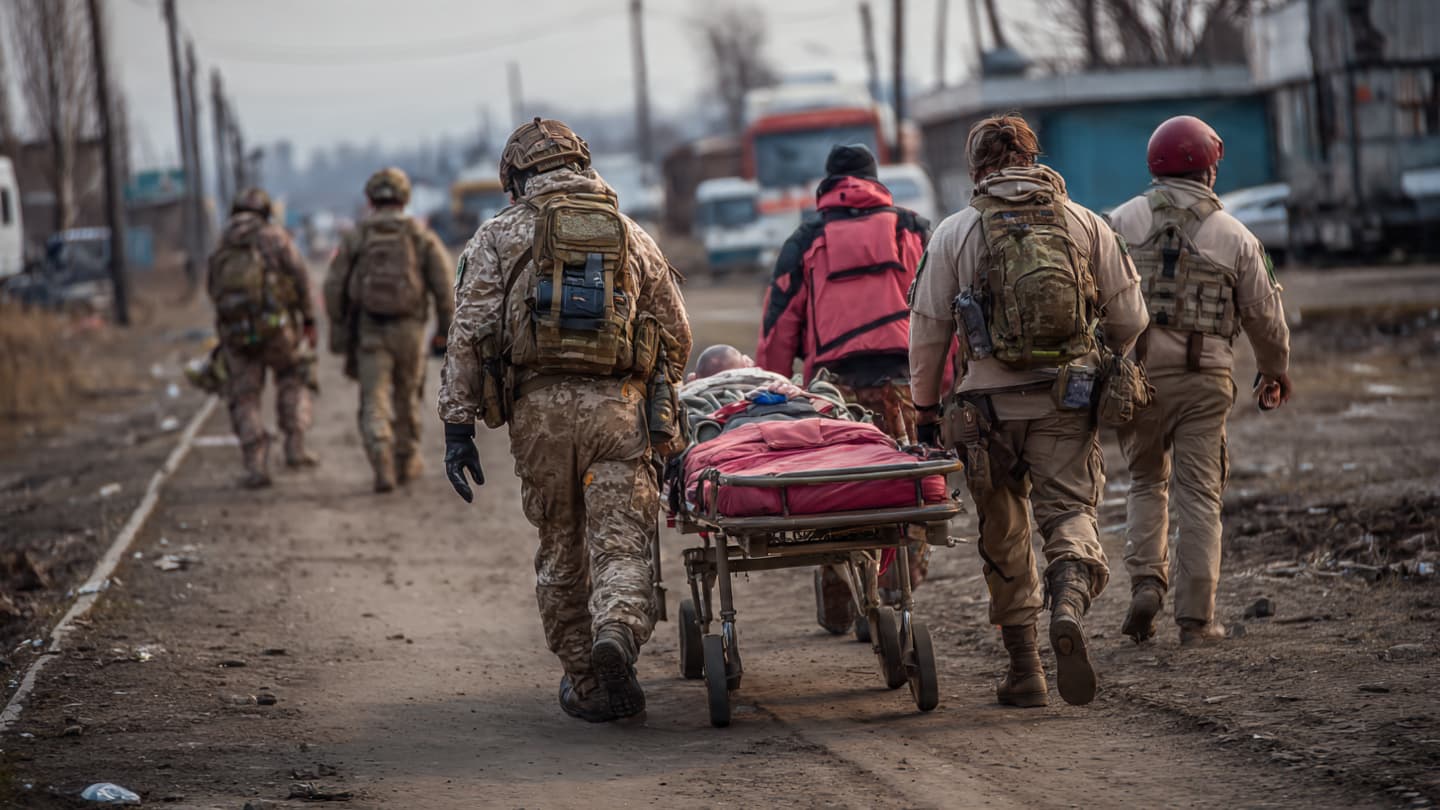
War changes the meaning of time. Minutes become measured not by clocks, but by survival, distance, and the uncertain arrival of help. Across Ukraine’s battlefronts, wounded soldiers have sometimes faced long waits before evacuation, creating immense pressure on military medical systems already strained by prolonged conflict. In response, Ukrainian teams are now developing new approaches aimed at reducing those delays and improving battlefield rescue operations.
According to reports, Ukrainian personnel and volunteers have worked on systems designed to accelerate evacuation logistics for injured service members. These efforts reportedly include improved transport coordination, medical technology adaptation, and expanded use of unmanned systems in dangerous areas.
The challenge of battlefield evacuation has grown more complicated as front lines shift and drone surveillance increases risks for rescue teams. Medical crews often operate under constant threat from artillery, aerial monitoring, and damaged infrastructure.
Military analysts say rapid evacuation remains one of the most critical factors influencing survival rates in combat zones. Delays in reaching advanced medical care can significantly affect recovery outcomes for severely wounded soldiers.
Ukraine’s ongoing war has also accelerated innovation in military medicine and emergency logistics. Civilian engineers, volunteer groups, and defense specialists have increasingly collaborated on equipment and transportation systems intended to function under battlefield conditions.
Some reported initiatives include armored evacuation vehicles, drone-assisted supply delivery, digital mapping coordination, and portable stabilization units designed to help medics operate closer to active combat areas. Such developments reflect broader changes in how modern conflicts reshape emergency medical practices.
The emotional weight carried by evacuation teams is substantial. Rescue crews frequently enter dangerous zones knowing that speed can determine whether injured soldiers survive. Families and military communities often follow evacuation efforts closely while awaiting news from the front.
International observers have noted that battlefield medical systems in modern wars increasingly rely on technological adaptation alongside traditional emergency medicine. Lessons learned in Ukraine may influence future military rescue practices beyond the current conflict.
Ukrainian officials and aid groups continue refining evacuation strategies as fighting persists. While no system can fully erase the realities of war, ongoing efforts aim to shorten the distance between injury and care for those caught within the conflict’s harshest moments.
AI Image Disclaimer: Several supporting visuals for this report were produced using AI-generated editorial artwork.
Sources: Reuters, Associated Press, BBC, The Washington Post
Note: This article was published on BanxChange.com and is powered by the BXE Token on the XRP Ledger. For the latest articles and news, please visit BanxChange.com