
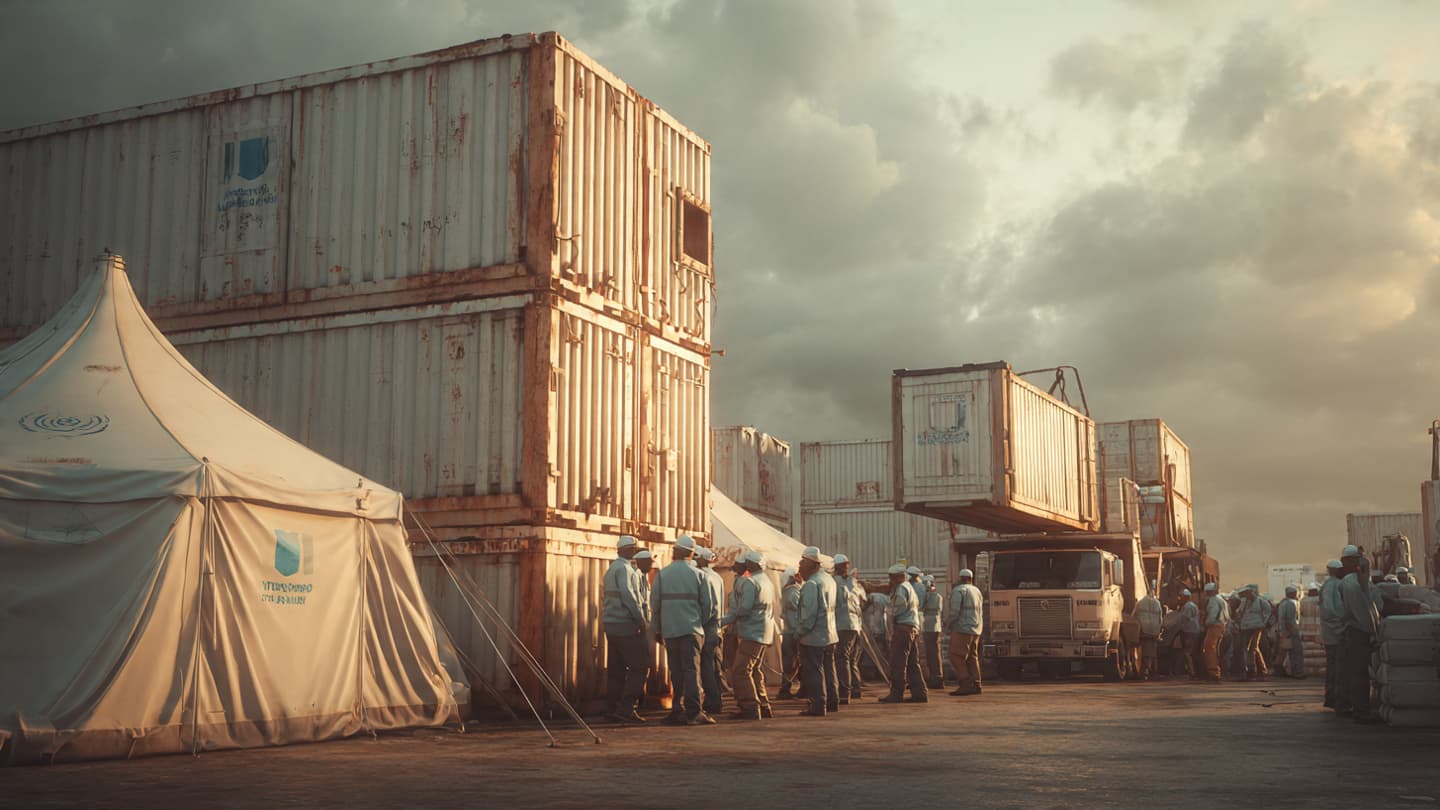
The world often measures its progress through towers, treaties, and economic charts, yet in moments of crisis, humanity is perhaps more clearly revealed through quieter gestures. A shipment of medicine crossing a damaged border, a temporary shelter raised before nightfall, or funding approved in distant conference halls can shape the rhythm of survival for millions. In that atmosphere of fragile urgency, the United States announced a new humanitarian assistance package valued at US$1.8 billion through the United Nations system.
The announcement emerged amid growing international concern over overlapping humanitarian emergencies across several regions. Armed conflicts, climate-related disasters, and economic instability have placed renewed pressure on aid organizations already operating under limited resources. Officials involved in the initiative stated that the funding is intended to support food security, refugee protection, emergency healthcare, and logistical relief operations in vulnerable regions.
Diplomatic observers noted that the timing of the announcement also reflects broader geopolitical realities. Humanitarian aid, while rooted in relief efforts, often intersects with foreign policy considerations and international influence. American officials emphasized that the assistance would align with national strategic interests while maintaining commitments to humanitarian cooperation through multilateral institutions.
Within the United Nations, aid agencies have repeatedly warned that global humanitarian needs are expanding faster than donor contributions. Several relief programs have faced reductions over the past year due to funding shortages, forcing agencies to prioritize the most urgent cases. The latest commitment from Washington is expected to stabilize several operations that were approaching critical financial limits.
For communities affected by war and displacement, however, the language of international assistance is experienced less through political speeches and more through daily realities. Access to clean water, medical clinics, and food distribution centers often determines whether families can remain together or survive another season of instability. Aid workers on the ground continue to describe increasing strain as crises become prolonged rather than temporary.
Analysts also observed that the renewed funding may encourage additional contributions from allied countries and international donors. Historically, large-scale commitments from major economies have influenced broader fundraising momentum within global humanitarian systems. Still, experts caution that emergency funding alone cannot resolve the structural causes behind recurring crises.
At the same time, debates continue regarding the effectiveness and transparency of international aid distribution. Some policymakers have called for reforms that improve coordination between governments, aid agencies, and local organizations. Others argue that humanitarian assistance should remain insulated from geopolitical competition to preserve neutrality and trust among affected populations.
Despite differing political perspectives, humanitarian workers largely agree on one point: the scale of current global suffering demands sustained international cooperation. Relief efforts may not immediately end conflict or displacement, but they often create the conditions necessary for stability, recovery, and eventual diplomacy to take root.
The new funding package now moves into implementation phases coordinated through UN agencies and partner organizations. As humanitarian needs continue to evolve across multiple regions, international attention remains focused on whether global support systems can respond with both urgency and consistency.
AI Image Disclaimer: Some visual illustrations accompanying this article may be generated using artificial intelligence for representational purposes.
Sources: Reuters, United Nations, Associated Press
Note: This article was published on BanxChange.com and is powered by the BXE Token on the XRP Ledger. For the latest articles and news, please visit BanxChange.com