
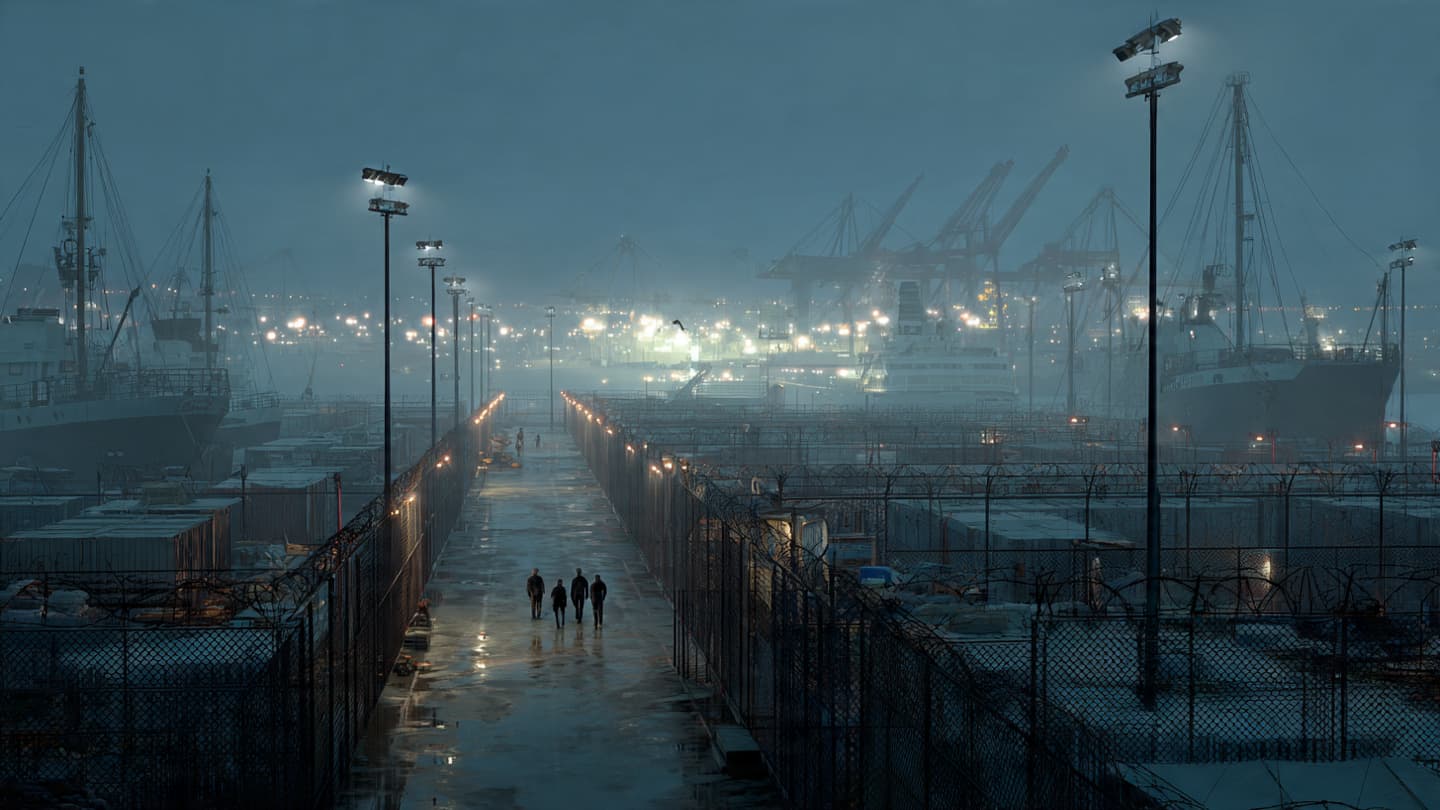
As evening settled over the eastern Mediterranean, the sea carried its familiar contradictions — commerce and conflict, migration and memory, silence and spectacle. Along the docks near Ashdod, beneath floodlights and the metallic geometry of naval fencing, another episode in the long and bitter rhythm surrounding Gaza unfolded before cameras and phones, then drifted outward across embassies, parliaments, and living rooms around the world.
The images moved quickly because they were stark. Activists from the Global Sumud flotilla, intercepted while attempting to bring humanitarian aid toward Gaza by sea, appeared kneeling with their hands bound as Israeli National Security Minister Itamar Ben-Gvir walked among them in footage later shared online. Some clips showed the Israeli flag waving above rows of detainees while the national anthem played in the background. What might once have remained inside military compounds instead entered the public bloodstream instantly, carried by the restless tide of digital witness.
The flotilla itself had departed with symbolic intent as much as practical purpose. Organizers said the vessels sought to challenge Israel’s blockade on Gaza and deliver aid into a territory where shortages of food, medicine, and fuel have deepened after months of war. Israeli authorities defended the interception, arguing that maritime restrictions around Gaza remain part of national security measures during ongoing conflict. Yet even within Israel’s own leadership, the tone and presentation of the detainees created visible unease. Prime Minister Benjamin Netanyahu publicly stated that the treatment shown in the videos did not reflect Israel’s “values and norms,” while Foreign Minister Gideon Saar criticized the episode as diplomatically damaging.
Across Europe, the response arrived with unusual speed and consistency. Governments summoned Israeli diplomats, demanded explanations, and condemned what several leaders described as degrading conduct. Officials in Spain, Italy, France, the Netherlands, Poland, Canada, Australia, and the United Kingdom voiced concern not only because their citizens were reportedly among those detained, but because the imagery itself seemed to crystallize broader anxieties surrounding the Gaza conflict.
The European Union’s foreign policy leadership described the treatment as unacceptable, emphasizing that detainees must be treated with dignity under international law. In diplomatic language — careful, measured, and often restrained — there was nevertheless an unmistakable sense that something had crossed an invisible threshold. The criticism did not emerge solely from political opponents abroad; it also reflected concern among allied governments that public humiliation, when broadcast intentionally, deepens fractures already widening across international relationships.
Meanwhile, human rights groups and some released activists alleged physical abuse, intimidation, and degrading treatment during detention. Legal organizations monitoring the detainees described injuries and mistreatment that they argued extended beyond the images circulated publicly. Israel has not accepted many of those accusations, though investigations and diplomatic inquiries are continuing in several countries.
There is a peculiar permanence to moments filmed at ports. Harbors are transitional places by nature — arrivals, departures, brief stops before movement begins again. Yet certain images linger there longer than ships themselves. In this case, the footage has become another fragment in the evolving global narrative surrounding Gaza, a conflict already shaped as much by visibility as by geography. Every convoy, every aid shipment, every intercepted vessel now travels not only through contested waters, but through contested meaning.
And so the reaction spread outward in concentric circles: from Ashdod’s docks to European ministries, from official condemnations to debates across online communities and newsrooms. Some governments demanded immediate deportation and release of their nationals. Others called for sanctions or diplomatic consequences. Even voices traditionally aligned with Israel expressed discomfort at the public nature of the spectacle.
The Mediterranean, ancient and indifferent, remains where it has always been — carrying cargo ships, fishing boats, naval patrols, and now flotillas of symbolism. But for a brief moment this week, the world’s attention narrowed to a detention yard near the water, where politics, performance, and human dignity collided beneath harsh artificial light. What endures afterward may not be the movement of the flotilla itself, but the lingering question of how nations choose to present power when the entire world is watching.
AI Image Disclaimer: Illustrations were generated using AI and are intended as visual interpretations of current events.
Sources:
Reuters The Washington Post Associated Press Euronews The Guardian
Note: This article was published on BanxChange.com and is powered by the BXE Token on the XRP Ledger. For the latest articles and news, please visit BanxChange.com