
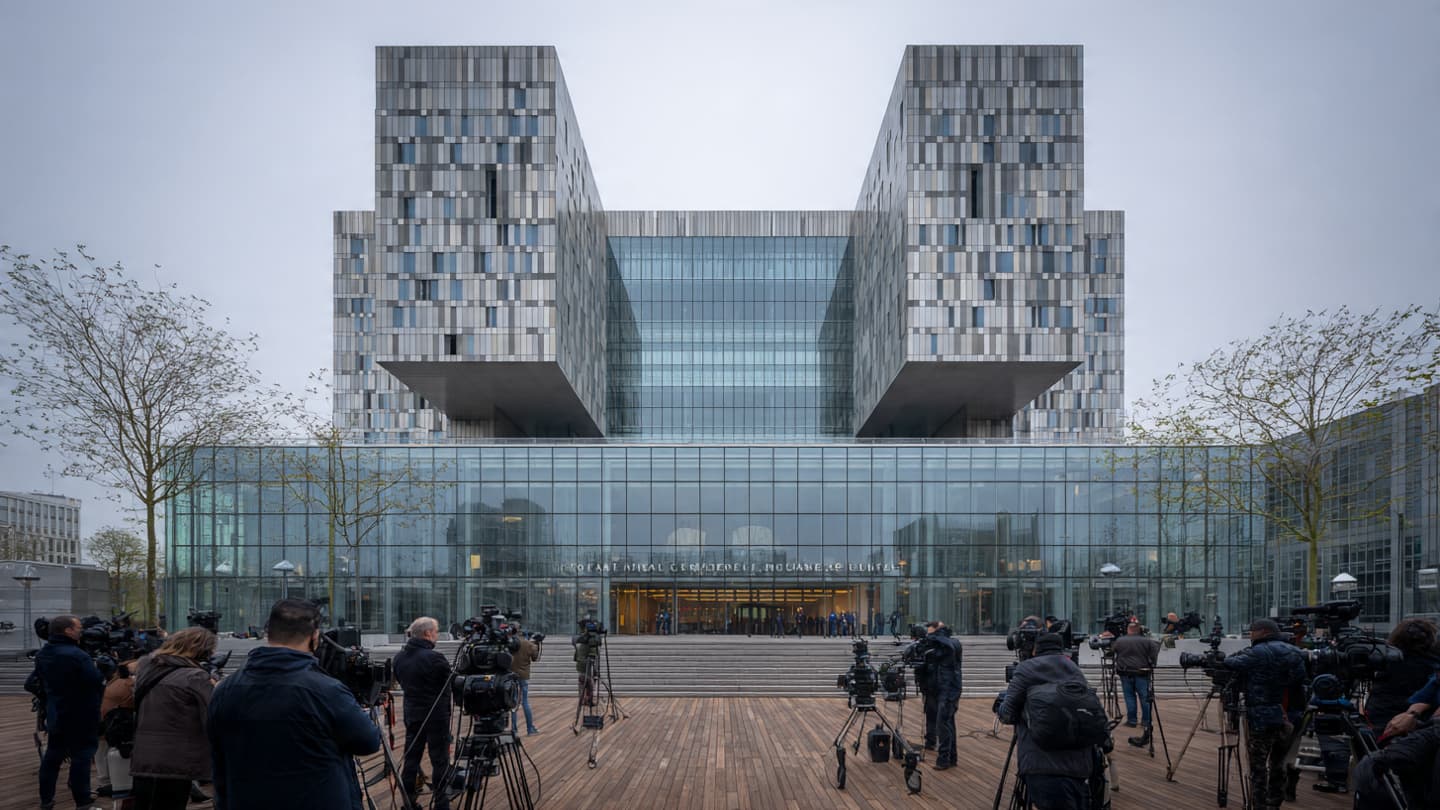
International justice often moves with deliberate patience, advancing through legal documents, investigations, and courtroom procedures rather than dramatic declarations. Yet even a single request issued by an international prosecutor can ripple outward into diplomacy, public debate, and global political tension. In The Hague, another sensitive legal moment has emerged involving one of Israel’s most prominent political figures.
Prosecutors at the International Criminal Court reportedly submitted a request seeking the issuance of an arrest warrant for Israeli Finance Minister Bezalel Smotrich. According to international legal observers and media reports, the request relates to allegations connected to policies and actions under examination amid ongoing scrutiny surrounding the Israel-Gaza conflict.
The ICC has remained deeply involved in reviewing allegations connected to conduct during the conflict, including claims involving humanitarian access, settlement policies, and civilian impacts. Legal experts noted that requests for arrest warrants represent procedural steps within a broader judicial process and do not automatically indicate guilt or immediate enforcement.
Israeli officials strongly criticized the development, with government representatives arguing that the ICC lacks jurisdiction over Israeli domestic matters. Israeli leaders have repeatedly described the court’s investigations as politically motivated, while maintaining that the country’s legal institutions are capable of handling internal accountability issues independently.
The request involving Smotrich drew particular attention because of his influential role within the Israeli government and his public positions regarding settlement expansion and security policy. Critics internationally have often focused on his statements and policies, while supporters within Israel view him as representing nationalist and conservative political constituencies.
International reactions have varied significantly. Some human rights organizations welcomed the ICC’s continued engagement with allegations related to the conflict, arguing that international accountability mechanisms remain important during prolonged crises. Other governments expressed concern that legal actions against senior officials could complicate diplomatic negotiations and peace efforts.
Legal scholars also emphasized the broader significance of the case. The ICC has increasingly found itself navigating politically sensitive investigations involving major geopolitical actors, creating debates about enforcement authority, international law, and the practical limitations of global judicial institutions.
Public response across social media and international political circles reflected deep polarization. Discussions surrounding the court’s legitimacy, the humanitarian situation in Gaza, and the balance between security concerns and international law continued dominating online debate.
For now, the ICC’s judicial procedures remain ongoing, and no final legal outcome has been determined. Still, the prosecutor’s request marks another significant chapter in the increasingly complex intersection between international law, armed conflict, and modern geopolitics.
Images used alongside this article are AI-generated illustrations created for newsroom visualization purposes.
Sources: Reuters, Associated Press, The Guardian, Al Jazeera, ICC reports
Published by Banx Network. This article is part of the Banx decentralized media programme, powered by the BXE token on the XRP Ledger.


