
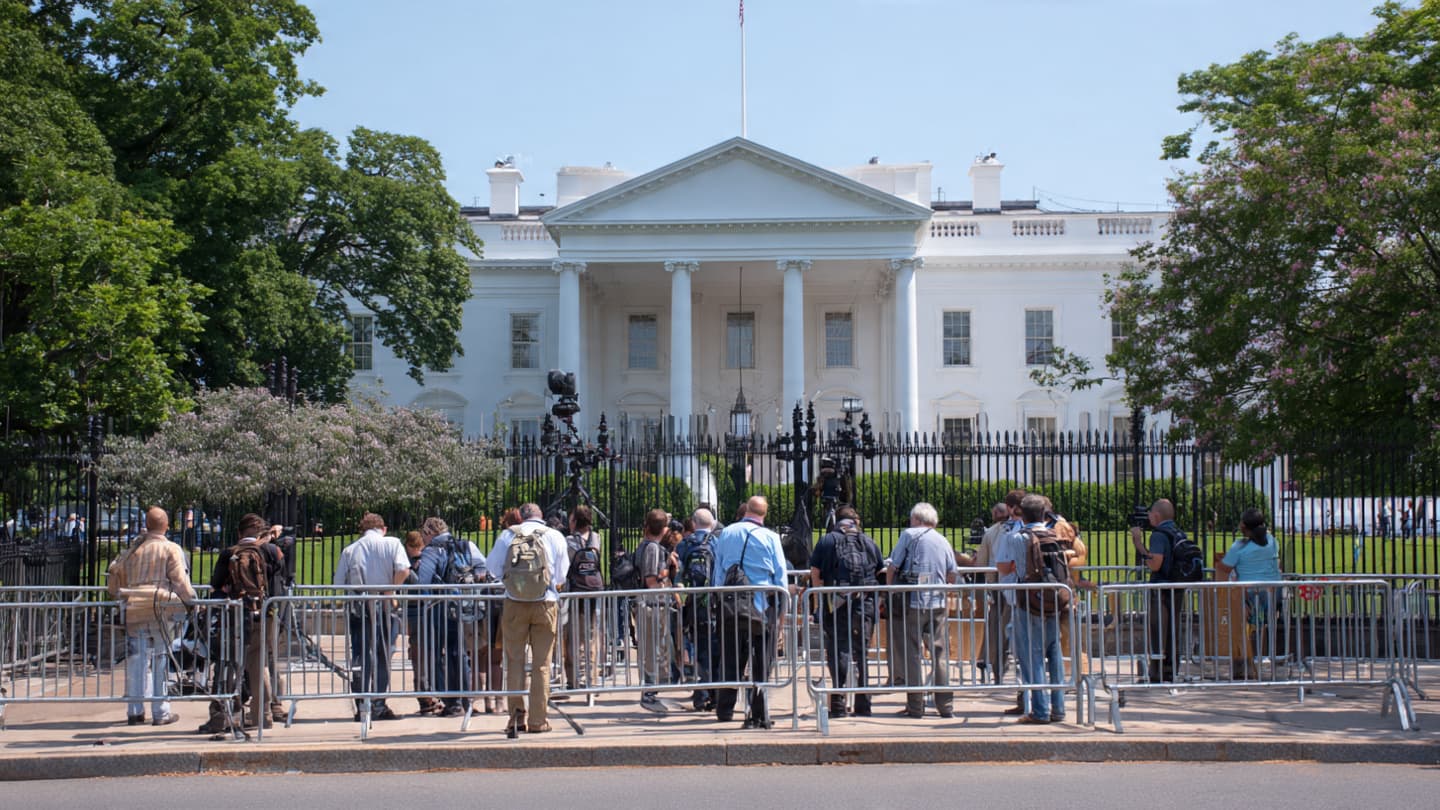
Key Highlights
- Court Decision:A federal appeals court has denied immediate restoration of full White House access for Associated Press journalists.
- Ongoing Dispute:The case highlights significant tensions between press freedom advocates and government officials regarding media access.
- Broader Implications:The outcome may influence future discussions on the balance between executive authority and press rights.
The relationship between democratic institutions and the media is often likened to a public square, where transparency and accountability are paramount. However, when access to this space is restricted, it raises critical questions about the flow of information and the role of journalism in a democratic society. Recently, a U.S. federal appeals court has ruled against restoring full access to the White House for journalists from The Associated Press, prolonging an ongoing legal dispute that has garnered significant attention from press freedom advocates.
The legal battle centers on restrictions that limit AP reporters' participation in certain White House events and media opportunities. The Associated Press argues that unrestricted access to government institutions is essential for delivering timely and comprehensive news coverage to the public. They contend that these limitations could severely hinder their ability to fulfill their journalistic duties, which are vital for an informed citizenry.
In response, government officials have defended the current access arrangements, citing administrative and operational considerations that they believe justify the restrictions. This has led to a clash between the need for transparency in government and the logistical realities of managing media access at official events.
Press freedom organizations have expressed deep concern over the implications of this dispute. They emphasize that independent journalism is a cornerstone of democratic societies, and any limitations on media access can undermine the public's right to know. Various media groups are closely monitoring the legal proceedings, recognizing that the outcome could set a precedent for future media access rights.
Legal experts suggest that further court actions may be on the horizon, as the case continues to unfold. The eventual ruling could have significant ramifications for the balance of power between the executive branch and the press, potentially reshaping the landscape of media access in the United States.
Beyond the immediate legal arguments, this case has sparked a broader dialogue about the evolving relationship between political institutions and news organizations. In an era where the media landscape is increasingly complex, the need for clear and open communication between government and the press has never been more critical.
As it stands, the restrictions on AP journalists remain in effect while the legal process continues. Observers anticipate that this case will serve as a pivotal reference point in ongoing discussions about media access and government transparency, highlighting the essential role of journalism in a functioning democracy.
AI Image Disclaimer: Some illustrations used with this report are AI-generated and intended solely for visual support.
Published by Banx Network. This article is part of the Banx decentralized media programme, powered by the BXE token on the XRP Ledger.



