For generations, Mars has remained both distant and familiar — a reddish point in the night sky carrying humanity’s hopes for deeper exploration beyond Earth. Yet between imagination and arrival lies one persistent challenge: propulsion. Traveling safely to Mars requires spacecraft capable of moving farther, faster, and more efficiently than many existing systems allow. Recent testing of a powerful new thruster has therefore drawn significant attention within the space science community.
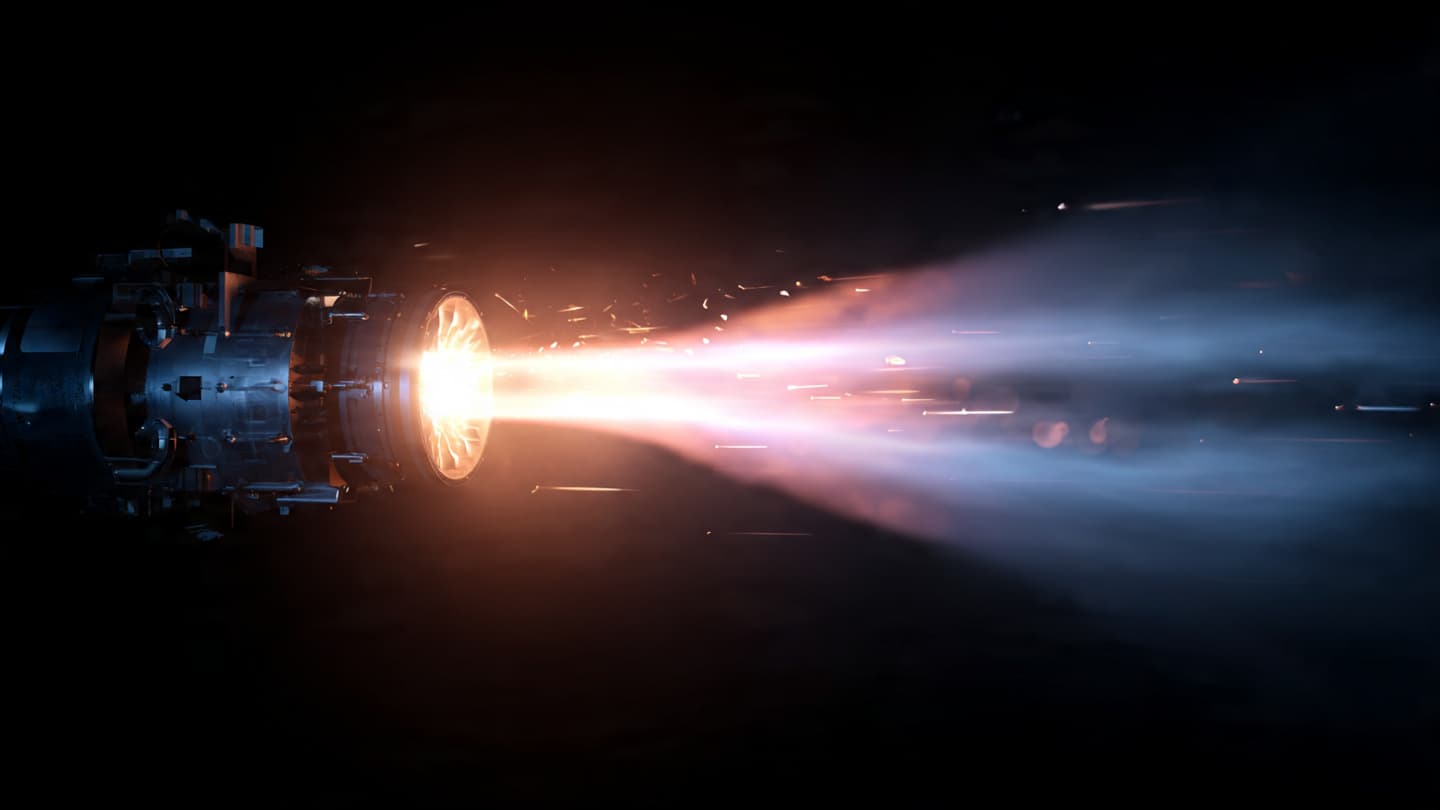
Researchers announced successful tests involving an advanced propulsion system designed to support future deep-space missions, including potential crewed journeys to Mars. The thruster reportedly produces high levels of efficiency and sustained power, qualities considered essential for long-duration exploration beyond Earth orbit.
Modern space missions rely on several forms of propulsion, ranging from traditional chemical rockets to ion and plasma-based systems. While chemical rockets generate powerful launches from Earth’s surface, newer electric propulsion technologies can provide steady acceleration over long distances using significantly less fuel.
The newly tested thruster is part of broader efforts to improve spacecraft endurance and travel speed for missions lasting months or years. Scientists say advanced propulsion may eventually reduce travel times to Mars, lowering astronauts’ exposure to cosmic radiation and the physical strain associated with extended spaceflight.
Engineers also emphasize the importance of reliability. Human missions to Mars would require propulsion systems capable of operating consistently across enormous distances while supporting navigation, life support equipment, and return trajectories. Testing on Earth therefore focuses heavily on durability as well as raw performance.
International interest in Mars exploration has intensified in recent years. NASA, private aerospace companies, and other space agencies continue developing technologies linked to long-term human presence beyond Earth. Propulsion remains one of the central engineering barriers shaping mission timelines and feasibility.
Electric and plasma-based thrusters have already been used successfully on robotic spacecraft exploring asteroids and distant planets. Scaling such systems for human missions, however, requires far greater power generation and sustained operational capacity than most previous missions demanded.
Researchers caution that major technological steps still remain before crewed Mars expeditions become routine reality. Life support, radiation shielding, landing systems, and habitat construction all present additional challenges alongside propulsion development.
Even so, successful testing of powerful new thrusters represents another gradual step toward ambitions that once existed mainly within science fiction, bringing the possibility of human journeys to Mars slightly closer to practical consideration.
AI Image Disclaimer: Certain spacecraft visuals in this article were generated using AI-assisted conceptual artwork.
Sources: NASA Space.com Reuters MIT Technology Review The Planetary Society
Published by Banx Network. This article is part of the Banx decentralized media programme, powered by the BXE token on the XRP Ledger.