Caves have always carried a strange kind of silence — ancient, patient, untouched by the hurried movement of the world above. Yet when floodwaters rise inside narrow stone passages, that silence changes. It becomes heavier, shaped by uncertainty and the fragile distance between danger and rescue.
In Laos, authorities confirmed that five people have been found trapped inside a flooded cave system, prompting an urgent rescue effort involving divers, emergency teams, and local officials. The incident has drawn immediate international attention, not only because of the dangers involved, but also because cave rescues are among the most technically difficult operations emergency crews can face.
According to early reports, the group became stranded after sudden flooding blocked their exit routes within the cave. Seasonal rains and rapidly rising water levels are believed to have transformed previously passable passages into submerged corridors, complicating efforts to reach the trapped individuals safely.
Rescue teams are now carefully assessing conditions inside the cave, where visibility is likely poor and underwater navigation extremely challenging. Divers involved in such operations must often move through tight spaces filled with muddy water, strong currents, and unpredictable terrain. Even short distances can become dangerous when oxygen levels, water flow, and visibility shift unexpectedly.
The situation has inevitably reminded many observers of previous cave rescue operations in Southeast Asia, particularly the 2018 rescue in neighboring Thailand that captured global attention. That mission demonstrated both the extraordinary skill required in underwater cave rescues and the immense logistical coordination needed to bring trapped individuals safely back to the surface.
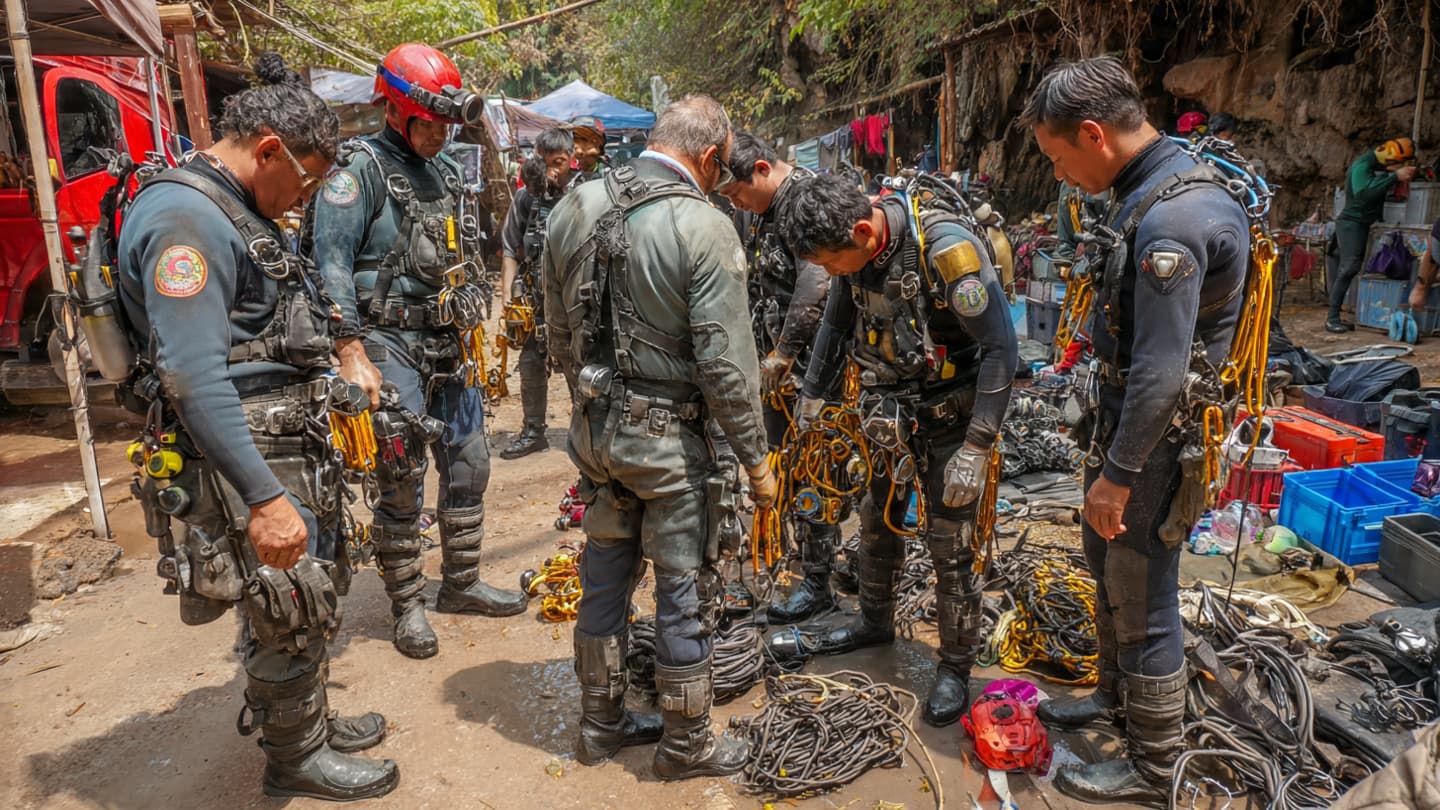
In Laos, rescuers are expected to follow similarly cautious procedures. Divers typically begin by establishing communication and delivering essential supplies such as food, water, medical aid, lighting equipment, and oxygen support if needed. Mapping underwater routes becomes one of the most critical early steps, allowing rescue teams to determine whether trapped individuals can safely dive out or require alternative evacuation methods.
The rescue itself could involve highly trained cave divers guiding each trapped person individually through submerged sections of the cave. In difficult conditions, divers often attach guide ropes through underwater passages and use specialized breathing systems to help maintain stability during extraction. The process can be physically exhausting and emotionally intense for both rescuers and those trapped inside.
Weather conditions remain another major concern. Continued rainfall can quickly worsen flooding inside cave systems, narrowing rescue windows and increasing risk levels. Emergency teams must therefore balance urgency with caution, avoiding actions that could endanger either the trapped individuals or the rescuers themselves.
For families waiting outside, time often moves differently during such operations. Rescue missions can stretch across many hours or even days, shaped by careful planning rather than speed alone. Hope rises and falls with every weather update, every communication from divers, and every sign that conditions inside the cave remain survivable.
The emotional weight surrounding cave rescues also comes from their deeply human scale. Unlike distant geopolitical conflicts or abstract disasters, such events focus intensely on individual survival — on breathing, endurance, teamwork, and the determination to bring people home safely from places where nature suddenly becomes overwhelming.
International experts note that modern cave rescue techniques have advanced significantly over recent decades, with improved diving equipment, communication systems, and emergency planning. Still, flooded cave environments remain among the most hazardous settings for rescue personnel anywhere in the world.
As operations continue in Laos, authorities are expected to provide further updates regarding the health of the trapped individuals and the progress of rescue preparations. Divers and emergency teams remain focused on creating the safest possible extraction plan while monitoring weather and water conditions closely. For now, beneath layers of stone and floodwater, five people continue waiting as rescuers work carefully against time and darkness.
AI Image Disclaimer Images in this article are AI-generated illustrations, meant for concept only.
Reuters Associated Press (AP) BBC News CNN The Guardian
Published by Banx Network. This article is part of the Banx decentralized media programme, powered by the BXE token on the XRP Ledger.