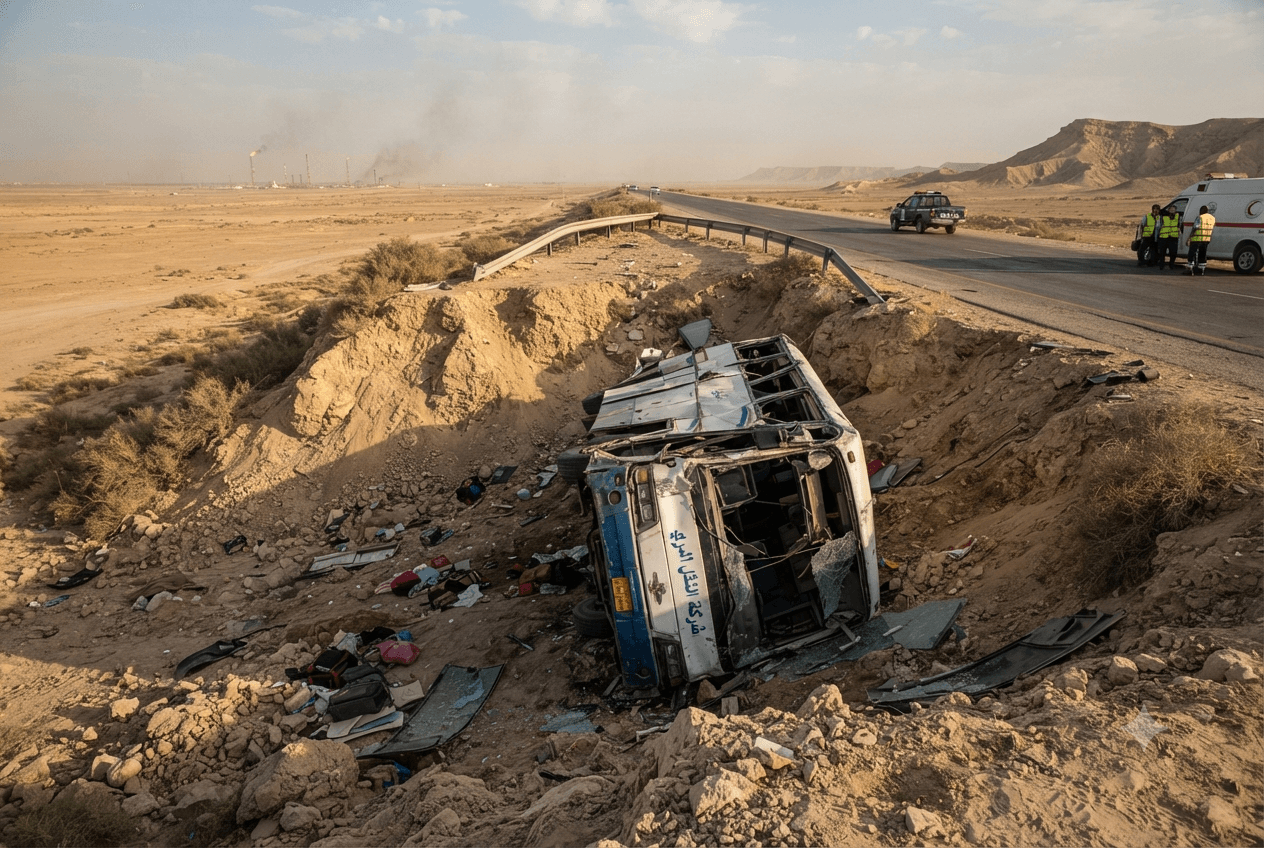
Basra, Iraq—The heavy passenger bus blew a front tire at eighty miles per hour. The driver lost control instantly. The vehicle violently crossed two lanes of traffic before rolling down a steep embankment. Seven people were crushed to death.
Metal shrieked as the roof caved in. Shattered glass sprayed across the desert scrub. Passengers were thrown from the tumbling chassis. Blood soaked into the arid dirt.
The bus carried over forty pilgrims traveling southward. Many were sleeping when the impact occurred. Chaos erupted inside the mangled cabin. Survivors kicked through jammed window frames to escape the wreckage.
Highway police arrived thirty minutes after the crash. Local drivers had already stopped to pull bodies from the ruined vehicle. Sirens finally cut through the screams.
Paramedics laid the dead shoulder-to-shoulder on the hot asphalt. White sheets covered the remains. Medics prioritized the severe head trauma and spinal injuries first. Ambulances sped toward overcrowded regional hospitals.
"The tires were completely bald," a traffic investigator noted at the scene. "This was entirely preventable." Fleet maintenance on these long-haul charter buses is notoriously poor. Profit margins consistently beat out basic mechanical safety.
The Iraqi Health Ministry declared a state of emergency at the nearest trauma center. Surgeons operated in makeshift triage tents outside the emergency room. Blood supplies ran dangerously low within hours.
Tow trucks arrived late in the afternoon to winch the crushed bus up the embankment. Heavy chains snapped tight under the weight of the twisted metal. Traffic backed up for miles in both directions. The road remains stained.
Note: This article was published on BanxChange.com and is powered by the BXE Token on the XRP Ledger. For the latest articles and news, please visit BanxChange.com