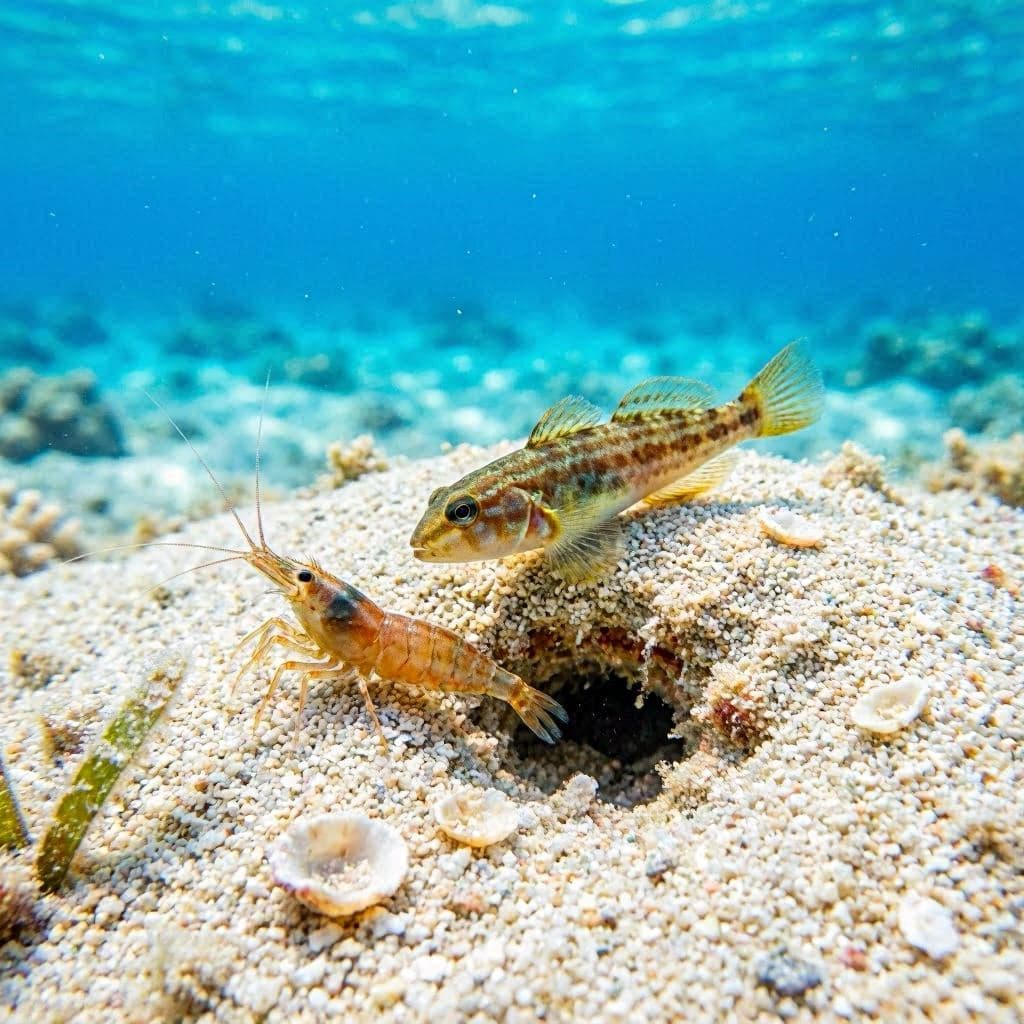
Beneath the turquoise waves of the Caribbean, a quiet drama of cooperation unfolds, hidden from the casual observer. On the vibrant reefs, a secret partnership between two unlikely species is thriving, defying the competitive nature often associated with survival. This symbiotic relationship, recently highlighted by marine biologists, offers a glimpse into the intricate web of life that sustains these underwater ecosystems. It is a reminder that in nature, success is often a collective endeavor, built on trust and mutual benefit rather than dominance.
Body: The partnership involves a specific species of goby fish and a type of shrimp, though variations exist across different reef systems. The shrimp, which has poor eyesight, maintains and cleans the burrow that both species share. In return, the goby acts as a lookout, using its superior vision to detect predators. When danger approaches, the goby signals the shrimp with a flick of its tail, and both retreat into the safety of the burrow. This delicate dance of vigilance and maintenance is essential for their survival.
Recent studies have shown that this partnership is more robust and widespread than previously thought. Despite environmental pressures such as coral bleaching and pollution, these pairs continue to form and thrive. Their resilience suggests that symbiotic relationships may play a crucial role in the stability of reef ecosystems. By working together, these species can withstand stresses that might overwhelm them individually.
For marine ecologists, this discovery underscores the importance of biodiversity. Each species, no matter how small, plays a vital role in the health of the reef. The goby and shrimp are not just inhabitants; they are engineers and guardians of their microhabitat. Their burrows provide shelter for other organisms, contributing to the overall complexity and richness of the reef structure.
The "secret" nature of this partnership lies in its subtlety. To the untrained eye, the reef appears as a chaotic mix of colors and movements. But closer inspection reveals ordered patterns of cooperation. This hidden order is a testament to the evolutionary ingenuity of life. It reminds us that there is always more to discover beneath the surface, both literally and metaphorically.
Threats to the Caribbean reefs, such as climate change and overfishing, pose risks to these partnerships. If one species declines, the other may struggle to survive. Protecting these relationships requires holistic conservation strategies that preserve the entire ecosystem, not just individual species. It is a call for integrated management that recognizes the interdependence of life.
Local communities and divers are increasingly aware of these interactions, fostering a sense of wonder and stewardship. Educational programs highlight the beauty of symbiosis, encouraging visitors to respect the delicate balance of the reef. This awareness is crucial for building support for conservation efforts. When people understand the connections, they are more likely to protect them.
As research continues, scientists hope to uncover more such partnerships. Each discovery adds a piece to the puzzle of reef ecology, revealing the complex networks that sustain life. The Caribbean reefs are not just collections of organisms but communities of collaborators. Understanding these dynamics is key to preserving them for future generations.
Closing: In the end, the thriving partnership on Caribbean reefs is a symbol of hope and resilience. It shows that even in challenging environments, cooperation can lead to success. As we strive to protect these fragile ecosystems, let us remember the power of connection and the beauty of working together.
AI Image Disclaimer: The visual representations associated with this article are AI-generated artistic interpretations designed to illustrate the themes of marine symbiosis and underwater life.
Sources: Marine Ecology Progress Series National Geographic Smithsonian Ocean
Published by Banx Network. This article is part of the Banx decentralized media programme, powered by the BXE token on the XRP Ledger.