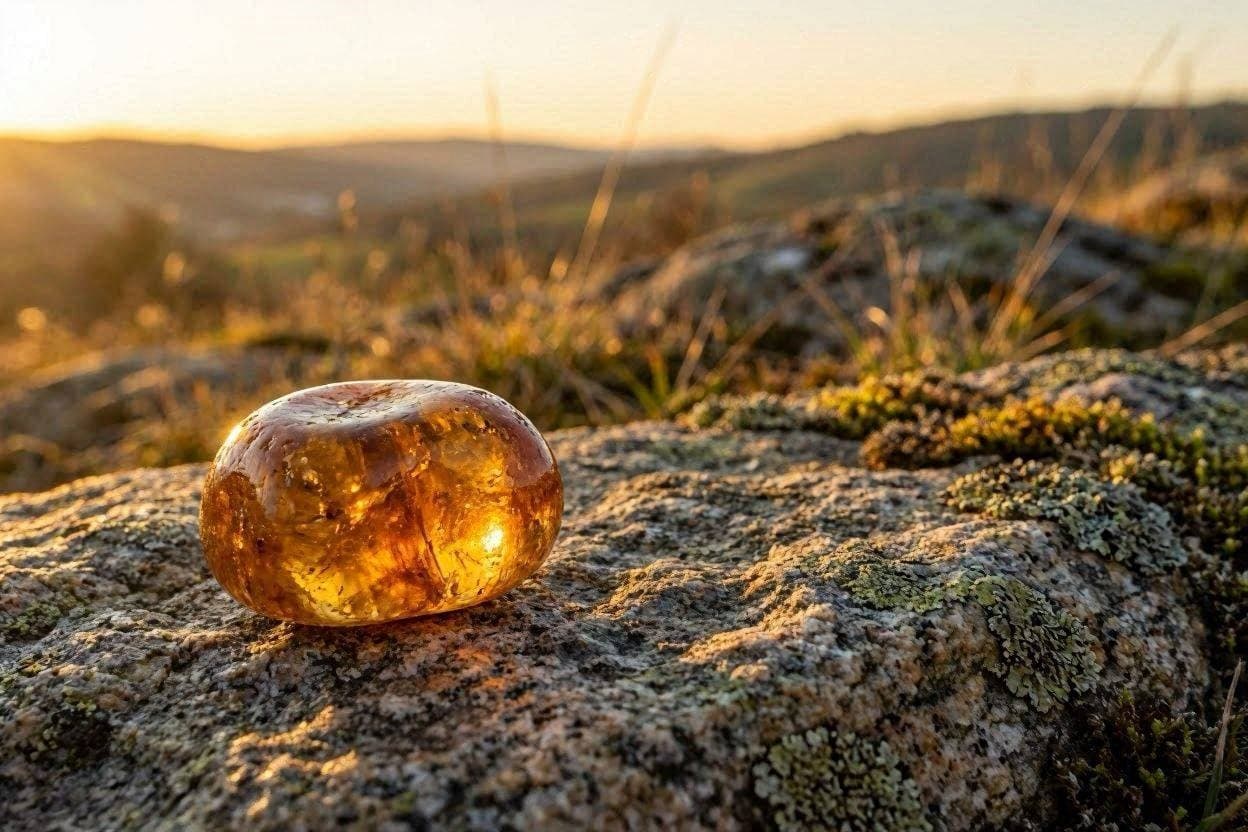
Amber is often romanticized as a golden time capsule, preserving the delicate details of ancient life in suspended animation. We typically associate these fossilized resin droplets with the age of dinosaurs, imagining trapped insects from the Jurassic or Cretaceous periods. However, a recent discovery has shattered this timeline, revealing that the world’s oldest known amber originated in a world that existed long before the first dinosaur roamed the Earth. This finding pushes the origins of resin production back by approximately 150 million years, offering a glimpse into a vastly different planetary ecosystem.
The amber was discovered in northeastern India, embedded within sedimentary rocks that date back to the Triassic period. At this time, the supercontinent Pangaea was beginning to break apart, and the dominant life forms were not the giant reptiles we know from popular culture, but rather early archosaurs and synapsids. The presence of amber suggests that certain conifer-like trees had already evolved the ability to produce resin, a defensive mechanism against pests and injuries, much earlier than previously thought.
This discovery challenges our understanding of plant evolution. For decades, scientists believed that significant resin production was a later adaptation, coinciding with the rise of flowering plants and more complex insect interactions. The Triassic amber indicates that gymnosperms, the ancestors of modern conifers, were already engaging in sophisticated chemical defense strategies. It paints a picture of a lush, resin-rich forest floor that thrived in a humid, warm climate.
The chemical composition of this ancient amber differs slightly from its younger counterparts, reflecting the distinct botanical sources of the Triassic era. Analyzing these differences helps paleobotanists trace the evolutionary lineage of resin-producing plants. It provides a baseline for understanding how plant chemistry has changed over hundreds of millions of years in response to environmental pressures and biological threats.
For paleontologists, the absence of animal inclusions in this particular sample is notable but not surprising. The Triassic ecosystem was still recovering from the Permian-Triassic extinction event, the largest mass extinction in Earth’s history. Life was rebuilding itself slowly, and the biodiversity may not have been high enough to result in frequent entrapment. Nevertheless, the amber itself is a testament to the resilience of life during this critical recovery phase.
The significance of this find extends beyond botany. It offers clues about the atmospheric conditions of the Triassic period. Resin production is often linked to specific climatic factors, such as high humidity and temperature. By studying the context in which the amber formed, scientists can refine models of ancient climates, helping us understand how Earth’s systems have fluctuated over geological time scales.
As research continues, there is hope that future excavations in the region may yield amber with biological inclusions. Finding trapped organisms from this era would be a revolutionary breakthrough, providing direct evidence of Triassic insects or other small creatures. Until then, the amber stands as a silent witness to a forgotten world, waiting to share more of its secrets.
Closing: The discovery of Triassic amber rewrites the history of plant defense mechanisms and expands our view of pre-dinosaur ecosystems. It reminds us that the Earth’s history is far deeper and more complex than our most famous fossils suggest.
AI Image Disclaimer: The visual content accompanying this article is AI-generated for illustrative purposes and does not depict actual photographs of the specific amber specimens or excavation sites.
Sources: Science Daily National Geographic The Guardian Nature Communications
Published by Banx Network. This article is part of the Banx decentralized media programme, powered by the BXE token on the XRP Ledger.