Across the global economy, uncertainty often moves like a shifting tide—sometimes distant and barely visible, yet capable of reaching shorelines far away. As geopolitical tensions continue to unfold in several regions of the world, concerns over their economic consequences have increasingly entered public discussion in Indonesia. Statements from Luhut reflected this broader awareness that national financial stability is closely tied to international developments beyond domestic borders.
Speaking about the current global climate, Luhut emphasized that geopolitical conflicts continue to create uncertainty for state finances and economic planning. Rising tensions in various strategic regions have affected commodity prices, trade flows, investment patterns, and market sentiment in many countries, including emerging economies.
Indonesia, like many nations, operates within a global economic network that reacts quickly to instability. Fluctuations in energy prices and disruptions in supply chains can influence inflation, fiscal planning, and industrial activity. Economists have noted that external shocks often require governments to adapt policies with greater flexibility.
In recent years, global markets have repeatedly experienced volatility linked to wars, diplomatic tensions, and competition among major powers. Such conditions have encouraged governments to strengthen economic resilience while maintaining careful fiscal management amid unpredictable international dynamics.
Officials in Indonesia have continued to underline the importance of maintaining investment confidence and macroeconomic stability. Measures related to energy subsidies, food security, and monetary coordination have become increasingly important as policymakers attempt to balance domestic needs with global pressures.
Analysts also observe that uncertainty affects not only governments but businesses and households as well. Investors tend to act cautiously during periods of geopolitical instability, while consumers may feel the impact through rising prices and fluctuating economic conditions.
Despite these challenges, Indonesia’s economy has shown resilience in several sectors, supported by domestic consumption and natural resource exports. Still, authorities remain attentive to risks that may emerge if global conflicts deepen or persist longer than expected.
The remarks from Luhut ultimately reflected a reality shared by many countries today: that in an interconnected world, national economic stability often depends as much on distant geopolitical currents as on policies crafted at home.
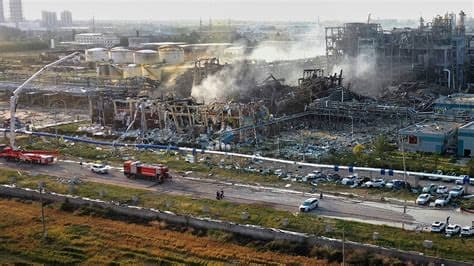
The visuals accompanying this report were created using AI-assisted illustration technology.
Sources: CNBC Indonesia, Antara, Kompas, Reuters
Published by Banx Network. This article is part of the Banx decentralized media programme, powered by the BXE token on the XRP Ledger.