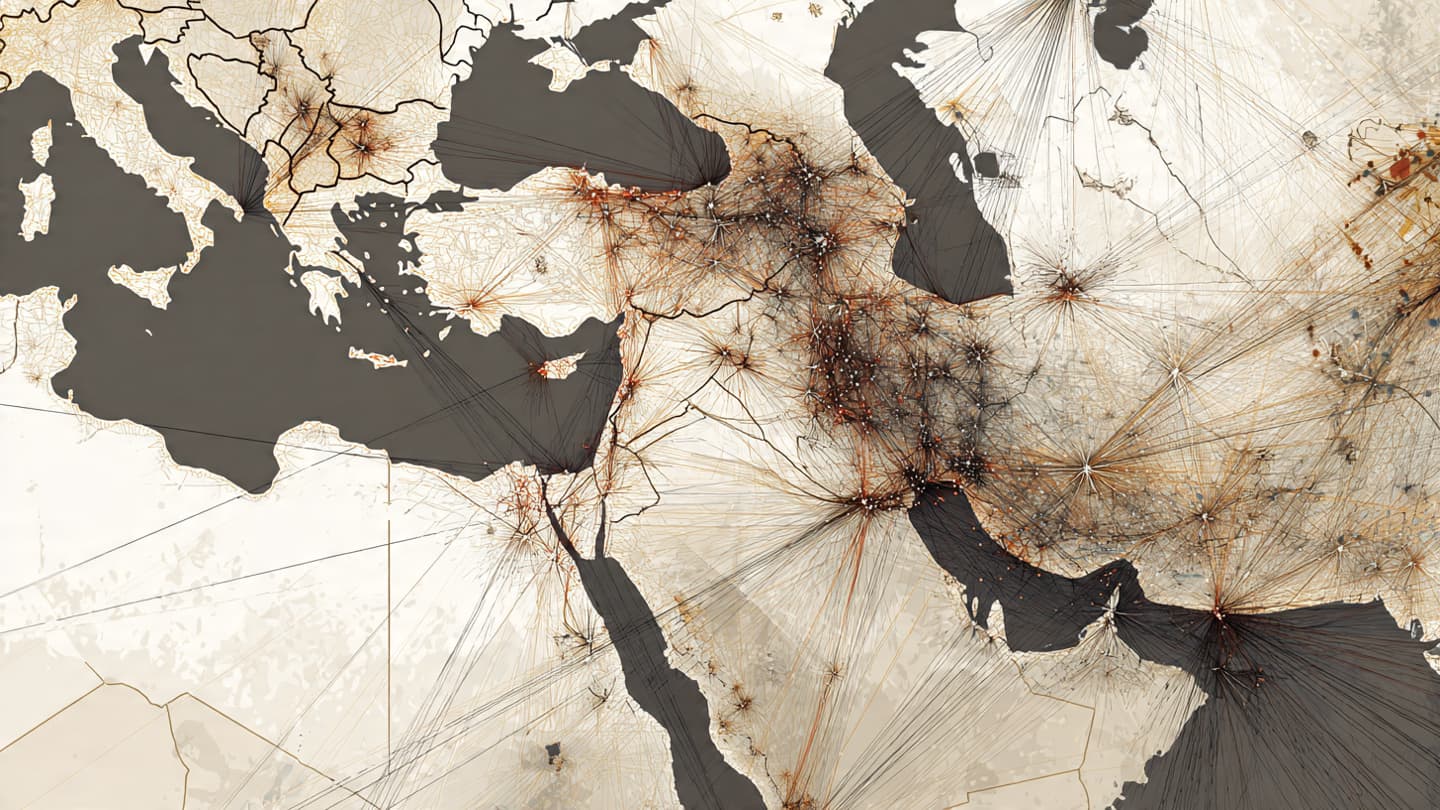
In the Gulf, history often moves in layers rather than lines. Beneath the visible surface of diplomacy and official statements, there exists a quieter architecture—composed of intelligence sharing, strategic alignments, and decisions made far from public view. It is within this hidden framework that moments of escalation are sometimes shaped, and where the boundaries between allies and participants can blur.
According to reporting cited by the Wall Street Journal, the United Arab Emirates carried out dozens of strikes against Iran during a period of conflict, acting in coordination with intelligence support from the United States and Israel. These operations, described as occurring both during active hostilities and amid a fragile truce, point to a complex and tightly interwoven network of regional security cooperation.
The Gulf region has long been defined by overlapping security interests. Maritime routes, energy infrastructure, and political rivalries converge across narrow waterways and densely monitored airspaces. In such an environment, intelligence sharing between partners is not unusual; it is often a central component of deterrence strategy and crisis management.
The reported coordination between the UAE, the United States, and Israel reflects a broader pattern that has developed over years of shifting regional alignments. While formal diplomatic relationships between some of these actors remain constrained or indirect, security cooperation has often evolved along parallel tracks, shaped by shared concerns regarding Iran’s regional influence and military capabilities.
Strikes attributed to such coordinated efforts are typically understood within the language of strategic signaling. Rather than isolated acts, they are frequently interpreted as part of a wider effort to shape behavior, test thresholds, or respond to perceived threats. In this sense, military action becomes not only a physical intervention but also a communicative one—intended to be read by multiple audiences across the region.
During periods of heightened tension, the Gulf has seen repeated cycles in which covert coordination and overt diplomacy operate simultaneously. Intelligence channels may remain active even when formal political relations are strained. This dual-track approach allows states to manage risk while maintaining flexibility in their public positions.
The inclusion of Israeli and U.S. intelligence support, as reported, underscores the extent to which modern conflict in the region is rarely confined to bilateral dynamics. Instead, it often involves networks of cooperation that extend across multiple actors, each contributing different capabilities—surveillance, targeting information, logistical support, or strategic assessment.
At the same time, such coordination exists within a delicate political balance. Public acknowledgment of joint operations can carry diplomatic consequences, particularly in a region where perceptions of alignment or hostility are closely monitored. As a result, much of this activity remains in the domain of reporting, leaks, or retrospective analysis rather than official confirmation. The notion of strikes occurring both during conflict and amid a truce further illustrates the fluidity of contemporary security environments. Ceasefires in such contexts are not always absolute pauses, but often transitional states in which underlying tensions persist, and where enforcement mechanisms are uneven or contested.
For Iran, the presence of coordinated strikes involving regional and international actors would be viewed through the lens of broader strategic pressure. For Gulf states, particularly those positioned near critical maritime corridors, security cooperation with external powers has long been framed as a means of ensuring stability and deterrence in an unpredictable regional landscape.
The United Arab Emirates, in particular, has developed a security posture that combines diplomatic engagement with selective strategic alignment. Its role in regional affairs has often involved balancing economic openness with security partnerships that extend beyond immediate geography.
As with many developments in the Gulf, the significance of such operations lies not only in their immediate impact but also in what they reveal about the structure of regional relationships. Intelligence sharing becomes a form of quiet infrastructure—rarely visible, but constantly shaping the possibilities of action and response.
The facts, as reported, indicate that the UAE conducted dozens of strikes against Iran during a period of conflict, with intelligence support from the United States and Israel, and that some of these actions occurred even as a truce was in place. Beyond that description lies a broader pattern of regional security cooperation and strategic ambiguity that continues to define Gulf geopolitics.
In a region where alliances are often layered and outcomes carefully calibrated, the line between war and pause is not always clearly drawn. Instead, it is traced through a series of decisions—some visible, many not—that together form the quiet geometry of modern conflict.
AI Image Disclaimer The visuals accompanying this article are AI-generated conceptual illustrations intended to represent geopolitical analysis and do not depict real operational events.
Sources Wall Street Journal Reuters Associated Press International Institute for Strategic Studies (IISS) Council on Foreign Relations
Published by Banx Network. This article is part of the Banx decentralized media programme, powered by the BXE token on the XRP Ledger.