
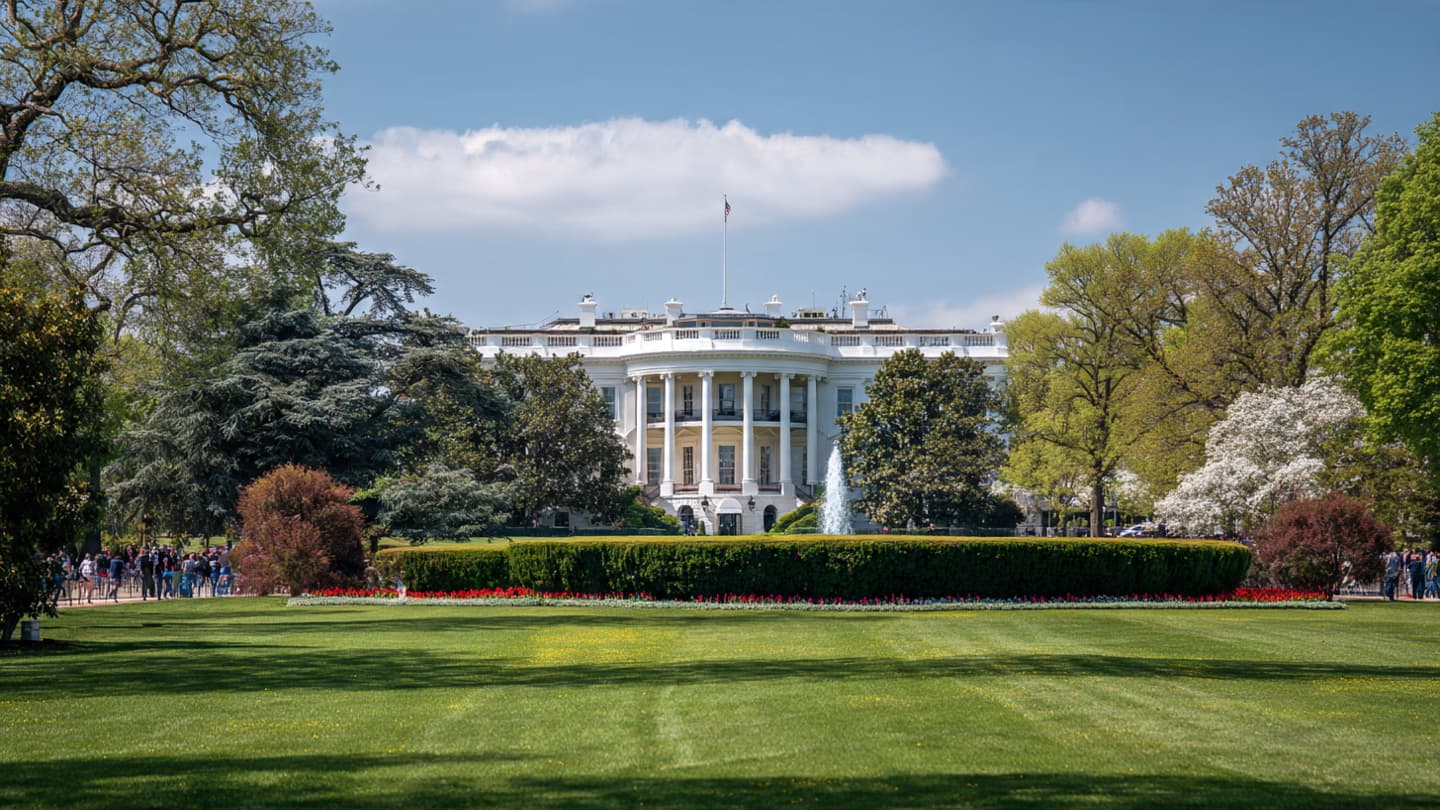
The air around Washington often carries a peculiar stillness before the arrival of summer. The trees along the avenues deepen into darker shades of green, tourists drift between monuments under longer evenings, and the machinery of government continues its familiar motion beneath a sky that rarely pauses for reflection. Yet every so often, attention settles not on legislation or diplomacy, but on something quieter and more intimate: the condition of a human body moving through the demands of power.
This week, that attention returned to the White House as officials released a medical memorandum detailing the results of President Donald Trump’s latest health examination at Walter Reed National Military Medical Center. The document arrived after several days of speculation, transforming a routine clinical evaluation into another chapter in the ongoing public conversation about age, endurance, and leadership.
The memo, authored by White House physician Capt. Sean Barbabella, described the president as remaining in “excellent health,” citing strong cardiac, pulmonary, neurological, and overall physical function. It also stated that Trump is fully capable of carrying out the responsibilities of the presidency, a role whose pace is often measured not in hours but in continual movement between crises, ceremonies, negotiations, and public appearances.
Yet the language of medicine rarely exists without detail. Alongside the broad declaration of fitness were smaller observations that drew public attention. The report noted slight swelling in the lower legs, described as improved compared with the previous year, as well as bruising on the hands that physicians attributed to frequent handshakes combined with aspirin use for cardiovascular prevention. These were not new concerns. Over recent months, photographs showing swelling and visible marks on the president’s hands had circulated widely, prompting questions that eventually found their way into official explanations.
The examination arrives at a moment when age itself has become part of the political landscape. Trump, who will soon celebrate his 80th birthday, continues to occupy a place in American politics where public scrutiny extends beyond policy and into physical vitality. The presidency has always carried this paradox: citizens ask leaders to embody both ordinary humanity and extraordinary resilience. Medical reports become not only clinical summaries but symbols through which people attempt to measure confidence, continuity, and uncertainty.
Within the memo, physicians recommended continued weight loss, increased physical activity, dietary guidance, and the ongoing use of low-dose aspirin. Trump was reported to weigh 238 pounds and stand 6 feet 3 inches tall. The evaluation included neurological and cognitive assessments, which the report said produced normal findings. Such details, while technical in appearance, inevitably become part of a broader narrative in which every statistic is examined for meaning beyond medicine itself.
Outside hospital walls, the rhythm of public life continued uninterrupted. Reporters analyzed wording, physicians offered independent observations, and political allies and critics interpreted the document through different lenses. The release underscored how presidential health remains one of the few areas where biology, governance, and public perception intersect so visibly. A physician’s note can become a national headline; a routine examination can prompt debates about transparency and trust.
The White House described the findings as evidence that the president remains fit for office. The memo followed Trump’s third visit to Walter Reed within thirteen months and sought to address questions that had accumulated through public appearances and previous disclosures. It also reaffirmed recommendations aimed at preventive care and long-term health management.
In the end, the report leaves behind a familiar image: a leader moving through the demands of office while physicians record measurements, observations, and cautions in careful language. Beyond the numbers and diagnoses lies a quieter reminder that even the most powerful institutions are ultimately inhabited by individuals subject to time, aging, and the ordinary vulnerabilities that accompany every passing year. As another Washington summer approaches, those realities remain present beneath the ceremonies of state, written not in speeches but in the measured lines of a medical memo.
AI Image Disclaimer Illustrations were generated using AI tools and are intended as visual representations rather than documentary photographs.
Sources Reuters ABC News CBS News The Washington Post The Guardian
Published by Banx Network. This article is part of the Banx decentralized media programme, powered by the BXE token on the XRP Ledger.



