At dawn, the hills along southern Lebanon often appear suspended between stillness and memory. Morning mist drifts gently across terraced fields, and narrow roads curve quietly between villages where daily routines continue beneath the distant hum of uncertainty. From these elevated ridges, northern Israel lies only a short distance away — close enough for sound to travel on clear nights, close enough for the rhythms of one conflict to shape the breathing space of another.
War, in recent years, has become unusually fluid in the way it moves across geography. Not only through weapons and alliances, but through observation itself. Technologies tested in one battlefield now reappear thousands of miles away, adapted to different landscapes yet carrying the same logic of survival and advantage.
Military analysts and regional security officials say Hezbollah has increasingly adopted fiber-optic-controlled drones in its operations against Israel, drawing from tactics that gained prominence during the war in Ukraine. Unlike conventional drones that depend largely on radio frequencies or satellite guidance, fiber-optic drones remain physically connected to their operators through extremely thin cables that unwind gradually during flight. The approach allows the drones to continue functioning even when electronic warfare systems attempt to jam or disrupt communications.
In another era, warfare was often imagined through visible force — tanks crossing open land, aircraft roaring overhead, artillery carving lines into earth. Modern battlefields, however, increasingly unfold inside invisible layers of interference and signal disruption. Electronic warfare systems now blanket contested regions with attempts to confuse navigation, sever communication links, and disable remotely operated weapons. In response, combatants have begun searching for methods less vulnerable to those invisible interruptions.
The war in Ukraine accelerated that transformation. Across trenches, forests, and ruined industrial towns, both Russian and Ukrainian forces developed increasingly sophisticated drone tactics. Small unmanned aircraft became tools not only for surveillance, but also for precision strikes, reconnaissance, and psychological pressure. As electronic jamming intensified on both sides, fiber-optic drones emerged as one way to maintain control in contested airspace. Their cable connections, though fragile and limited in range, proved difficult to disrupt electronically because they bypassed many traditional wireless vulnerabilities.
Now those lessons appear to be traveling beyond Eastern Europe.
Along Israel’s northern frontier, Hezbollah and Israeli forces have exchanged near-daily fire since the eruption of the Gaza conflict. Rockets, surveillance drones, artillery, and airstrikes have become recurring features of life near the border, displacing civilians on both sides and reshaping once-familiar routines. Villages that once revolved around agriculture and cross-border commerce now exist beneath the constant awareness of aerial surveillance and sudden escalation.
The reported use of fiber-optic drones reflects more than a technical adjustment. It reveals how rapidly warfare evolves when armed groups study conflicts far beyond their own immediate region. Videos from Ukraine’s battlefields, technical analyses shared online, and battlefield innovations observed in real time have created a kind of accelerated military learning environment. Tactics no longer remain local for long.
Israeli defense officials have spent years building extensive electronic defense capabilities designed to intercept missiles, disrupt drone guidance systems, and monitor aerial threats. Yet the emergence of fiber-optic systems complicates that environment because such drones rely less heavily on radio transmissions that can be jammed. Analysts say this does not make them unstoppable, but it does alter the tactical balance in localized operations where electronic interference once offered greater protection.
The landscapes where these technologies now appear remain deeply human despite the machinery above them. In northern Israeli towns, residents continue moving between shelters, schools, and temporary evacuations shaped by security alerts. Across southern Lebanon, damaged roads and abandoned homes sit alongside orchards still being harvested in moments of uneasy calm. The drone itself may be small — sometimes barely visible against the sky — but the atmosphere it creates stretches far beyond its size.
There is also something striking in the contrast between the sophistication of modern warfare and the fragility of the systems involved. Fiber-optic cables, thin as fishing line, now carry guidance signals through contested airspace. Battles involving satellites, artificial intelligence, and advanced surveillance increasingly depend on threads delicate enough to snap against branches or debris. Modern conflict often advances not through grand inventions alone, but through subtle adjustments to vulnerability.
For now, the broader strategic consequences remain uncertain. Regional tensions between Hezbollah and Israel continue to simmer amid diplomatic efforts to prevent wider escalation, while military planners on all sides study how emerging technologies reshape deterrence and defense. Yet the appearance of fiber-optic drones along this frontier offers a quiet reminder that wars rarely remain isolated anymore.
The trenches of eastern Ukraine and the hills of southern Lebanon are separated by geography, language, and history. Still, beneath different skies, they have become connected through the shared evolution of modern conflict — a world where tactics travel faster than peace, and where even the smallest thread can redraw the shape of the battlefield.
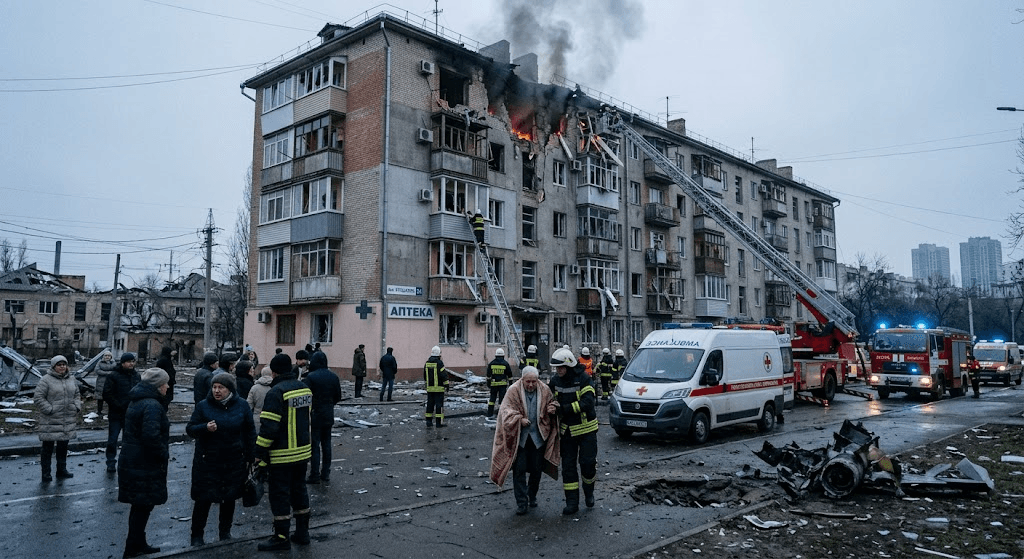
AI Image Disclaimer: These visuals were generated using AI technology to illustrate the themes and environments described in the article.
Sources:
Reuters Associated Press The Washington Post Al Jazeera Institute for the Study of War
Published by Banx Network. This article is part of the Banx decentralized media programme, powered by the BXE token on the XRP Ledger.