
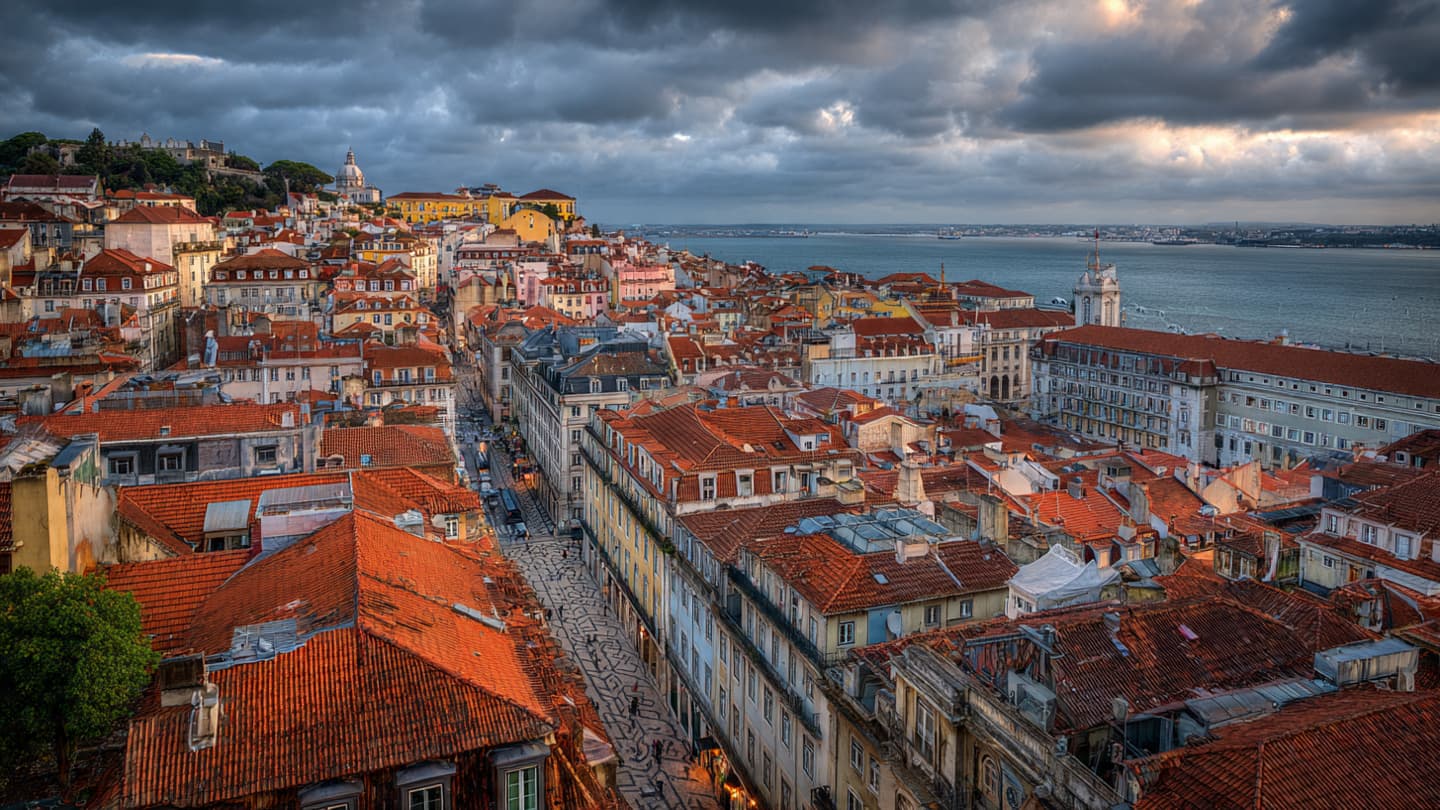
Morning arrived gently over Lisbon, with trams climbing narrow hills beneath pale Atlantic light and café doors opening onto streets still damp from overnight rain. The city moved through its ordinary rhythm — conversations drifting from balconies, bread deliveries crossing cobblestones, schoolchildren gathering beneath umbrellas. Yet behind one apartment door, investigators encountered a scene that would ripple far beyond Portugal’s capital, reaching across borders into France and unsettling both countries with questions difficult to answer plainly.
Authorities are continuing to investigate a disturbing case involving children allegedly abandoned and isolated for extended periods, a discovery that has triggered shock, public debate, and legal scrutiny in both Portugal and France. Details emerging from the investigation have painted a picture of neglect and social withdrawal severe enough to draw comparisons with some of Europe’s most troubling family abuse cases in recent memory.
According to investigators, the children were reportedly found living in deeply concerning conditions, largely disconnected from normal social contact and educational structures. Officials in Portugal and France are now working together to establish timelines, family circumstances, and the legal responsibilities of those involved. The case has quickly evolved beyond a single criminal inquiry into a broader reflection on how vulnerable children can remain hidden within modern urban life despite dense social systems surrounding them.
In neighborhoods where the discovery occurred, daily life continues with uneasy normalcy. Neighbors pass through shared hallways now crowded with reporters and police tape. Windows open briefly before curtains close again. Conversations lower in volume when unfamiliar footsteps approach stairwells. Such cases often create a peculiar silence in communities — a quiet attempt to reconcile ordinary surroundings with revelations that seem almost impossible to imagine occurring nearby.
Across Europe, reactions have carried a mixture of sorrow and disbelief. In both Portugal and France, child welfare experts and commentators have questioned how prolonged neglect could remain unnoticed. The investigation has drawn attention to gaps that sometimes emerge between institutions meant to monitor vulnerable families: schools, healthcare systems, immigration authorities, and social services operating separately within increasingly mobile and fragmented societies.
The children at the center of the case have now become subjects of medical care and protective intervention, though authorities have released limited identifying information in order to preserve privacy. What has emerged publicly instead is a portrait of isolation — children allegedly removed from ordinary routines of friendship, schooling, and outdoor life, growing up within spaces increasingly detached from the outside world.
Such stories resonate powerfully because they disrupt assumptions about visibility in modern cities. Lisbon and French urban centers alike are places of constant movement: apartment residents crossing shared entrances, delivery workers climbing staircases, teachers tracking attendance, neighbors hearing muffled sounds through thin walls. Yet even within crowded environments, loneliness and neglect can remain concealed for years behind closed doors.
The cross-border nature of the case has also added diplomatic and legal complexity. Authorities in Portugal and France are reportedly coordinating evidence, family records, and jurisdictional matters while media coverage intensifies in both countries. European cooperation mechanisms allow such investigations to move more fluidly than in earlier decades, yet they also expose the emotional challenge of confronting failures spread across multiple systems and nations simultaneously.
Meanwhile, the public response reflects a broader anxiety surrounding childhood itself in contemporary Europe. Questions about social isolation, parental control, online withdrawal, and mental health have increasingly shaped discussions about family life after years marked by pandemic disruptions, economic strain, and rising social fragmentation. Though the current case appears highly exceptional, it touches fears that modern urban societies can sometimes lose sight of their most vulnerable members until crisis forces attention suddenly into focus.
In Lisbon, reporters continue gathering outside official buildings while legal proceedings slowly advance through careful procedural language. In France, television panels debate accountability and prevention. Yet beneath headlines and courtroom developments lies something quieter and more difficult to measure — the emotional aftermath carried by children whose earliest experiences unfolded largely outside the ordinary rhythms of public life.
As evening settles again across the Iberian coast, light glows softly from apartment windows overlooking steep streets and distant river water. Somewhere inside government offices, investigators continue assembling timelines from scattered documents, interviews, and fragments of family history.
And beyond the immediate legal questions, the case leaves behind a broader reflection shared across Portugal and France alike: how, in cities full of movement and human proximity, entire childhoods can sometimes disappear almost silently behind a single closed door.
AI Image Disclaimer: Illustrative visuals accompanying this article were generated using AI technology and are intended as interpretive representations.
Sources:
Reuters BBC News Associated Press Le Monde Público
Note: This article was published on BanxChange.com and is powered by the BXE Token on the XRP Ledger. For the latest articles and news, please visit BanxChange.com