
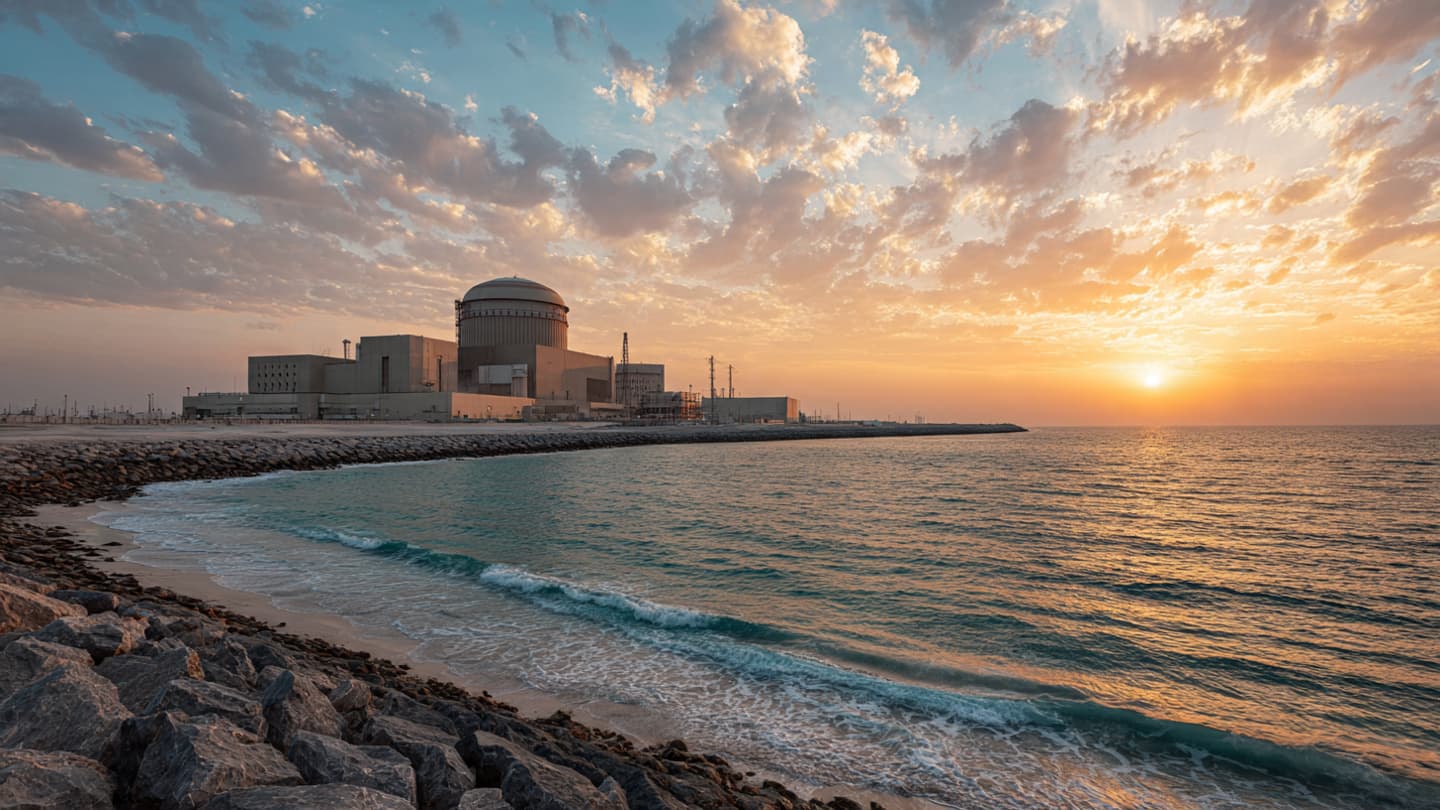
Along the western coastline of the United Arab Emirates, where desert sands meet the stillness of the Gulf, the Barakah nuclear power plant rises from the shoreline with an almost geometric calm. Its pale domes and structured lines stand against a horizon shaped by heat, salt air, and the steady hum of modern ambition. In daylight, the facility appears distant from conflict — a symbol of technological confidence in a region long associated more with oil fields than nuclear reactors.
Yet even in places designed around precision and control, the atmosphere of the wider Middle East has a way of reaching the shoreline.
This week, Emirati officials said drones that targeted the Barakah Nuclear Power Plant had originated from Iraqi territory, introducing another layer of tension into an already fragile regional landscape. Authorities stated that air defenses successfully intercepted the drones before they could cause damage, while investigations and security coordination efforts continued in the aftermath of the incident.
The announcement immediately carried significance beyond the technical details of interception systems or flight paths. Nuclear facilities occupy a unique psychological space in modern geopolitics. Even unsuccessful threats against them resonate differently, combining fears of regional instability with anxieties surrounding infrastructure designed to operate without interruption or uncertainty.
The Barakah plant itself represents one of the Gulf’s most ambitious energy projects. Developed as the Arab world’s first commercial nuclear power station, it has become central to the UAE’s strategy of diversifying energy production beyond hydrocarbons. For years, officials have presented the facility as a symbol of scientific advancement and long-term planning — a vision of stability built beside waters historically dominated by oil exports and shipping lanes.
Now, however, the plant finds itself more visibly connected to the region’s evolving security environment. Drone warfare has transformed modern conflict across the Middle East over the past decade, allowing armed groups and regional actors to project pressure across long distances with relatively low-cost technology. Oil facilities, airports, military bases, and infrastructure sites have all increasingly become vulnerable to attacks launched from beyond conventional front lines.
The UAE did not publicly identify which groups might have been responsible, though the mention of Iraqi territory immediately drew attention to the complex network of militias and armed factions operating within Iraq’s fragmented political and security landscape. Iraqi officials, meanwhile, have faced recurring challenges balancing domestic sovereignty, regional alliances, and the activities of armed groups linked to broader geopolitical rivalries.
For many observers, the incident also reflects the wider instability moving quietly beneath the surface of regional diplomacy. While Gulf states have recently pursued efforts to reduce tensions with neighboring powers through dialogue and normalization agreements, conflicts across the Middle East continue generating unpredictable consequences. The wars in Gaza, regional maritime tensions, and ongoing rivalries involving Iran, Israel, and allied groups have all contributed to an atmosphere where escalation can emerge suddenly across distant fronts.
And yet daily life continues around Barakah’s coastline much as before. Workers arrive through guarded checkpoints. Cooling systems move steadily beneath the desert sun. Along nearby roads, trucks cross stretches of empty highway where the horizon seems endless and still. The infrastructure of modern energy production operates with the quiet rhythm of routine even as regional uncertainty circles overhead.
Security analysts note that protecting critical infrastructure now requires attention not only to traditional military threats but to smaller, faster technologies capable of crossing borders with relative ease. The drone has become one of the defining symbols of contemporary conflict: compact, difficult to detect, and capable of carrying political consequences far larger than its physical size.
As investigations continue, Emirati authorities have emphasized that the Barakah facility remains safe and operational. International monitoring agencies and regional governments are expected to follow developments closely, aware that any perceived vulnerability involving nuclear infrastructure carries global attention almost immediately.
By nightfall, the reactors at Barakah continued glowing faintly against the Gulf coast while patrol systems watched the skies above. The sea nearby remained calm, tankers moved across familiar routes, and the desert wind carried on through the darkness. Yet somewhere beyond the horizon, invisible flight paths and contested borders served as another reminder that in today’s Middle East, even places built to symbolize permanence must now live with the uncertainty drifting through the air around them.
AI Image Disclaimer These visuals were generated using AI technology to artistically represent the events and locations described in the article.
Sources
Reuters International Atomic Energy Agency Associated Press Emirates News Agency BBC News
Note: This article was published on BanxChange.com and is powered by the BXE Token on the XRP Ledger. For the latest articles and news, please visit BanxChange.com