
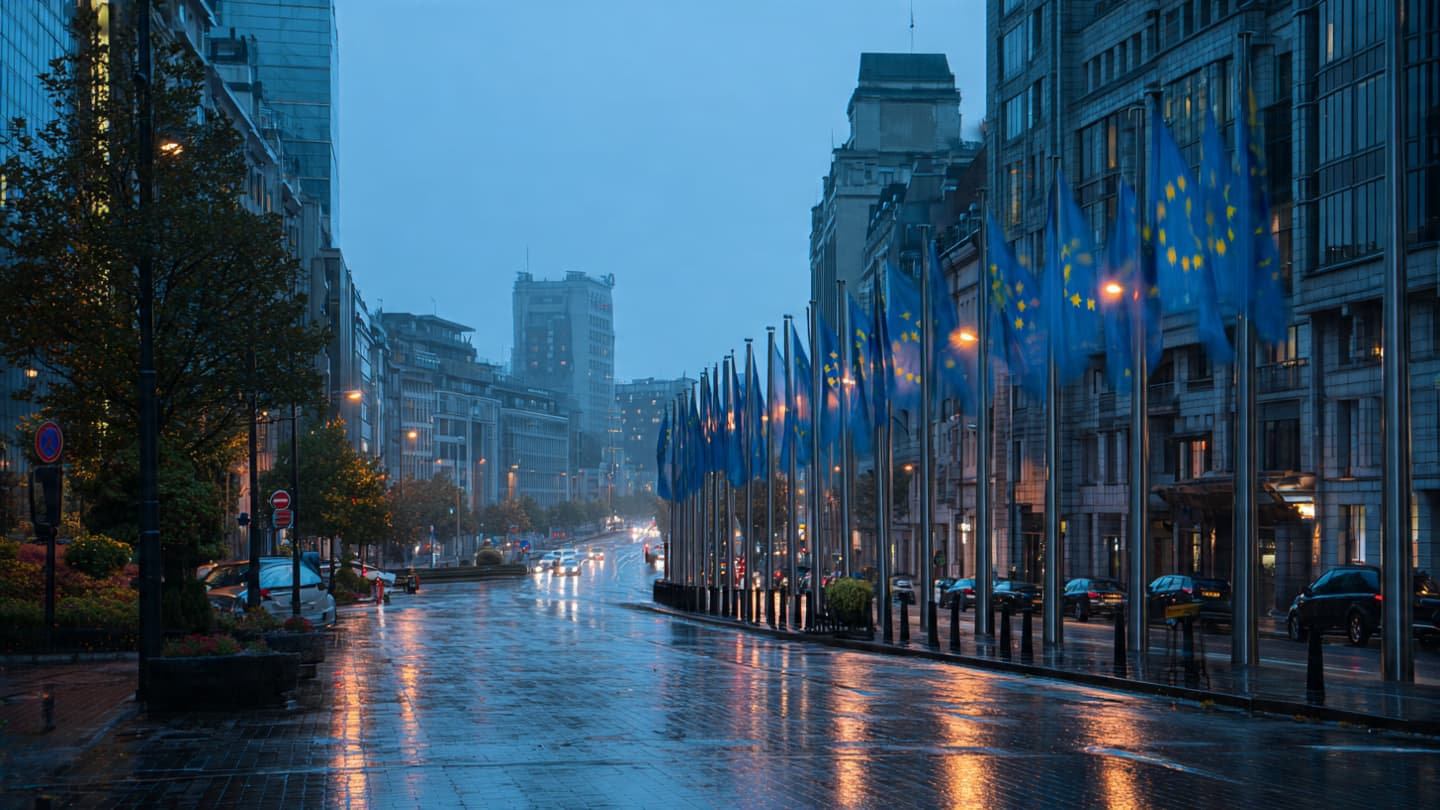
In Kyiv, even silence carries tension now. The city moves through its mornings beneath layers of awareness — café doors opening beside sandbagged buildings, diplomats traveling through streets where air raid sirens can interrupt conversations without warning, and embassies continuing their work under the long shadow of war. Here, diplomacy no longer exists apart from danger; it unfolds inside it.
This week, the European Union summoned Russia’s envoy after remarks interpreted as threats against European diplomats visiting Kyiv. The move reflected mounting concern inside European institutions over rhetoric emerging from Moscow as the war in Ukraine continues reshaping not only battlefields, but also the language and boundaries of international diplomacy.
European officials described the statements as unacceptable, emphasizing that diplomatic representatives must be protected under international norms regardless of political disagreement or wartime conditions. The response from Brussels was measured but unmistakably firm, signaling that threats — even rhetorical ones — directed toward visiting diplomats would not pass without consequence.
The episode unfolded against the wider backdrop of a war that has gradually expanded beyond military confrontation into nearly every sphere of European political life. What began as a territorial invasion has evolved into a prolonged continental crisis touching energy systems, border policies, military alliances, economic planning, and the daily vocabulary of diplomacy itself.
Kyiv has become one of the defining symbolic centers of this transformation. Foreign delegations continue arriving in the Ukrainian capital despite persistent security risks, their visits carrying both practical and symbolic weight. To walk through Kyiv today is to encounter a city balancing ordinary movement with wartime vigilance — traffic flowing beneath anti-air defenses, government meetings held alongside blackout preparations, diplomats gathering while missile alerts remain part of the background atmosphere.
Russia’s increasingly severe rhetoric toward European governments reflects a broader hardening that has accompanied the war’s long duration. As Western military and financial support for Ukraine continues, Moscow has repeatedly framed European involvement as escalatory, while European leaders argue their assistance is necessary to preserve Ukrainian sovereignty and regional stability. Between these competing narratives lies a diplomatic environment growing steadily more brittle.
The summoning of an envoy may appear procedural from a distance, yet such gestures carry quiet significance in international relations. Diplomatic summonses are among the few formal instruments nations and institutions use to publicly register disapproval without severing communication entirely. They belong to the restrained grammar of diplomacy — symbolic acts designed to warn, document, and preserve boundaries even as tensions rise.
Across Europe, the war has altered the emotional climate as much as the political one. Capitals once accustomed to viewing conflict as distant now conduct policy under the awareness that war has returned to the continent in a sustained and destabilizing form. Security discussions that once belonged mostly to military forums now enter ordinary public life through debates over energy costs, defense budgets, cyber threats, and regional preparedness.
Yet amid these larger geopolitical movements, individual human moments remain quietly visible. Diplomats in Kyiv continue attending meetings beneath reinforced ceilings. Residents gather in parks during calm evenings despite uncertainty. Railway stations remain crowded with travelers carrying both luggage and fatigue. War reshapes institutions, but it also reshapes habits, gestures, and expectations.
The EU’s response also reveals how diplomacy during wartime increasingly operates on multiple levels at once. There are the visible exchanges — statements, summonses, sanctions — and the quieter calculations beneath them: maintaining unity among European states, preventing escalation beyond Ukraine’s borders, and ensuring that channels of communication with Moscow remain open even amid profound hostility.
For now, the incident stands as another reminder that Europe’s confrontation with Russia extends beyond trenches and missile strikes into the symbolic terrain of diplomacy itself. Words have become strategic instruments, capable of escalating tension even without direct military action.
And so Brussels and Kyiv continue their careful coordination beneath an unsettled European sky, while diplomats move through guarded corridors trying to preserve the fragile architecture of international order in a moment when that order feels increasingly strained. The war continues not only across front lines, but also through language, protocol, and the uncertain space between warning and restraint.
AI Image Disclaimer Illustrative visuals in this piece were created with AI and are intended to evoke the settings described rather than depict actual scenes.
Sources
Reuters Associated Press BBC News Politico Europe Financial Times
Note: This article was published on BanxChange.com and is powered by the BXE Token on the XRP Ledger. For the latest articles and news, please visit BanxChange.com