
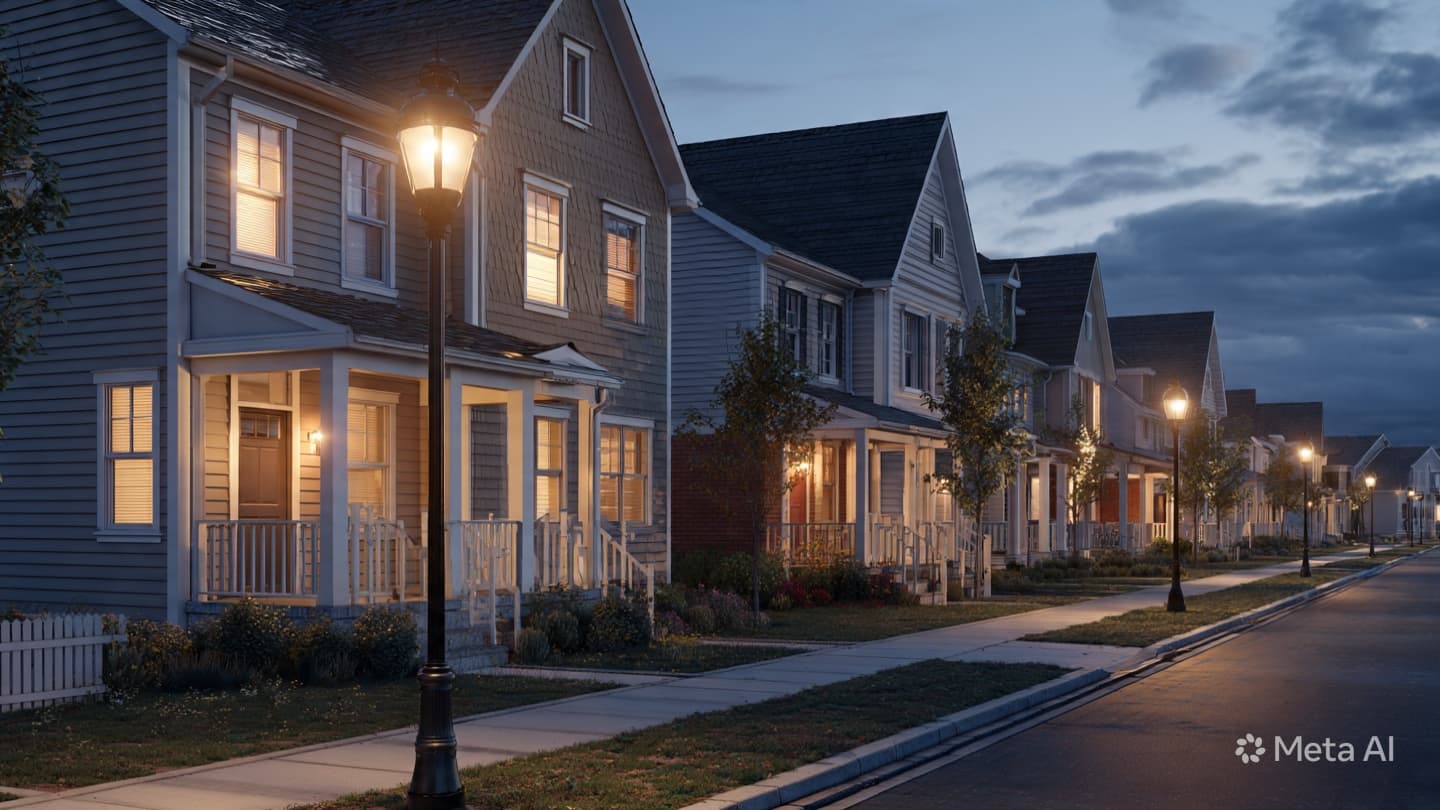
There is a particular kind of quiet that follows a disturbance in a suburban neighborhood. It is not the peaceful silence of an evening, but a heavy, watchful stillness that lingers after the normalcy of private life has been breached. When residents wake to find that their perimeters have been crossed, the ripple effects move through the community with surprising speed. Each house, once an island of security, becomes a reminder of the shared vulnerability that links one neighbor to the next.
Recent reports of a string of residential burglaries have brought this sense of unease to the forefront, shifting the focus of the community toward the intersection of private property and public vigilance. For days, the pattern seemed unpredictable, leaving residents to wonder about the security of their own thresholds. It is in these moments that the internal logic of a neighborhood changes; locks are checked twice, lights are left on, and every passing vehicle is met with a lingering, investigative glance.
The resolution, when it comes, often arrives with the sudden efficiency of a dedicated police operation. When authorities move to close the gap between the incident and the apprehension, the tone of the community shifts again. The arrests made in the wake of this spree serve as a punctuation mark in a narrative that had felt open-ended and unsettling. They provide a semblance of closure, a return to the state of affairs where the sanctity of the home is once again a baseline expectation.
These operations are rarely about a single triumph; they are the culmination of hours spent reviewing footage, talking to witnesses, and connecting disparate threads of evidence. The work is often invisible until the moment it isn't. It is a process of gathering fragments of information to build a coherent picture of the movement of those responsible, tracing their paths through neighborhoods that were never intended to be anything but quiet residential pockets.
There is a human dimension to the cleanup that follows these arrests. Beyond the legal proceedings and the recovery of items, there is the work of restoring a sense of belonging. The victim of a burglary experiences a disruption that is not easily measured by the value of the missing property. It is the loss of a feeling of sanctuary, a disruption that requires time and a sense of collective support to mend. Neighborhoods often find that their response to such events is as much about unity as it is about security.
The broader conversation around these events usually touches on the balance between modern connectivity and the inherent risks of living in an open society. As investigations conclude, discussions shift toward prevention and the role of surveillance, not just in catching the perpetrators but in deterring future intrusions. It is a reflective period, a time for communities to take stock of their defenses and reaffirm the importance of knowing one another as a primary layer of protection.
As the dust settles, the rhythm of life in the area begins to recover its former pace. The fear that once hung over the streets gradually dissipates, replaced by the mundane business of daily routines. However, the memory of the event remains, a faint shadow on the collective consciousness that influences how the community approaches its own safety. It is a reminder that the boundary between order and disorder is maintained not just by the authorities, but by the watchful eyes of those who call these neighborhoods home.
Ultimately, the resolution of these burglaries offers a moment of relief, yet it also invites a quiet contemplation of what it means to keep a home safe in an evolving world. The investigations are technically complete, but the social impact lingers, encouraging a dialogue about resilience and the importance of community cohesion. As the normalcy of daily life resumes, there is a renewed appreciation for the quiet, predictable safety that once seemed so ordinary and, perhaps, so easily taken for granted.
Note: This article was published on BanxChange.com and is powered by the BXE Token on the XRP Ledger. For the latest articles and news, please visit BanxChange.com