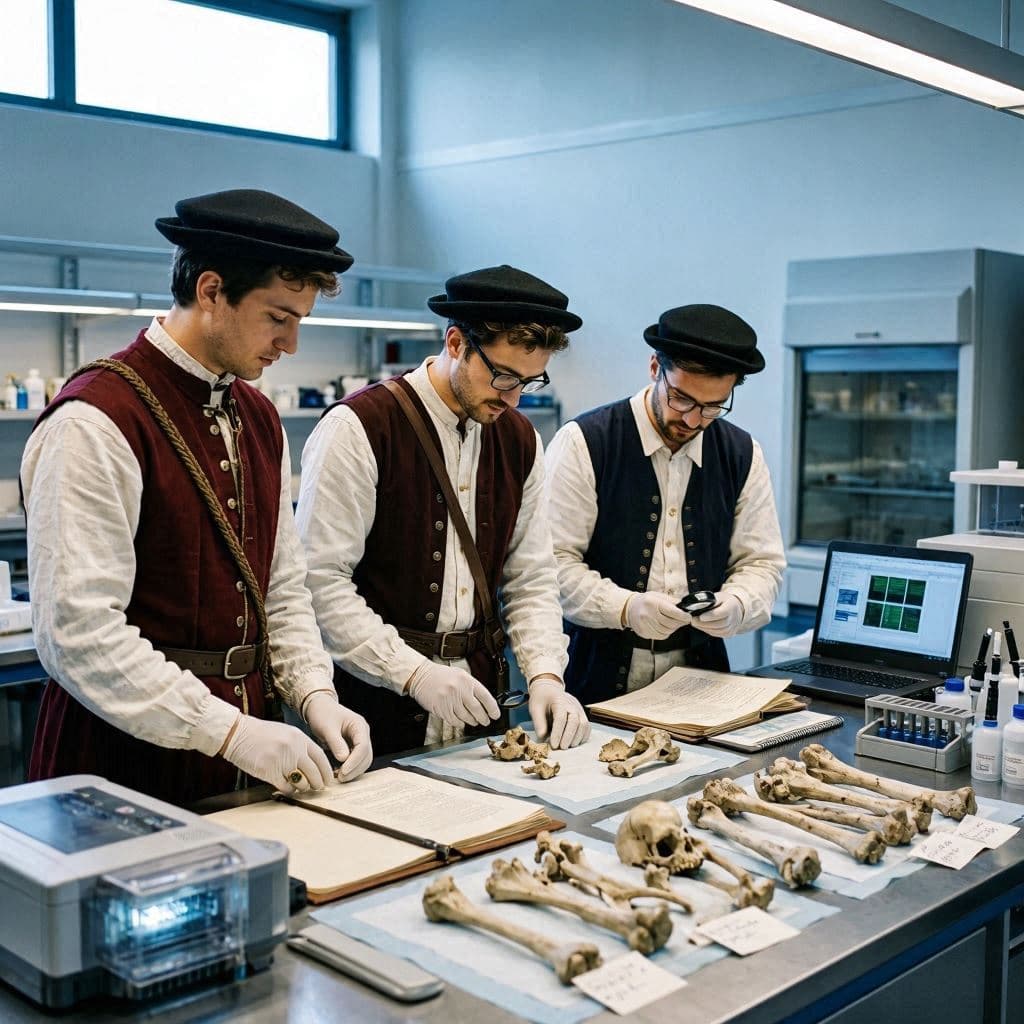
History often leaves behind unanswered questions, allowing stories to grow with every passing generation. Some mysteries become woven into legend, surviving long after those who witnessed the events are gone. Yet advances in science are giving researchers new ways to revisit the past, showing that even centuries-old debates can sometimes find evidence hidden within ancient remains.
One such mystery surrounds the deaths of Grand Duke Francesco I de' Medici and his wife, Bianca Cappello, members of the powerful Medici dynasty that ruled Florence and Tuscany during the Renaissance. In 1587, the couple died only hours apart after several days of illness, giving rise to centuries of speculation that Francesco's younger brother, Ferdinando, had poisoned them to gain power.
A new international study led by researchers from Yale University and the University of Pisa now presents strong genetic evidence supporting a different explanation. By analyzing ancient DNA preserved in bone samples from Francesco and his brother Giovanni de' Medici, scientists detected genetic traces of Plasmodium falciparum, the parasite responsible for the deadliest form of malaria. The findings were published in the peer-reviewed journal iScience.
Researchers explained that earlier investigations had already suggested malaria through paleopathological and immunological evidence, but those methods could not definitively rule out poisoning. Ancient DNA analysis, however, allowed scientists to directly identify the parasite's genetic material, providing much stronger evidence that malaria—not arsenic or another poison—caused Francesco's death.
Historical records from physicians serving the Medici court also align with the new findings. Contemporary accounts described Francesco suffering intermittent fever, chills, and prolonged illness, symptoms that closely match severe malaria. Medical treatments of the era, including bloodletting, may have further weakened his condition rather than improving it.
Beyond resolving a famous historical debate, the research contributes to scientists' understanding of malaria's evolution. By examining centuries-old parasite DNA, researchers hope to better understand how the disease spread through Europe during the Renaissance and how malaria strains have changed over time. Such information may help place modern infectious diseases into a broader historical perspective.
The study also highlights how advances in genetic technology are transforming archaeology and historical research. Questions once addressed only through written records can now be investigated using biological evidence preserved for hundreds of years, allowing historians and scientists to work together in reconstructing the past with greater confidence.
While the Medici family will likely remain associated with political intrigue, artistic patronage, and Renaissance influence, this latest research suggests that one of its best-known mysteries may have had a far simpler explanation than generations imagined. More than four centuries after Francesco's death, modern science has offered what researchers believe is the clearest answer yet.
AI Image Disclaimer: The illustrations accompanying this article were generated using artificial intelligence to visualize historical events and scientific research. They are artistic representations rather than authentic historical images.
Sources (verified):
Yale University University of Pisa iScience CNN Smithsonian Magazine
Published by Banx Network. This article is part of the Banx decentralized media programme, powered by the BXE token on the XRP Ledger.