The cosmos is filled with mysteries, some visible and others hidden in the shadows of gravity. In the dense heart of a star cluster, astronomers have long suspected the presence of black holes, silent giants that exert immense influence without emitting light. Now, NASA’s Hubble Space Telescope has confirmed the existence of one of these elusive objects, marking the first discovery of its kind in this specific cluster. This finding is not just a confirmation of theory; it is a revelation that invites us to reflect on the invisible forces that shape the universe and the persistence of human curiosity in uncovering them.
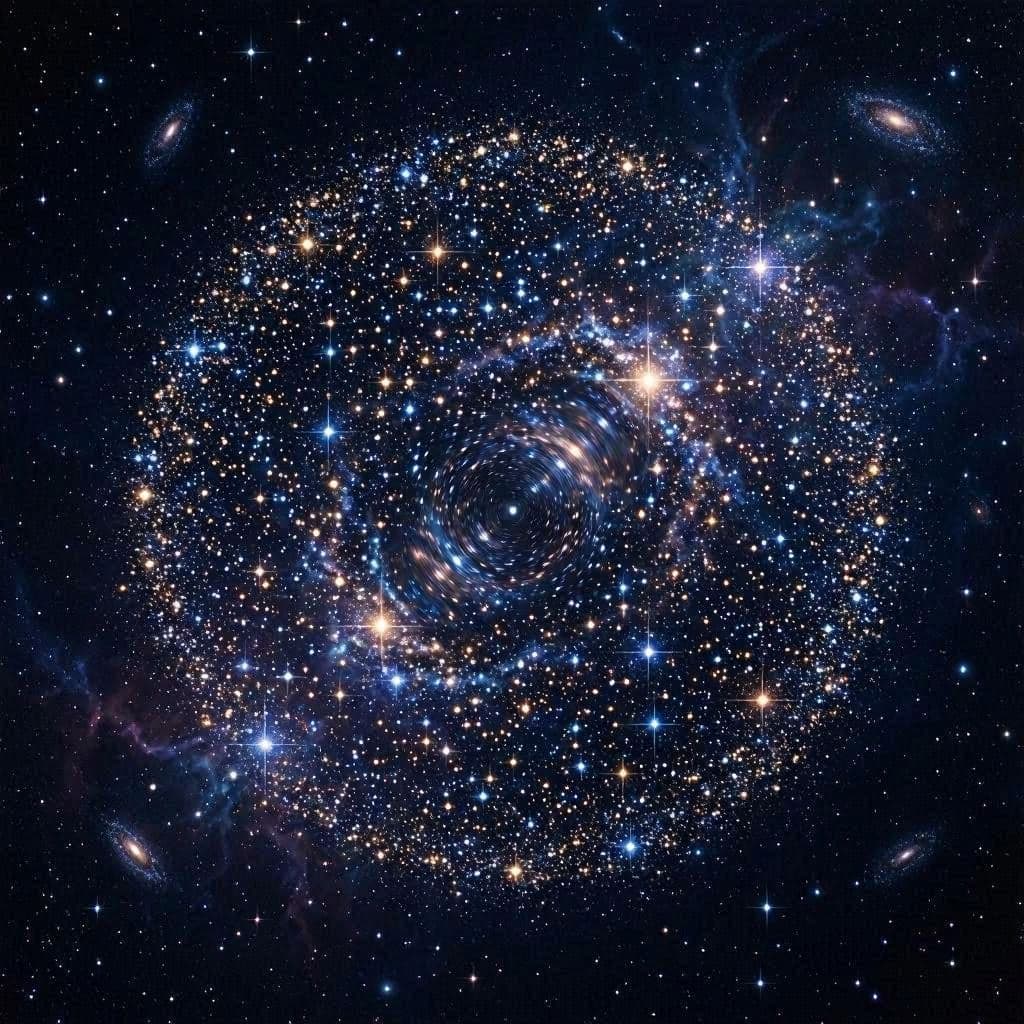
Body: Star clusters are tightly packed groups of stars, bound together by gravity. Over time, the most massive stars explode as supernovae, leaving behind black holes. These black holes were expected to sink to the center of the cluster due to their mass, but observing them has proven difficult. Hubble’s high-resolution imaging allowed astronomers to detect the subtle gravitational effects of a black hole on nearby stars, revealing its presence through motion rather than light.
This discovery validates models of stellar evolution and dynamics. It suggests that black holes do indeed migrate to the centers of clusters, influencing the movement of surrounding stars. This "mass segregation" is a key prediction of astrophysics, and seeing it in action provides strong evidence for our understanding of how these systems evolve. It connects theoretical mathematics with observable reality.
The black hole itself is stellar-mass, formed from the collapse of a single massive star. Unlike supermassive black holes found in galaxy centers, these are smaller but still powerful. Their presence affects the stability of the cluster, potentially ejecting lighter stars or causing collisions. Understanding this dynamic helps astronomers predict the future of star clusters and the distribution of black holes in the galaxy.
Hubble’s role in this discovery highlights the enduring value of legacy instruments. Despite being launched decades ago, its precision remains unmatched for certain types of observation. This success underscores the importance of maintaining and utilizing existing technology while preparing for future missions. It is a reminder that scientific progress is cumulative, building on past achievements.
For the public, the idea of "missing" black holes captures the imagination. It suggests that the universe holds secrets waiting to be found. This discovery encourages a sense of wonder and exploration, reminding us that there is always more to learn. It transforms abstract concepts into tangible discoveries, making science accessible and engaging.
Future telescopes, such as the James Webb Space Telescope, will likely find more of these hidden objects. They will probe deeper into clusters, revealing a population of black holes that was previously invisible. This will help astronomers estimate the total number of black holes in the Milky Way, refining our map of the galaxy’s dark inhabitants.
The implications for gravitational wave astronomy are also significant. Mergers of black holes in clusters are sources of ripples in spacetime. By identifying these populations, scientists can better predict and interpret gravitational wave signals. It connects the visual universe with the auditory one, creating a multi-sensory understanding of cosmic events.
Closing: In the end, the discovery of the missing black hole is a testament to the power of observation. It reveals the hidden architecture of star clusters and confirms long-held theories. As we continue to look up, the hope is that we will uncover more of the universe’s secrets, deepening our appreciation for the cosmos.
AI Image Disclaimer: The visual representations associated with this article are AI-generated artistic interpretations designed to illustrate the themes of astronomy and discovery.
Sources: NASA Space Telescope Science Institute The Astrophysical Journal
Published by Banx Network. This article is part of the Banx decentralized media programme, powered by the BXE token on the XRP Ledger.