
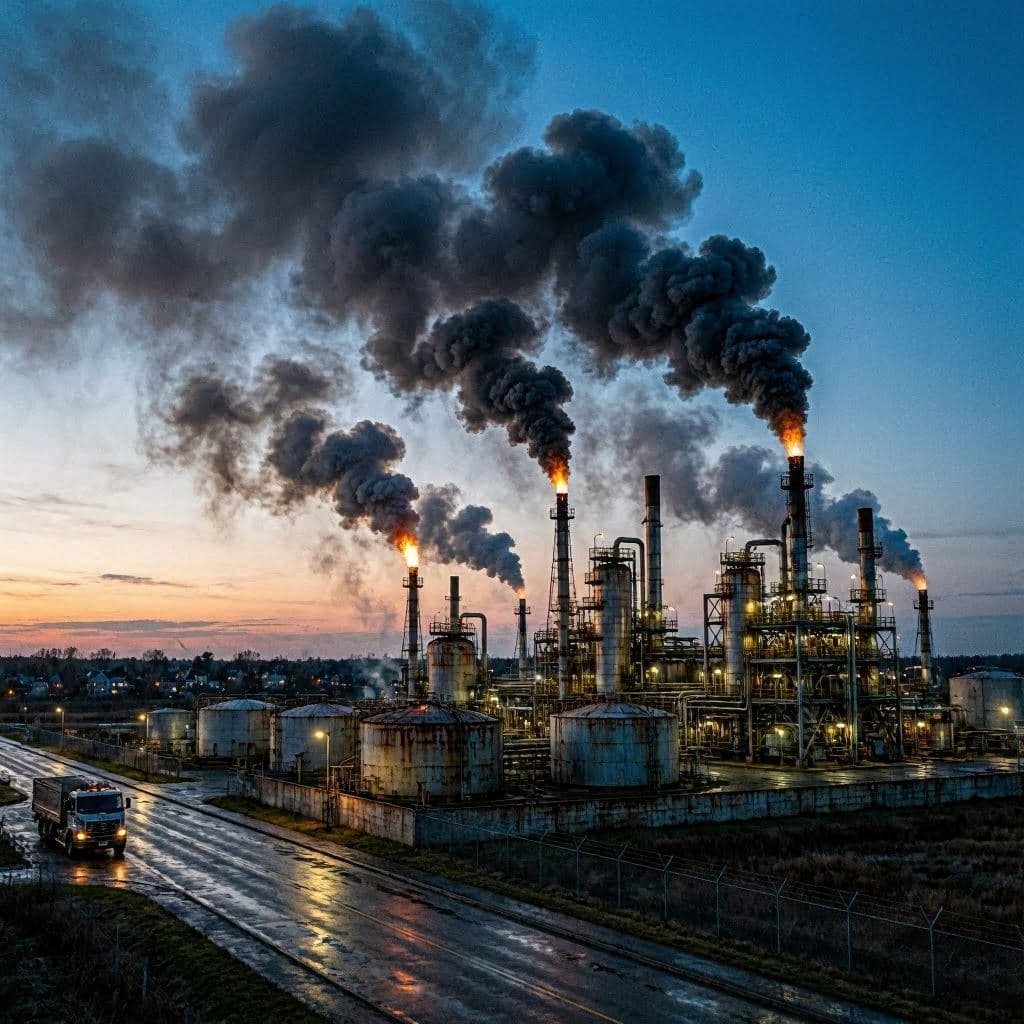
In the quiet hours before dawn, when the world is still and shadows stretch long across the landscape, a new kind of warfare has emerged. It is not fought with tanks or troops on the ground, but with unmanned aircraft that traverse hundreds of miles to strike at the heart of an enemy’s economic engine. Recent reports confirm that Ukrainian drone strikes have ignited significant fires at several Russian oil refineries, marking an escalation in the conflict’s reach and impact.
These attacks target critical infrastructure, aiming to disrupt the flow of fuel that powers Russia’s military and civilian sectors. The flames rising from facilities in regions like Moscow, Krasnodar, and Omsk are visible symbols of a strategy that seeks to weaken logistical capabilities from afar. For Ukraine, these strikes represent a shift toward asymmetric warfare, leveraging technology to offset conventional disadvantages.
The impact of these fires extends beyond immediate damage. Refineries are complex industrial ecosystems, and their disruption can lead to shortages of gasoline, diesel, and jet fuel. This creates ripple effects throughout the economy, affecting transportation, agriculture, and daily life for ordinary citizens. The strategic goal is to impose a cost that is felt far from the front lines.
Russian authorities have acknowledged the attacks, often describing them as terrorist acts while working to contain the blazes. Firefighters and emergency crews work tirelessly to extinguish the flames, but the scale of the damage can be substantial. Repairing specialized equipment takes time and resources, further straining an already pressured industrial base.
Internationally, the strikes have drawn mixed reactions. Some allies support Ukraine’s right to defend itself by targeting military-related infrastructure, while others express concern about the potential for broader escalation. The use of drones raises questions about the rules of engagement and the future of aerial warfare in densely populated areas.
For the residents living near these facilities, the sudden roar of explosions and the sight of thick smoke are reminders of how close war can come, even in places considered safe. Evacuations and safety warnings become part of daily life, altering the rhythm of communities that were once distant from the conflict.
As the campaign continues, the effectiveness of these strikes will be measured not just in barrels of oil lost, but in the strategic pressure they apply. It is a testament to the evolving nature of modern conflict, where distance no longer guarantees security, and innovation plays a decisive role.
Closing: Ukrainian drone strikes have caused significant fires at multiple Russian oil refineries, disrupting fuel production and highlighting the expanding scope of the conflict. These attacks underscore the strategic use of asymmetric warfare to target critical economic infrastructure.
AI Image Disclaimer: Please note that any accompanying visuals for this article are AI-generated representations intended for illustrative purposes only.
Sources: ABC News, The Moscow Times, France 24, Caspian Policy Center
Note: This article was published on BanxChange.com and is powered by the BXE Token on the XRP Ledger. For the latest articles and news, please visit BanxChange.com