Kathmandu, Nepal—Monsoon-triggered landslides and an alarming surge in venomous snakebites claimed multiple lives across ten separate districts in Nepal, disaster authorities confirmed on Wednesday. The National Disaster Risk Reduction and Management Authority reported that saturated soils gave way overnight, burying homes and cutting off mountain trails in several mid-hill regions. Concurrently, public health officials noted a spike in rural snakebite fatalities as rising floodwaters forced snakes out of their natural habitats and into residential areas. Local medical outposts reported critical shortages of anti-venom serum as victims flooded community health centers for emergency treatment.
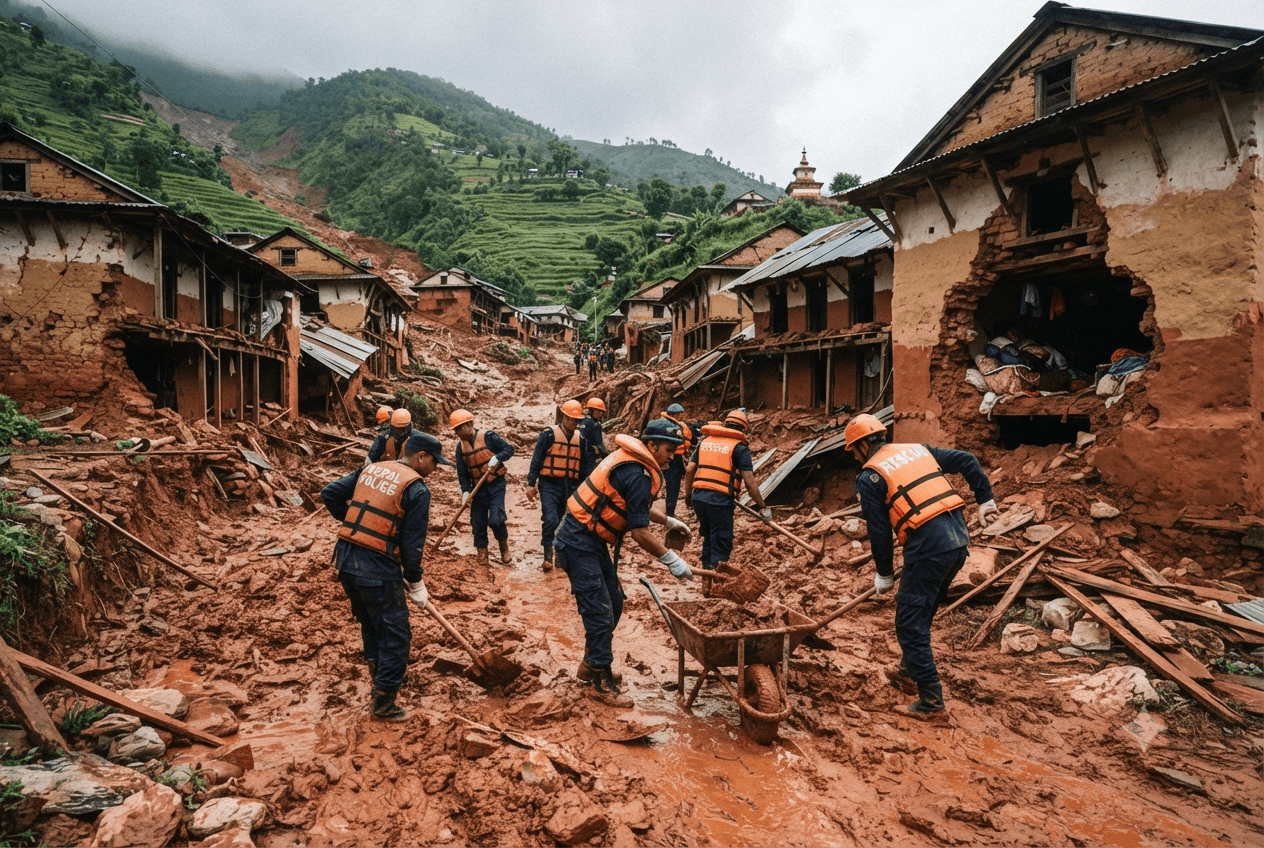
Rescue squads equipped with basic hand tools dug through mud and rock piles to reach families trapped beneath collapsed hillside dwellings. District administrators dispatched emergency medical teams to remote villages where road blockages prevented ambulances from reaching critical patients. Health workers launched hurried public awareness campaigns advising rural residents to use flashlights and elevated bedding during nighttime hours. Environmental conditions across the affected zones created a breeding ground for compounding public health and safety hazards.
Families displaced by the sudden earth movements were relocated to temporary learning centers and community buildings situated on higher ground. Local police recorded fatalities ranging from elderly villagers caught in structural collapses to agricultural workers bitten while tending flooded fields. Humanitarian groups coordinated with provincial ministries to airlift essential medical supplies, including life-saving anti-venom vials, into hard-to-reach rural clinics. Provincial leaders faced mounting pressure to improve healthcare infrastructure and disaster preparedness in remote administrative zones.
Meteorological departments warned that continuous rainfall would maintain high landslide risks across the affected districts for the next forty-eight hours. Rural communities organized voluntary night patrols to monitor slope stability and warn sleeping households of impending ground shifts. Relief distribution remained slow due to impassable mud tracks and broken suspension bridges spanning swollen mountain streams. Disaster management officials urged citizens living near unstable cliffs to evacuate immediately rather than wait for mandatory official orders.
Note: This article was published on BanxChange.com and is powered by the BXE Token on the XRP Ledger. For the latest articles and news, please visit BanxChange.com