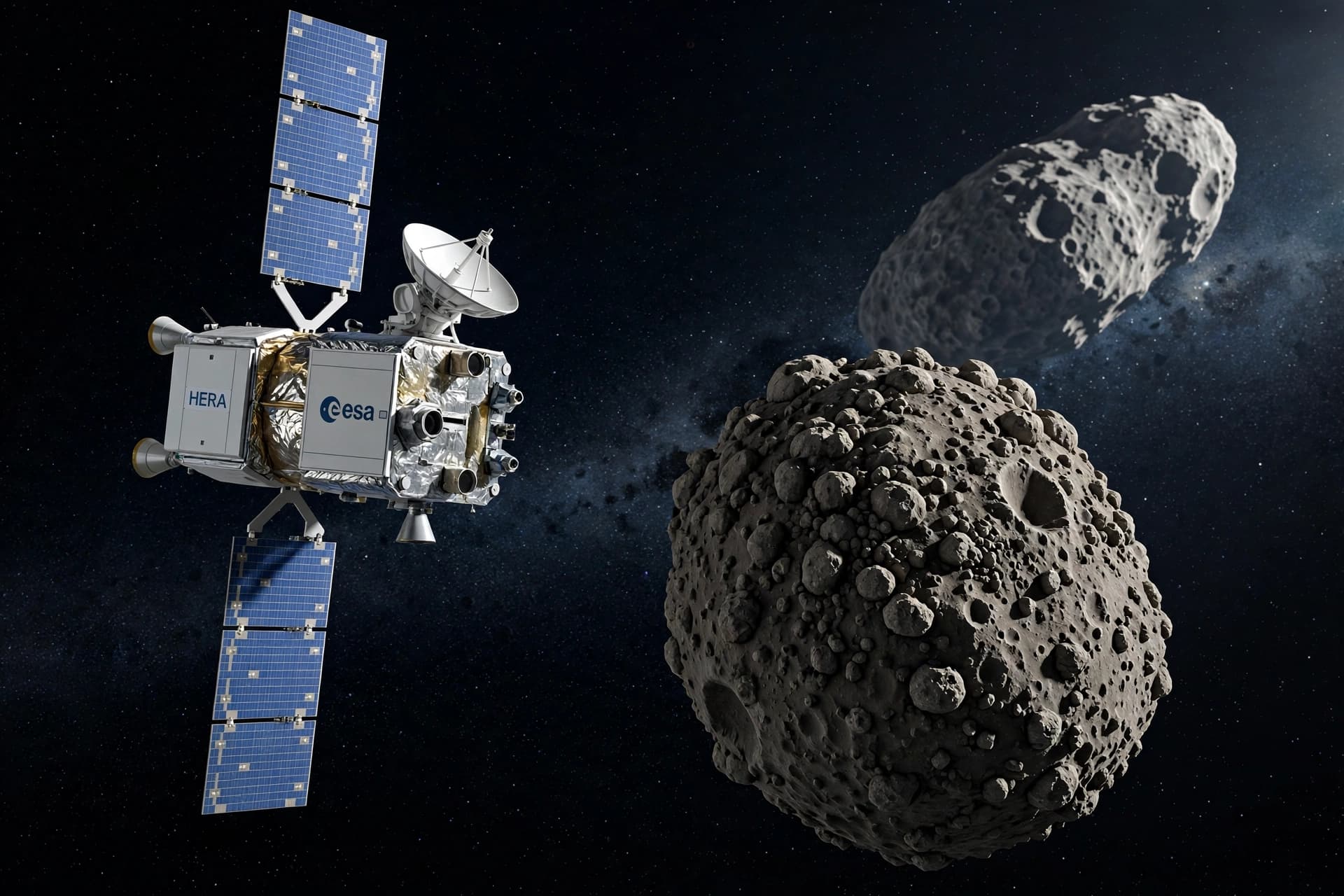
The story of space exploration is no longer written solely by the world's largest space agencies. Around the globe, countries are steadily building their own capabilities, contributing new ideas, technologies, and scientific expertise to an increasingly interconnected space economy. Australia, once known primarily for supporting international missions through its geographic advantages, is now expanding its role as an active developer of satellite technology and space innovation.
Recent initiatives demonstrate the growing momentum of Australia's space sector. Government agencies, universities, and private companies have continued investing in satellite research, Earth observation technologies, and advanced communications systems. These efforts are intended to strengthen Australia's sovereign space capability while supporting scientific research, environmental monitoring, emergency response, and commercial services.
One of the country's priorities has been the development of smaller, more cost-effective satellites. Compared with traditional large spacecraft, modern small satellites can be designed, manufactured, and launched more quickly while still delivering valuable scientific and operational data. Australian researchers believe this approach allows greater flexibility for research institutions and emerging space companies seeking to test new technologies.
Collaboration remains central to the sector's progress. Australian organizations continue working with international partners, including government space agencies and commercial launch providers, to exchange technical expertise and participate in joint missions. These partnerships provide opportunities for Australian engineers and scientists to contribute to projects involving climate observation, communications, navigation, and space science.
The Australian Space Agency has identified satellite capability as one of the country's strategic priorities. Investment in advanced manufacturing, robotics, and space-enabled services is expected to help domestic companies compete in the rapidly expanding global space economy. Officials have emphasized that strengthening local capability also supports national resilience by improving access to critical satellite services.
Universities across Australia are likewise playing an important role by developing experimental spacecraft and training the next generation of aerospace engineers. Several institutions have successfully designed CubeSats and other research satellites, allowing students and researchers to gain practical experience in spacecraft design, mission operations, and data analysis. These educational initiatives help build the skilled workforce required for future space missions.
Industry leaders note that satellite technology now supports far more than scientific discovery. Modern satellites contribute to agriculture, disaster management, telecommunications, maritime navigation, resource exploration, and national infrastructure. As reliance on space-based services continues to grow, investment in domestic satellite capabilities becomes increasingly important for both economic development and public services.
Australia's expanding space sector reflects a long-term commitment to innovation rather than short-term competition. By combining scientific research, international cooperation, and industrial development, the country continues strengthening its contribution to the global space community. As satellite technologies become more sophisticated and accessible, Australia's growing expertise is expected to support future discoveries while creating new opportunities across science, industry, and society.
AI Image Disclaimer: The images accompanying this article are AI-generated illustrations created to visualize the subject matter and should not be interpreted as actual mission photography.
Source Verification: Australian Space Agency, CSIRO, SmartSat CRC, SpaceNews
Published by Banx Network. This article is part of the Banx decentralized media programme, powered by the BXE token on the XRP Ledger.