
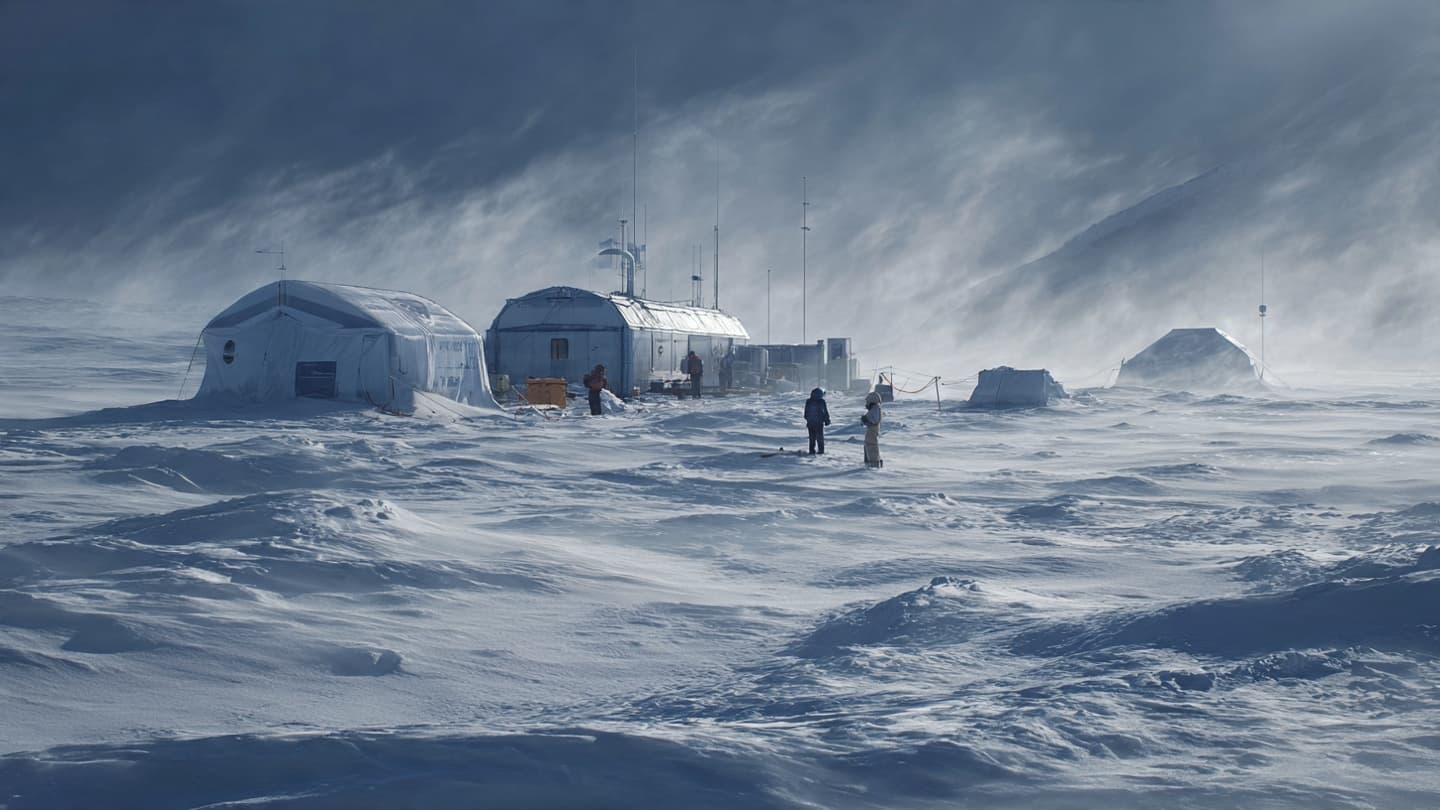
Antarctica has long stood as one of Earth's most remote and demanding frontiers. For generations, scientists traveling to the frozen continent accepted isolation, cold, and uncertainty as part of their mission. Yet researchers now report that a new challenge is emerging: increasingly unpredictable and extreme weather conditions.
Recent scientific assessments indicate that changing weather patterns are complicating research activities across parts of Antarctica. Stronger storms, shifting sea ice conditions, and unusual weather variability are affecting logistics and field operations.
Research teams often depend on narrow weather windows to conduct studies, transport equipment, and access remote observation sites. When storms intensify or conditions change unexpectedly, scientific schedules can be delayed by days or even weeks.
Sea ice variability has also become an important concern. Some research stations rely on stable sea ice for transportation and supply operations. Changes in ice conditions can create significant logistical difficulties for expeditions.
Scientists emphasize that Antarctica plays a crucial role in understanding global climate systems. Data collected from the continent contributes to research on sea-level rise, atmospheric processes, ocean circulation, and long-term climate trends.
Technological innovation is helping researchers adapt. Autonomous instruments, satellite monitoring systems, and remote sensing technologies are increasingly being deployed to collect data in areas that have become more difficult to access physically.
Despite these advances, field research remains essential. Direct observations and on-site measurements continue to provide information that cannot be fully replicated through remote technologies alone.
As environmental conditions evolve, scientists say maintaining research capacity in Antarctica will require continued international cooperation, investment, and flexibility to operate safely within one of Earth's most challenging environments.
AI Image Disclaimer: Visual elements included with this article may be AI-generated for illustrative newsroom use.
Source Verification Check: Phys.org, Reuters, British Antarctic Survey, scientific research institutions
Note: This article was published on BanxChange.com and is powered by the BXE Token on the XRP Ledger. For the latest articles and news, please visit BanxChange.com