
Key Highlights
- Europe consumes more dairy than any other region globally.
- Per-capita dairy availability in Europe is over two and a half times the global average.
- The data is sourced from the Food and Agriculture Organization of the United Nations.
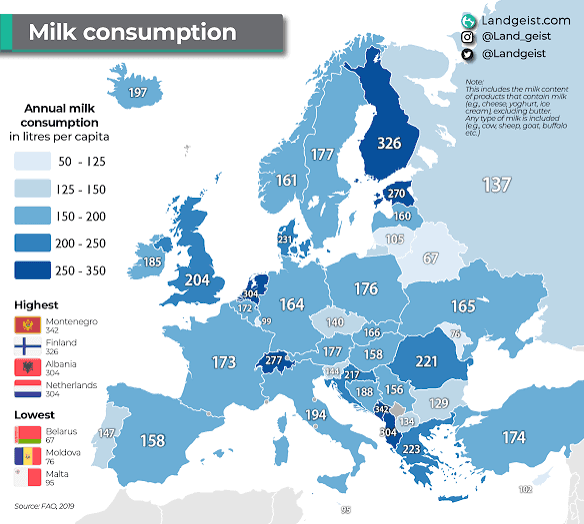
Europe stands out as the leading region in milk and dairy product consumption, significantly outpacing other parts of the world. According to recent data from the Food and Agriculture Organization (FAO) of the United Nations, the per-capita availability of dairy products in Europe is more than two and a half times higher than the global average. This remarkable statistic highlights the region's robust dairy industry and cultural inclination towards dairy consumption.
The FAO's analysis focuses on the supply of milk per person, which includes not only liquid milk but also dairy products like yogurt and cheese. These products are estimated based on the amount of milk used in their production. However, it is important to note that the measure does not account for butter. The high availability of dairy in Europe can be attributed to several factors, including favorable agricultural conditions, a strong dairy farming tradition, and a high demand for dairy products among consumers.
In contrast, regions such as Africa and Asia show significantly lower per-capita dairy availability. This disparity can be linked to various challenges, including limited dairy farming infrastructure, lower consumer demand, and economic factors that restrict access to dairy products. For instance, in many African countries, dairy consumption is hampered by a lack of refrigeration and distribution networks, which affects the availability of fresh milk and dairy products.
The chart provided by the FAO illustrates these differences starkly, showcasing the varying levels of dairy supply across different regions. While Europe enjoys a rich dairy culture, other regions are still working to improve their dairy production and consumption rates. The data serves as a reminder of the global inequalities in food availability and the need for continued investment in agricultural development in less developed regions.
As the world grapples with food security issues, understanding these consumption patterns can inform policies aimed at improving nutrition and access to dairy products in regions where they are scarce. The high dairy consumption in Europe not only reflects dietary preferences but also underscores the importance of sustainable dairy farming practices that can be replicated in other parts of the world.
In conclusion, Europe's dominance in dairy consumption highlights the region's agricultural strengths and cultural preferences, while also pointing to the challenges faced by other regions in accessing these vital food resources. As global demand for dairy continues to rise, addressing these disparities will be crucial for ensuring equitable access to nutrition worldwide.
Published by Banx Network. This article is part of the Banx decentralized media programme, powered by the BXE token on the XRP Ledger.



