
Alliances, much like old bridges, are tested not only during storms but also during periods of gradual change. Across Europe, conversations about defense and security have increasingly centered on what the continent can sustain on its own, particularly as the United States reassesses military commitments abroad. Recent remarks by NATO Secretary General Mark Rutte reflected that evolving reality after he described a shrinking U.S. military presence in Europe as something largely expected.
Rutte’s comments came amid continuing discussions about long-term defense planning within NATO. While the United States remains the alliance’s largest military power, Washington has for years encouraged European allies to increase defense spending and strengthen regional capabilities.
Analysts say the shift reflects broader strategic priorities in American foreign policy. The United States has increasingly directed attention toward the Indo-Pacific region, where tensions involving China, trade routes, and regional security partnerships continue influencing defense planning.
European governments have meanwhile accelerated military investments following Russia’s invasion of Ukraine. Countries across the continent have expanded procurement programs, troop readiness initiatives, and defense coordination efforts under NATO frameworks.
Rutte appeared to frame the adjustment not as a sudden rupture, but as part of a longer-term transition already visible within alliance discussions. NATO officials continue emphasizing that transatlantic cooperation remains central despite evolving military deployments.
Security experts note that European nations now face growing pressure to maintain stronger independent defense capacities while preserving close cooperation with Washington. Questions surrounding military logistics, industrial production, and collective deterrence have become more urgent in recent years.
Some observers believe Europe’s increased defense role could strengthen NATO by distributing responsibilities more evenly across member states. Others caution that reduced American presence may create concerns in regions geographically closer to Russia.
Public debate surrounding defense policy has also expanded beyond military institutions. Energy security, cyber defense, infrastructure resilience, and strategic autonomy increasingly shape broader discussions about Europe’s future stability.
For now, NATO leaders continue presenting alliance unity as intact despite changing force structures. Rutte’s remarks suggested that European governments are preparing not for separation from the United States, but for a security landscape in which Europe may gradually carry a larger share of responsibility.
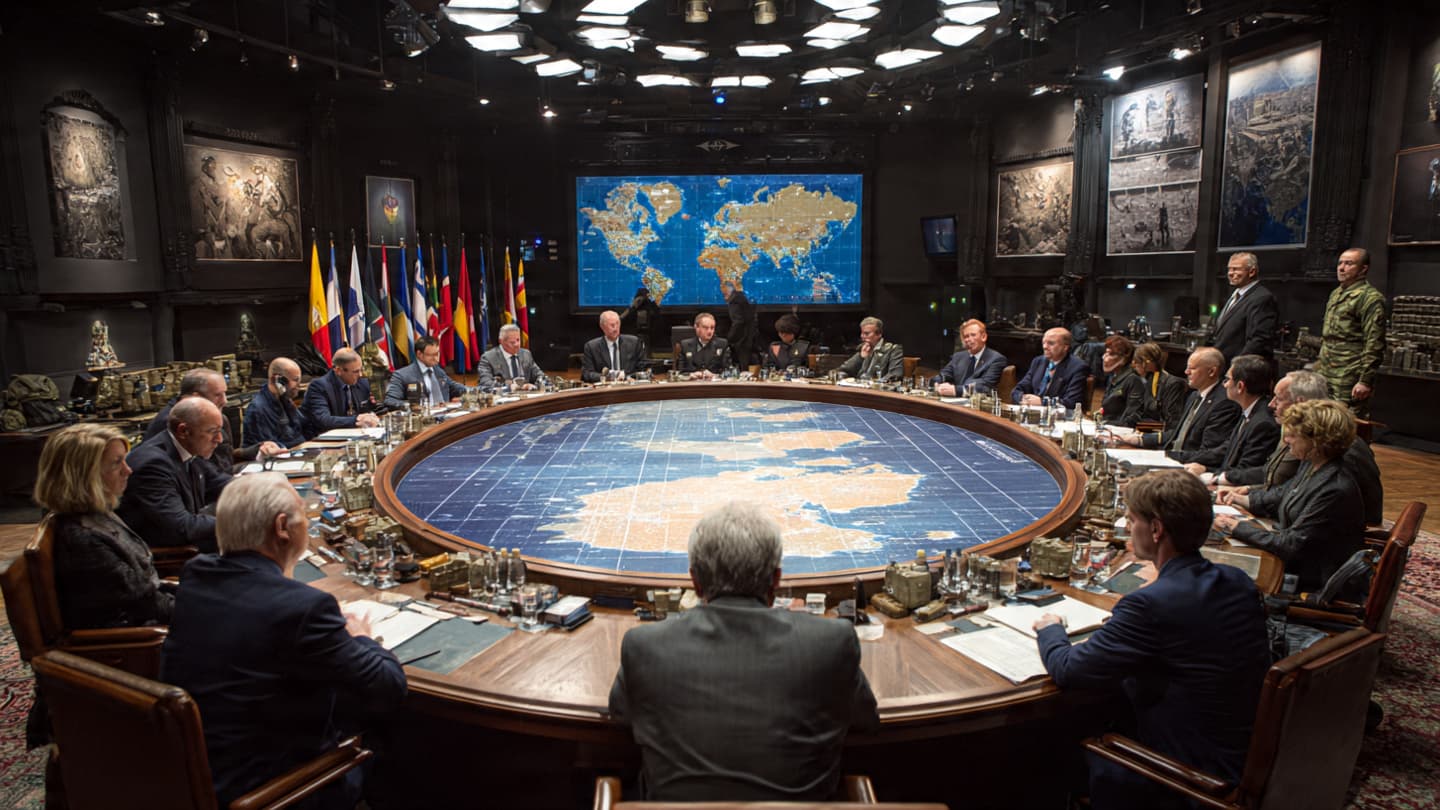
AI Image Disclaimer: Some accompanying visuals for this article were produced using AI-assisted editorial illustration tools.
Sources: Reuters, NATO statements, BBC, Politico Europe, Associated Press
Note: This article was published on BanxChange.com and is powered by the BXE Token on the XRP Ledger. For the latest articles and news, please visit BanxChange.com