

Key Highlights
- EU Support:The European Union has pledged an additional €18 million in economic support for Armenia.
- Trade Restrictions:Russia has imposed significant trade restrictions on Armenia, affecting key export sectors.
- Election Context:The EU's support comes in the wake of Armenia's parliamentary elections, which faced allegations of interference.
The European Union has announced an additional €18 million in economic support for Armenia, a move aimed at bolstering the South Caucasus nation amid increasing pressure from Russia. This announcement was made on Thursday, coinciding with the EU's decision to ease certain export rules for Armenian goods, a strategic effort to enhance Armenia's economic resilience.
This support from the EU comes at a critical time as Moscow has imposed extensive trade restrictions on Armenia, particularly in the lead-up to the parliamentary elections held in June. The incumbent Civil Contract party secured 49.8% of the vote, but the election was marred by accusations from Russia of Western interference and claims of electoral violations from Armenia's opposition parties.
The trade restrictions imposed by Russia have significantly impacted several key sectors of the Armenian economy, including fresh produce, flowers, fish, and alcoholic beverages. Despite Armenia's membership in a Russian-led economic bloc, the EU's involvement is becoming increasingly vital. In 2022, Russia accounted for approximately 35% of Armenia's foreign trade, while the EU's share was only 11%, according to government statistics.
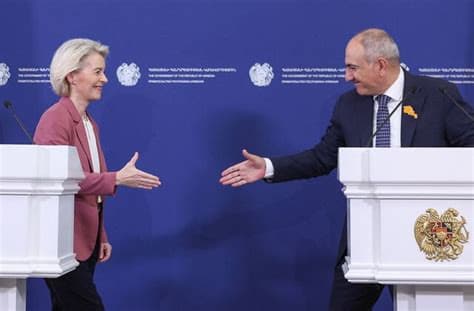
European Commission President Ursula von der Leyen visited Yerevan, where she met with Prime Minister Nikol Pashinyan. During her visit, von der Leyen emphasized the EU's commitment to supporting Armenia as geopolitical pressures mount. She announced that the EU would eliminate tariffs on nearly 80% of Armenian exports to the EU, thereby facilitating access to a market of approximately 450 million consumers.
The €18 million disbursement is part of a larger €52 million aid package that the EU had previously agreed upon for Armenia earlier in June. This comprehensive support package is designed to help Armenia navigate the economic challenges posed by Russian trade restrictions and to strengthen its ties with the EU.
As Armenia continues to face economic challenges, the EU's support is seen as a crucial lifeline. The easing of export rules and financial assistance are expected to provide much-needed relief to Armenian businesses affected by the recent trade restrictions. The EU's proactive stance reflects its broader strategy to enhance cooperation with Eastern Partnership countries, particularly in the context of rising tensions with Russia.
The situation remains fluid, and the long-term effects of these developments on Armenia's economy and its relationship with both Russia and the EU will be closely monitored in the coming months. The EU's commitment to Armenia may also signal a shift in regional dynamics as countries in the South Caucasus reassess their alliances and economic partnerships.
Published by Banx Network. This article is part of the Banx decentralized media programme, powered by the BXE token on the XRP Ledger.




