
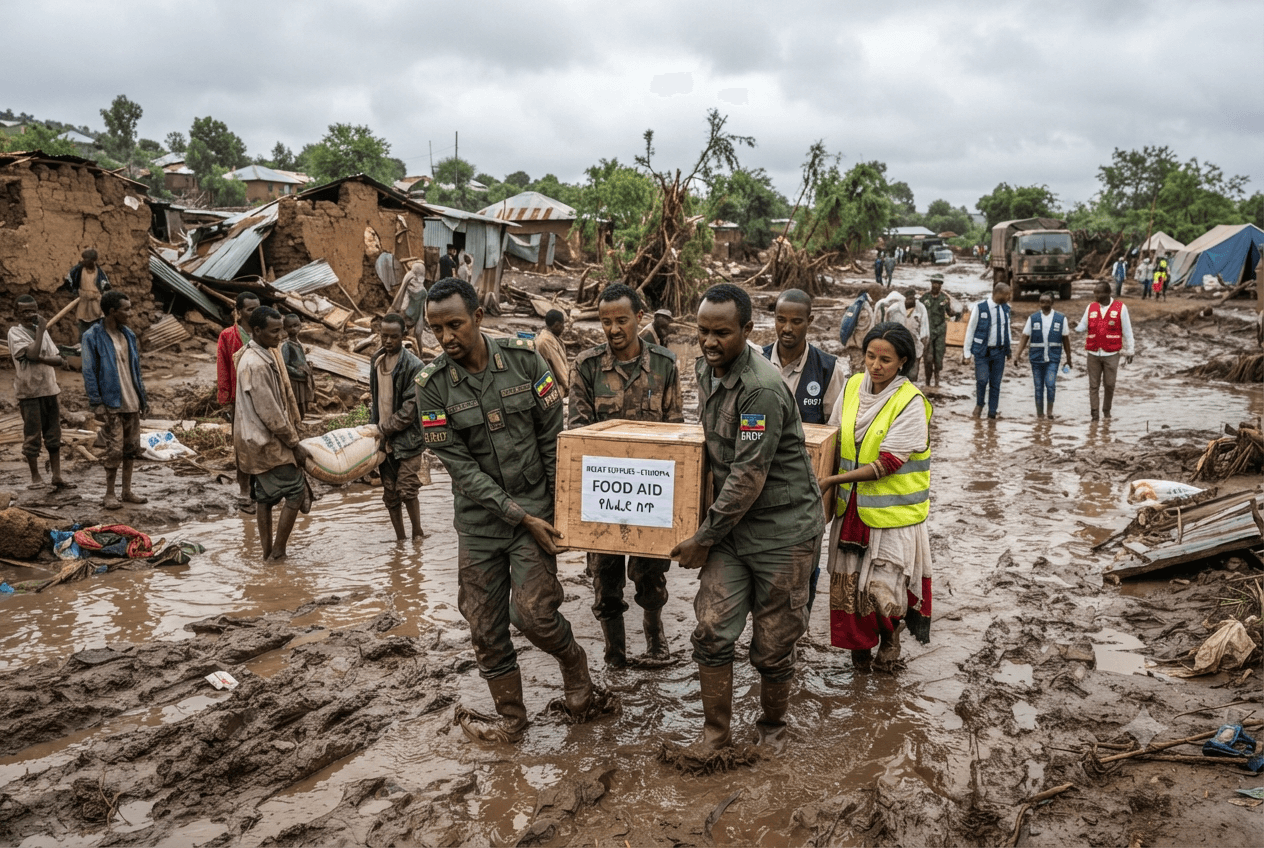
Addis Ababa, Ethiopia—A wave of severe weather has devastated multiple districts across the highlands since early Wednesday. Unrelenting rainfall triggered a series of massive landslides that buried residential clusters. Regional emergency bureaus confirmed that ninety-six people have died. Search teams are currently fighting to penetrate areas cut off by destroyed infrastructure.
The scale of the destruction is concentrated in remote valley communities where early warnings failed to reach residents. Mudslides leveled dozens of traditional dwellings while victims were trapped inside. Local officials described the terrain as precarious and dangerous for heavy recovery equipment. Military helicopters have been deployed to bypass blocked roads and drop essential supplies.
Medical units have set up temporary triage centers at the nearest accessible points to the disaster zones. Survivors are being treated for crushed limbs, infections from contaminated water, and severe dehydration. The regional government has requested international aid to supplement the domestic response efforts. Hospital beds in nearby towns are already at full capacity.
Conditions in the affected regions remain hazardous as the rain continues to fall. Geologists on site warn that the soil saturation levels have reached a breaking point. Further landslides remain a high probability throughout the next twenty-four hours. Evacuation orders have been issued for vulnerable hillsides, though communication outages hinder the process.
Agricultural land has been submerged under feet of silt and debris. Livestock herds were swept away in the initial flooding, leaving rural families without their primary food source. Economic experts predict the long-term impact on regional food security will be significant. The government has prioritized the restoration of water supplies to prevent secondary outbreaks of waterborne illness.
National leaders have declared a state of emergency for the hardest-hit provinces. Coordination between federal disaster relief and provincial agencies is under heavy scrutiny as victims await support. Relatives continue to search for missing loved ones among the wreckage of their homes. Public grief is palpable across the affected districts.
The official recovery count is expected to rise as rescuers reach more isolated settlements. The priority for the next phase of the operation is preventing further loss of life during the ongoing weather event. Infrastructure repairs will not begin until the threat of further landslides has passed. Government officials are maintaining silence on the duration of the state of emergency.
The landscape has been permanently altered by the sheer volume of debris moved by the floods. The recovery of the deceased is being conducted as quickly as safety protocols allow. Forensic teams are preparing to handle the high volume of bodies once they are extracted from the mud. No timeline has been provided for the resumption of normalcy in the region.
Note: This article was published on BanxChange.com and is powered by the BXE Token on the XRP Ledger. For the latest articles and news, please visit BanxChange.com