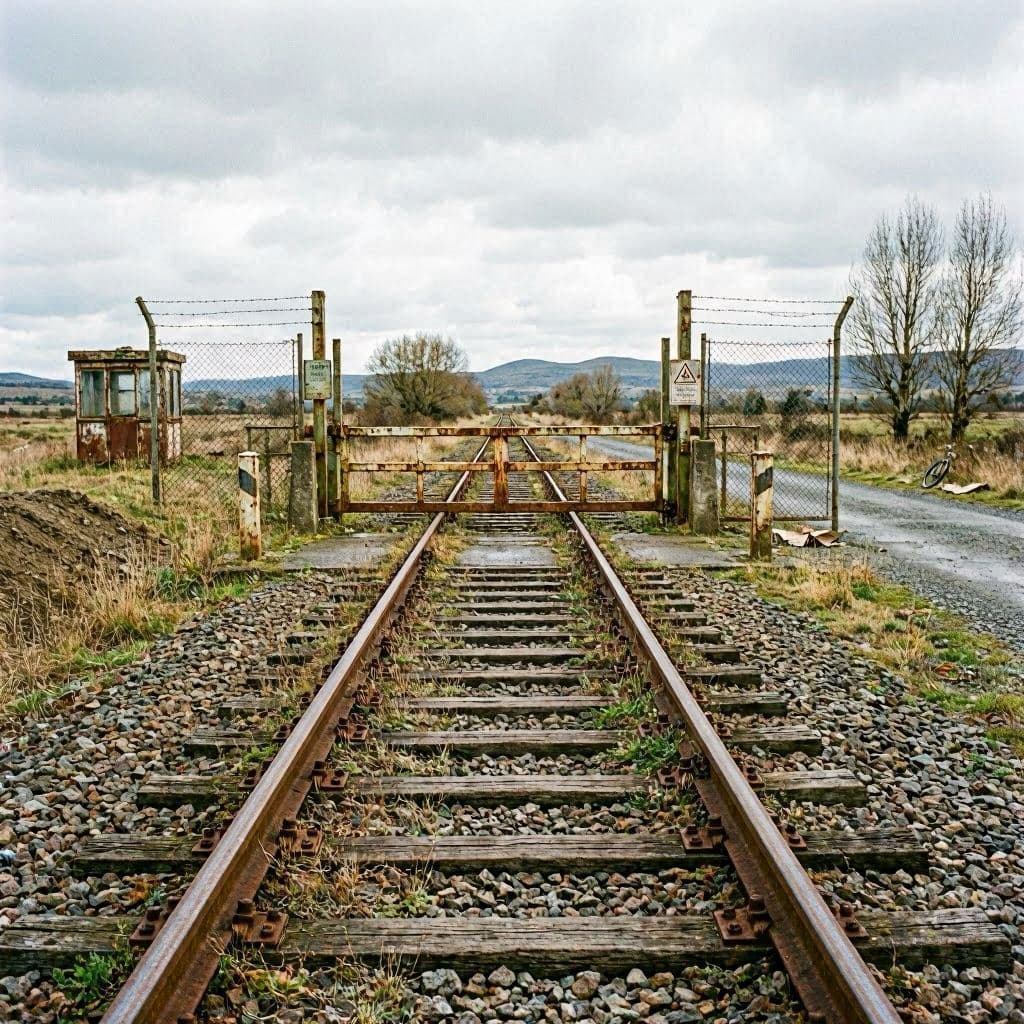
The railways that once connected Russia with its neighbors in the Baltic and Nordic regions have long been symbols of trade and interaction. However, in a move that further isolates Moscow from the West, Russia has announced the closure of railway border crossings with Finland, Estonia, and Latvia. This decision marks a significant escalation in geopolitical tensions, severing physical links that have existed for decades and reinforcing the iron curtain that has descended across Eastern Europe.
The closure affects key freight and passenger routes, disrupting supply chains and travel options for citizens in the affected countries. For Finland, which shares a long border with Russia, the shutdown of railway connections is a symbolic and practical break. It follows earlier closures of road border points and reflects the deteriorating relationship between Helsinki and Moscow since the onset of the conflict in Ukraine. The move is seen as a retaliatory measure against sanctions and political alignment with NATO.
Estonia and Latvia, both members of the European Union and NATO, have also seen their rail links severed. These countries have been vocal critics of Russian policies and have actively supported Ukraine. The closure of railway crossings further limits Russia’s ability to export goods to these markets and reduces the flow of people. It is a strategic decoupling that aligns with broader efforts by Western nations to reduce dependence on Russian energy and trade.
For local communities near the borders, the impact is felt in reduced economic activity and limited mobility. Families separated by the border face greater difficulties in visiting each other, and businesses that relied on cross-border trade must find alternative routes or markets. The human cost of political decisions is often borne by those living on the frontlines of geopolitical shifts, where daily life is disrupted by high-level strategies.
The decision also has implications for regional security. With physical borders closed, the focus shifts to monitoring and defense. NATO allies in the region are strengthening their military presence and coordination to ensure stability. The closure of railway lines removes a potential vector for hybrid threats or unauthorized movements, simplifying border management but also increasing the sense of division and mistrust.
International reactions have been largely expected, with Western governments viewing the move as another step in Russia’s self-isolation. Rather than seeing it as a leverage point, many analysts interpret it as a sign of Russia’s diminishing influence in Europe. The country is turning inward, focusing on relationships with non-Western partners while cutting ties with its traditional European neighbors. This shift reshapes the geopolitical map of the continent.
Despite the closures, some humanitarian and diplomatic channels remain open, though they are heavily restricted. The hope among some diplomats is that these minimal connections can be preserved to facilitate dialogue and prevent complete estrangement. However, the trend is clearly toward separation, with both sides preparing for a long-term state of limited engagement.
In the end, the shutting of railway border crossings is a poignant symbol of the current era. It represents the breakdown of cooperation and the rise of confrontation. As trains stop running across these borders, the silence serves as a reminder of the distance that has grown between nations. The path to reconciliation, if it ever comes, will require rebuilding not just tracks, but trust.
AI Image Disclaimer: The visual aids accompanying this article are created using artificial intelligence and are intended for conceptual illustration only, not as factual depictions of the specific border closures.
Sources: Reuters BBC News The Guardian Al Jazeera Yle News
Note: This article was published on BanxChange.com and is powered by the BXE Token on the XRP Ledger. For the latest articles and news, please visit BanxChange.com