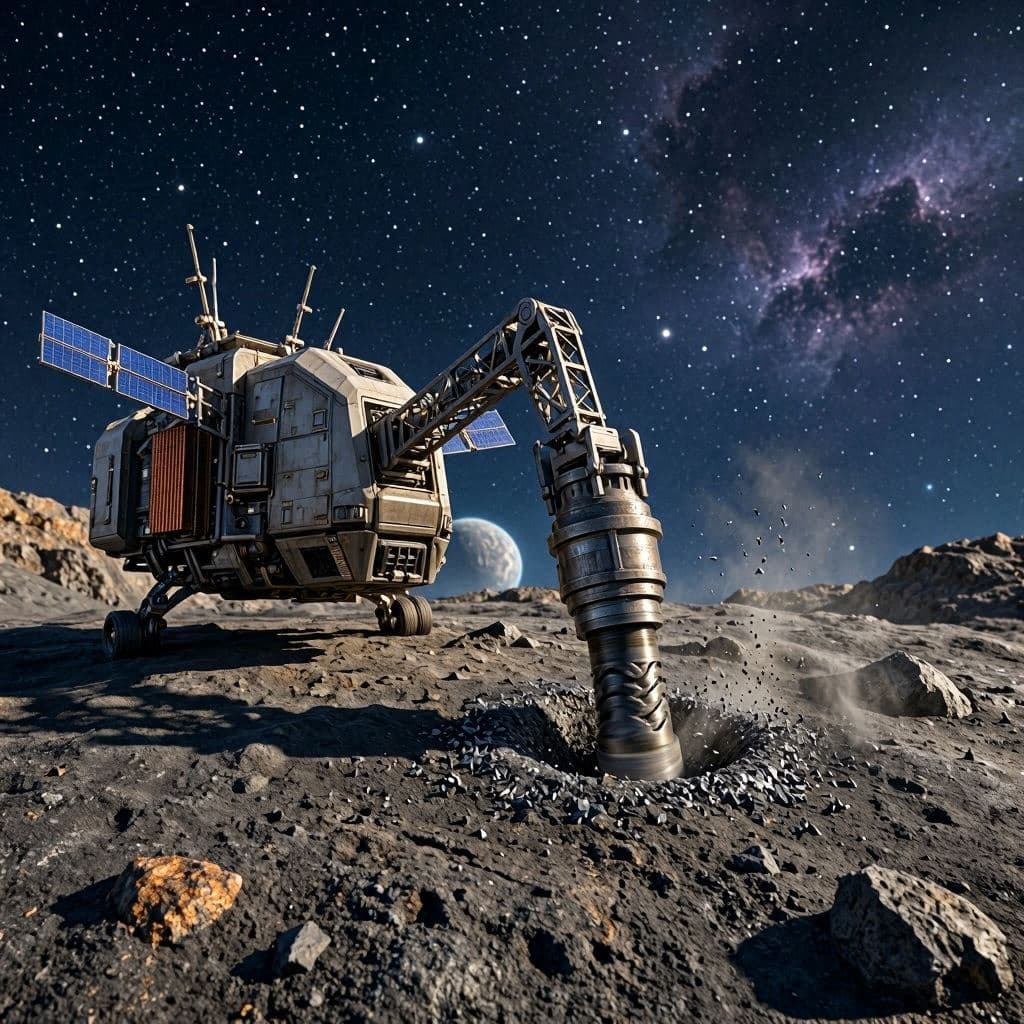
The threat of an asteroid impact is a scenario that has long captivated the imagination, often depicted in cinema as a dramatic last-minute rescue. In reality, planetary defense is a serious scientific endeavor requiring precise calculations and innovative strategies. Recently, Chinese rocket scientists have proposed a refined approach to deflecting a potentially hazardous asteroid: rather than detonating a nuclear device on the surface, they suggest drilling a hole and burying the bomb thirty meters deep. This method, supported by advanced simulations, could more than triple the deflection force, offering a more reliable shield for Earth.
The study, published in recent aerospace journals, addresses the limitations of surface detonations. When a nuclear explosive goes off on the surface of an asteroid, much of the energy is radiated away into space, resulting in inefficient momentum transfer. By burying the device, the energy is contained within the rock, creating a more powerful shockwave that ejects material in a focused direction. This recoil effect acts like a thruster, pushing the asteroid off its collision course with greater efficiency.
The proposed technique involves a two-step process: first, a spacecraft would land on the asteroid and drill a borehole to the required depth. Then, the nuclear device would be inserted and detonated. The simulations indicate that this subsurface explosion generates a significantly larger change in velocity compared to surface blasts. For large asteroids, where every meter per second of deflection counts, this improvement could be the difference between a near-miss and a catastrophic impact.
China’s growing capabilities in space exploration and rocketry provide the technical foundation for such ambitious plans. The country has been actively developing missions for asteroid sampling and defense, aligning with global efforts to protect the planet. This research contributes to the international dialogue on planetary protection, offering a viable option for dealing with threats that are too large for kinetic impactors alone.
However, the logistical challenges are immense. Drilling into a rotating, low-gravity body requires advanced robotics and precise navigation. The stability of the drill and the placement of the explosive must be exact to ensure the desired outcome. Additionally, the political and legal implications of using nuclear devices in space are complex, governed by treaties that restrict such activities but allow for exceptions in cases of existential threat.
The scientific community views this proposal as a significant step forward in modeling asteroid deflection. While no immediate threat requires such action, preparedness is key. Understanding the physics of subsurface explosions helps refine contingency plans and improves the reliability of defense strategies. It also highlights the importance of international cooperation in sharing data and resources for planetary safety.
Public perception of nuclear solutions in space varies, with some expressing concern about radiation and debris. Scientists emphasize that the goal is deflection, not destruction, and that the amount of radioactive material involved is minimal compared to the benefit of saving the planet. Transparent communication and rigorous safety standards are essential to gaining public trust in such high-stakes technologies.
The idea of burying a bomb in an asteroid may sound like science fiction, but it is grounded in rigorous scientific analysis. As humanity expands its presence in the solar system, the ability to protect our home planet becomes increasingly important. This research offers a powerful tool in the arsenal of planetary defense, reminding us that preparation and innovation are our best defenses against cosmic threats.
AI Image Disclaimer: Please note that the images in this piece are AI-generated illustrations created to depict the themes of planetary defense and space engineering.
Sources: South China Morning Post, SpaceNews, Ars Technica, Acta Astronautica
Published by Banx Network. This article is part of the Banx decentralized media programme, powered by the BXE token on the XRP Ledger.