
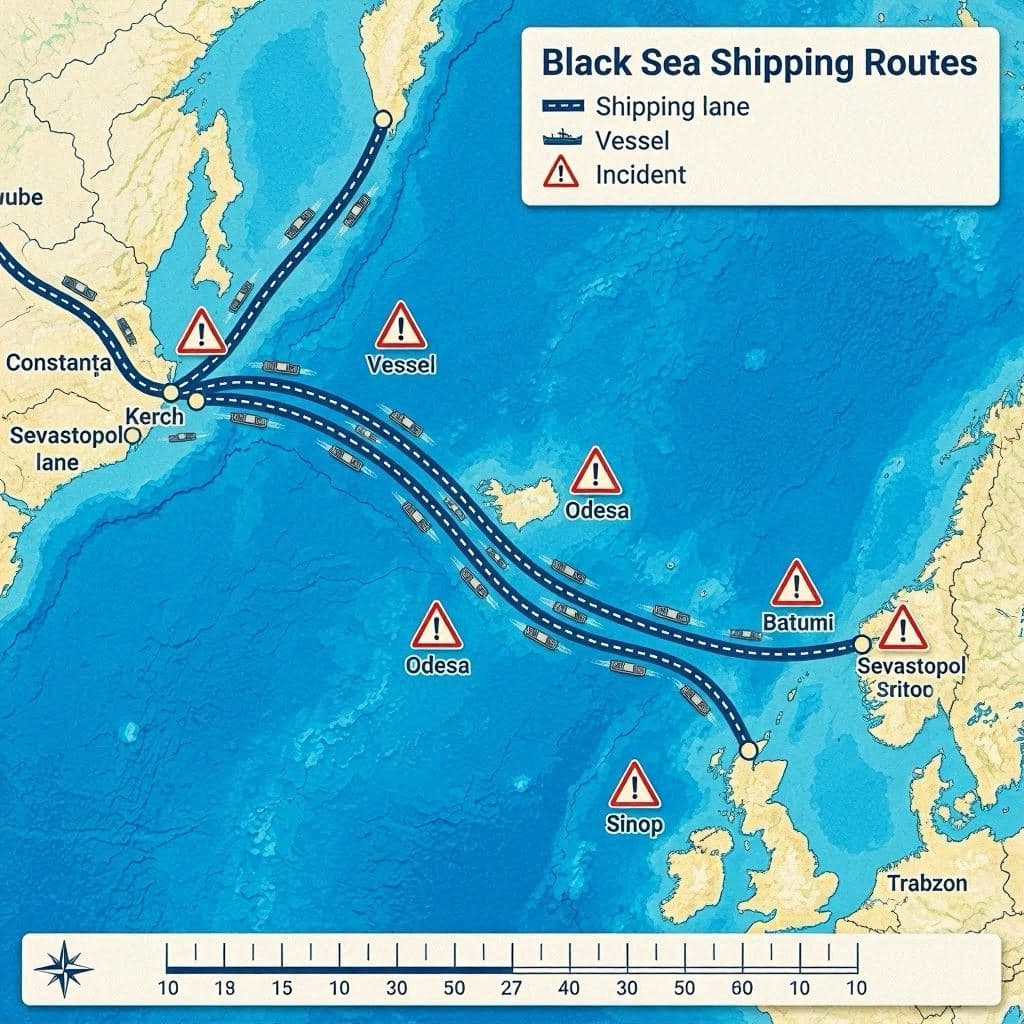
The Black Sea, a vital artery for global energy supplies, has become a theater of modern asymmetric warfare. In a span of just four days, drone strikes targeted multiple oil tankers carrying crude from Kazakhstan, disrupting operations at the Caspian Pipeline Consortium (CPC) terminal. These attacks highlight the vulnerability of critical infrastructure in conflict zones and the far-reaching economic consequences of regional instability. It is a moment that invites reflection on the interconnectedness of global markets and the fragility of energy security.
The CPC terminal in Novorossiysk, Russia, is a key export point for Kazakh oil, handling a significant portion of the country’s production. The drone strikes, attributed to Ukrainian forces targeting Russian energy infrastructure, caused fires and temporary suspensions of loading operations. While no major environmental disaster was reported, the incidents underscore the risks faced by commercial vessels operating in contested waters. For Kazakhstan, a landlocked nation dependent on this route, the disruptions pose a serious economic challenge.
Kazakhstan has condemned the attacks, emphasizing the civilian nature of the tankers and the importance of uninterrupted energy exports. The government relies on oil revenues to fund its budget and maintain social stability. Any prolonged disruption could lead to financial strain and affect its ability to invest in diversification efforts. Diplomatic efforts are underway to ensure the safety of its shipments and explore alternative routes, though options are limited.
The global oil market reacted with caution to the news, with prices fluctuating amid concerns about supply chain reliability. While the volume of affected oil is relatively small compared to global totals, the psychological impact of such attacks can amplify market volatility. Traders and investors monitor these developments closely, aware that even minor disruptions can signal broader risks in the region.
Russia, as the host of the terminal, has increased security measures but struggles to fully protect against low-cost, high-impact drone threats. The asymmetry of modern warfare allows non-state actors or smaller nations to inflict significant economic damage on larger powers. This dynamic complicates traditional defense strategies and requires innovative solutions to safeguard critical assets.
For the crews of the targeted tankers, the experience is terrifying. Working in a war zone, they face constant uncertainty and danger. International maritime organizations have called for greater protection for civilian vessels and stricter adherence to laws of war. Ensuring the safety of seafarers is a moral imperative that transcends political divisions.
The incident also raises questions about the future of energy transit through the Black Sea. As conflicts persist, insurance costs rise, and shipping companies may seek safer, albeit longer, routes. This could increase transportation costs and reduce the competitiveness of Caspian oil in global markets. Long-term planning must account for these geopolitical realities.
The drone strikes on Kazakh oil tankers in the Black Sea illustrate the vulnerabilities of global energy supply chains. While operations have resumed, the threat of further attacks remains. Ensuring the security of civilian infrastructure is essential for maintaining economic stability and international trust.
AI Image Disclaimer: Please note that the images accompanying this article are AI-generated and intended for illustrative purposes only.
Sources: Reuters Maritime Executive Oilprice.com Astana Times
Note: This article was published on BanxChange.com and is powered by the BXE Token on the XRP Ledger. For the latest articles and news, please visit BanxChange.com