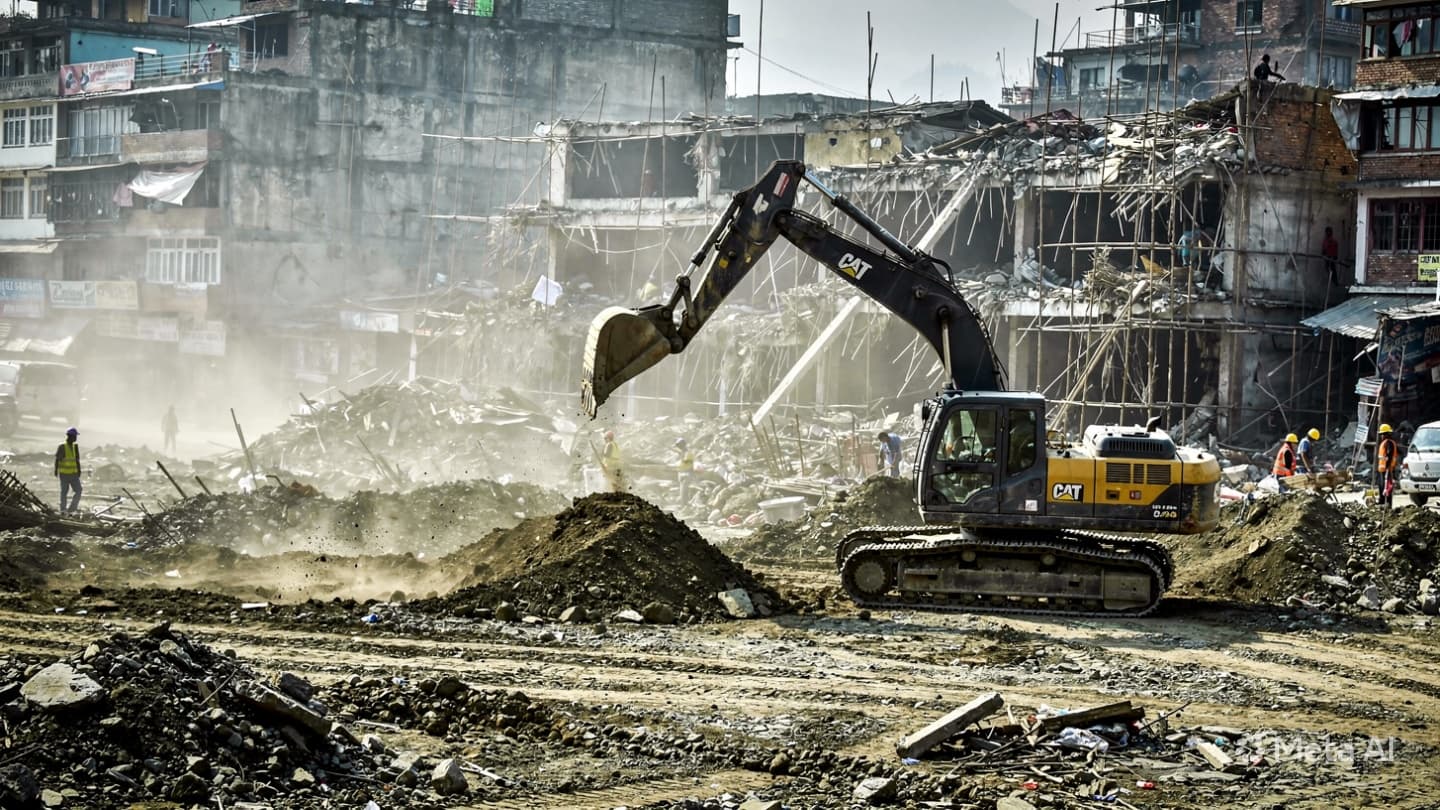
Pokhara, Nepal—Pokhara Metropolitan City commenced the formal clearing of the Prithvi Chowk site today, June 23, 2026, signaling the start of construction for a modern, well-equipped bus park. Bulldozers moved in to dismantle commercial shutters and stalls along the petrol pump line, including the Bastola Complex, marking the most significant progress on the project in nearly five decades. The land had been acquired for this purpose as early as 1973, yet the vision for a central transit hub had remained stuck in bureaucratic limbo.
The clearing operation was carried out under the supervision of city officials and local police to ensure a smooth transition. The area, once occupied by shops and private businesses, has been leveled in preparation for the next phase of development. For the residents of Pokhara, the sight of the demolition was a long-awaited sign that the city is finally addressing its severe transport congestion.
However, the clearance of commercial structures is only the beginning of a complex project. The metropolis still faces the significant challenge of managing three informal squatter settlements located within the project boundaries. A total of 572 households are currently residing on the encroached land, and their relocation remains the primary hurdle for the city’s leadership.
Mayor Dhanraj Acharya stated that the city is committed to a humanitarian approach, promising that no residents will be evicted without alternative housing arrangements. The metropolis is currently verifying the credentials of every family within the settlements. The mayor warned that those who provided false information during the documentation process would face legal consequences as the city seeks to ensure only eligible families receive support.
Representatives of the squatter communities have indicated a willingness to relocate, provided the city identifies a suitable site for them. Prem Gurung, chairman of the informal settlers' committee, stated that the community does not wish to stand in the way of the city’s development goals. The residents are now waiting for the city to present its resettlement plan, which has yet to be finalized.
A judicial committee, led by a former judge, has been formed by the metropolis to investigate the history of land distribution in this area. The committee is tasked with reviewing past decisions made by the Pokhara Valley Town Development Committee, which previously allocated some of the acquired land to private individuals. The report from this inquiry is still pending.
The project is viewed by many as a critical upgrade for Pokhara’s tourism and logistics sectors. With the city’s rapid growth, the lack of a formal, centralized bus terminal has long been a source of frustration for both transport operators and the public. City planners hope that once the land is fully cleared, construction can begin within the current fiscal year.
For now, the site remains an active zone of transition. The city has pledged to keep the lines of communication open with the affected families, though the timeline for the final relocation of the 572 households remains unclear. The success of the bus park will depend entirely on how the city navigates these social and legal complexities in the coming months.
Note: This article was published on BanxChange.com and is powered by the BXE Token on the XRP Ledger. For the latest articles and news, please visit BanxChange.com