History often whispers its secrets through the faded ink of manuscripts, waiting for modern ears to finally understand the message. For centuries, scholars and stargazers alike have pored over ancient records, puzzled by descriptions of celestial phenomena that seemed to defy the known order of the heavens. These accounts, written in languages long fallen out of daily use, spoke of a mysterious presence in the night sky, an anomaly that hovered between myth and observation. Today, with the benefit of advanced computational models and precise astronomical data, we are beginning to bridge the gap between poetic antiquity and scientific reality, revealing that our ancestors may have witnessed something far more ordinary than they imagined, yet no less fascinating.
Body: The recent identification of this historical celestial event marks a significant convergence of humanities and hard science. Astronomers, working in tandem with historians, have analyzed specific passages from ancient texts that described a bright, stationary object appearing during a particular season. By cross-referencing these textual clues with orbital mechanics and historical star charts, researchers have been able to pinpoint the exact nature of the phenomenon. It turns out that the "strange object" was likely a rare conjunction of planets or a particularly bright comet whose trajectory aligned perfectly with the observer’s horizon, creating an illusion of stillness that captivated the ancient mind.
This discovery underscores the importance of interdisciplinary collaboration in unraveling the mysteries of the past. Often, scientific data exists in a vacuum, detached from the cultural context in which observations were made. Conversely, historical texts are sometimes dismissed as mere mythology, lacking empirical weight. However, when these two fields engage in dialogue, a richer picture emerges. The ancient observers were not merely inventing stories; they were documenting real events through the lens of their available knowledge and symbolic language. Their descriptions, though imprecise by modern standards, contained enough factual anchors to allow contemporary scientists to reconstruct the event.
The process of identification involved meticulous attention to detail. Researchers had to account for changes in the Earth’s axial tilt, atmospheric conditions, and even the precession of the equinoxes over millennia. These factors subtly shift the appearance of the night sky, meaning that a constellation visible today in a certain position might have appeared differently to an observer in ancient Mesopotamia or Greece. By adjusting for these variables, astronomers could simulate the sky as it would have looked at the specific time mentioned in the texts, confirming the presence of the celestial body in question.
Moreover, this finding highlights the enduring human fascination with the cosmos. Across cultures and epochs, people have looked upward seeking meaning, guidance, or simply wonder. The anxiety or awe expressed in these ancient texts reflects a universal response to the unknown. Understanding what they saw does not diminish the emotional weight of their experience; rather, it connects us to them across time. We share the same sky, governed by the same physical laws, even if our tools for interpreting it have evolved dramatically.
The implications of this research extend beyond a single historical puzzle. It suggests that other unexplained references in ancient literature might also have astronomical bases. As digital archives become more accessible and analytical tools more powerful, we may find that many "myths" are actually recorded observations of supernovae, meteor showers, or planetary alignments. This perspective invites a reevaluation of historical texts, not as fabrications, but as early forms of scientific record-keeping, encoded in the narrative traditions of their time.
Ultimately, the resolution of this mystery serves as a reminder of the continuity of human inquiry. The desire to understand our place in the universe is a thread that runs from the clay tablets of Sumer to the silicon chips of modern telescopes. By deciphering these ancient descriptions, we honor the curiosity of those who came before us, acknowledging their contributions to our collective understanding of the cosmos. It is a gentle reconciliation of past and present, showing that truth often lies in the synthesis of different ways of knowing.
Closing: As we continue to explore the depths of space and the breadth of history, such discoveries remind us that science and storytelling are not opposing forces but complementary paths to truth. The ancient observers saw a wonder in the sky, and today, we see the same wonder, now named and understood. In both cases, the human spirit remains captivated by the light above, seeking connection in the vastness of the night.
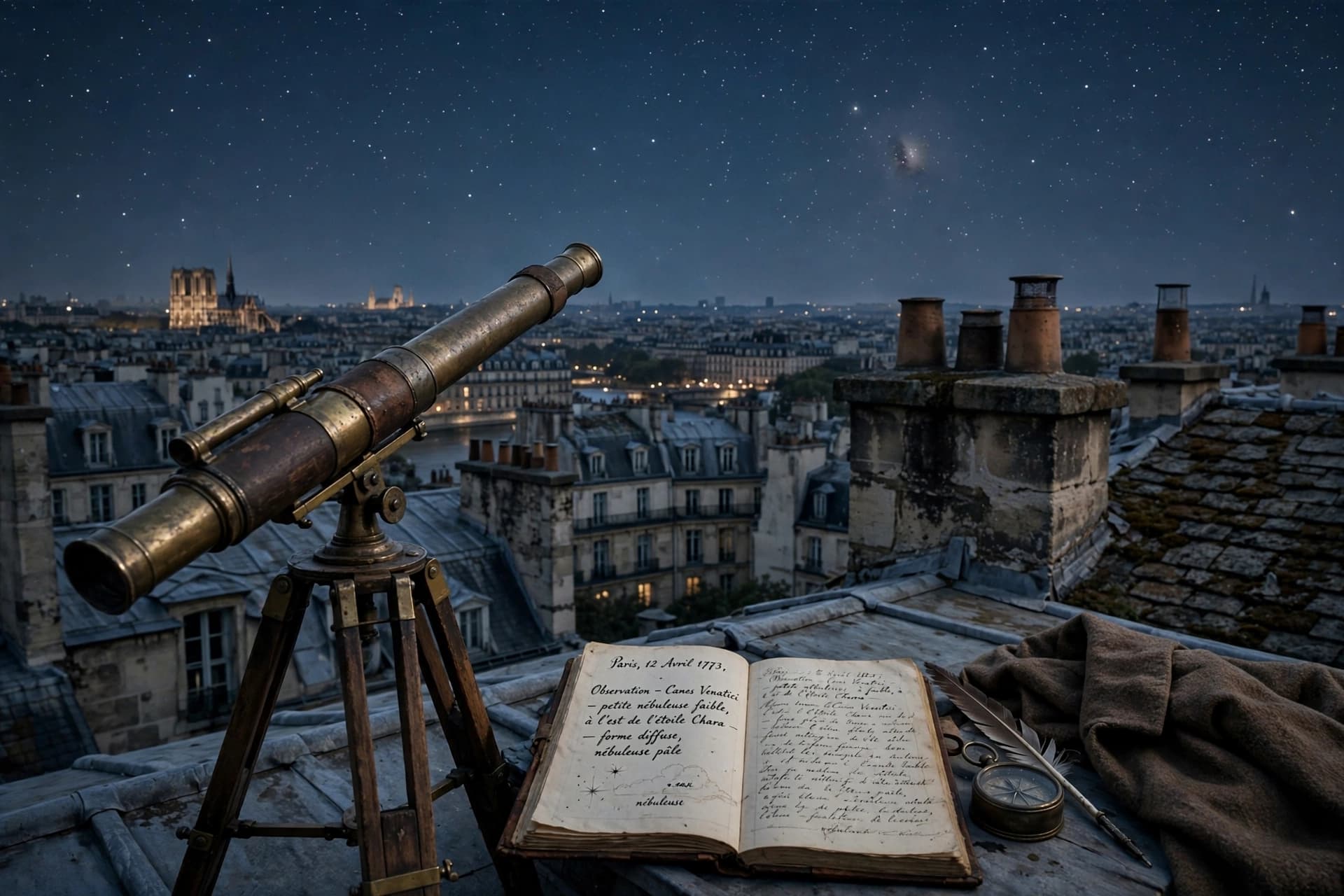
AI Image Disclaimer: Please note that any accompanying visuals for this piece are artificially generated representations intended to illustrate the narrative context.
Sources: Nature Scientific American The Guardian
Published by Banx Network. This article is part of the Banx decentralized media programme, powered by the BXE token on the XRP Ledger.