Opening: The life cycle of a star is a grand narrative of transformation, ending not with a whimper but with a dramatic reshaping of its celestial neighborhood. When a star like our sun exhausts its fuel, it swells into a red giant before shedding its outer layers, leaving behind a dense, glowing core known as a white dwarf. For years, astronomers believed that any planets lurking close to such a dying star would be vaporized or ejected into the void. However, the recent discovery of a planet surviving in orbit around a white dwarf challenges this assumption, offering a haunting yet fascinating glimpse into the distant future of our own solar system.
Body: This newly identified world, circling a white dwarf roughly 1,200 light-years away, serves as a cosmic time capsule. It suggests that planets can endure the violent phases of stellar evolution, provided they are at the right distance or migrate to a stable orbit after the star’s collapse. The discovery was made possible through precise observations of the white dwarf’s light, which dimmed slightly as the planet passed in front of it. This transit method allowed scientists to estimate the planet’s size and orbital period, revealing a world that has weathered the apocalypse of its parent star.
The implications for Earth are profound, though they lie billions of years in the future. As our sun ages, it will expand, likely engulfing Mercury and Venus, and possibly scorching Earth beyond recognition. Yet, if a planet can survive around a white dwarf, it raises the possibility that Earth, or what remains of it, might persist in some form. Alternatively, outer planets like Jupiter or Saturn could migrate inward, settling into new orbits around the sun’s remnant core. This scenario transforms our understanding of planetary resilience and the long-term architecture of solar systems.
Studying this system also provides insights into the composition of planets that survive such extreme conditions. The intense radiation and gravitational forces of a white dwarf can strip away atmospheres and alter surface materials. By analyzing the light passing through any remaining atmosphere or debris disk, astronomers can determine what elements endure. This data helps refine models of planetary formation and destruction, offering a clearer picture of how common such survivor worlds might be in the galaxy.
Moreover, the discovery highlights the dynamic nature of post-main-sequence systems. White dwarfs are not static endpoints; they continue to interact with their surroundings, potentially disrupting asteroid belts and cometary clouds. These interactions can send debris raining down onto the white dwarf, providing clues about the chemical makeup of the original planetary system. The surviving planet acts as a gravitational anchor, influencing these processes and maintaining a semblance of order in a chaotic environment.
The search for such planets is technically challenging, requiring high-precision instruments capable of detecting subtle changes in starlight. Future telescopes, including the James Webb Space Telescope, will play a crucial role in characterizing these worlds in greater detail. They may reveal whether these survivor planets retain any heat or geological activity, further expanding our understanding of habitability in extreme environments. While this specific planet is unlikely to support life as we know it, its existence broadens the scope of where we might look for biological signatures.
Ultimately, this finding invites a philosophical reflection on permanence and change. Just as civilizations rise and fall, so too do stars and their planetary companions. The survival of a planet around a dead star is a testament to the enduring nature of matter, even as energy dissipates. It reminds us that the universe is constantly recycling itself, creating new possibilities from the remnants of the old. Our solar system’s future, while distant, is part of this eternal cycle.
Closing: The discovery of a planet orbiting a white dwarf offers a rare preview of our solar system’s eventual fate. It demonstrates that planetary bodies can survive the death of their stars, prompting scientists to rethink the longevity and stability of celestial systems. As we look to the heavens, we see not just the present, but a reflection of what is yet to come.
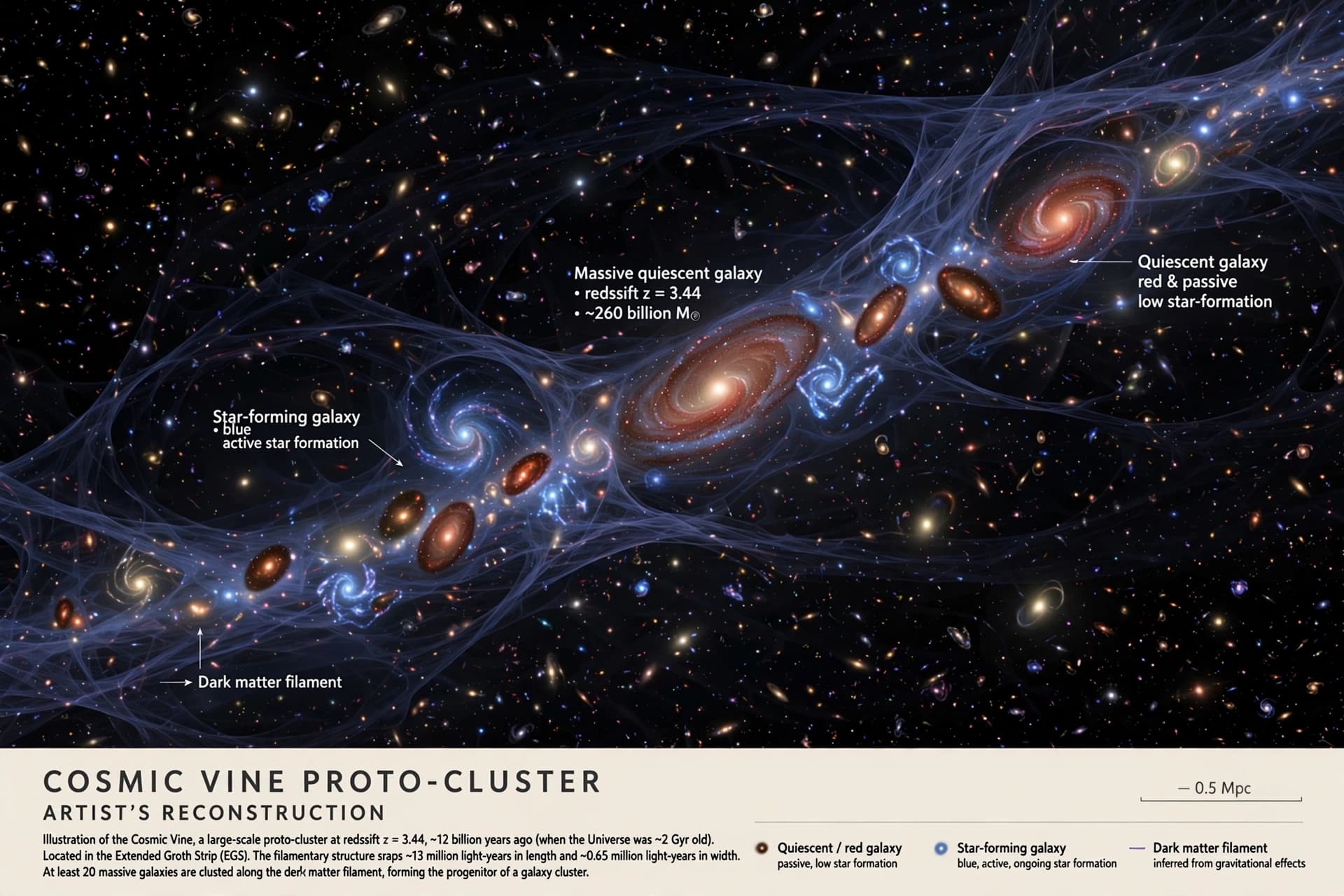
AI Image Disclaimer: Please note that the visual illustrations accompanying this article are AI-generated representations intended to contextualize the astronomical concepts discussed.
Sources: Nature NASA Goddard Space Flight Center University of Warwick Science Daily
Published by Banx Network. This article is part of the Banx decentralized media programme, powered by the BXE token on the XRP Ledger.