
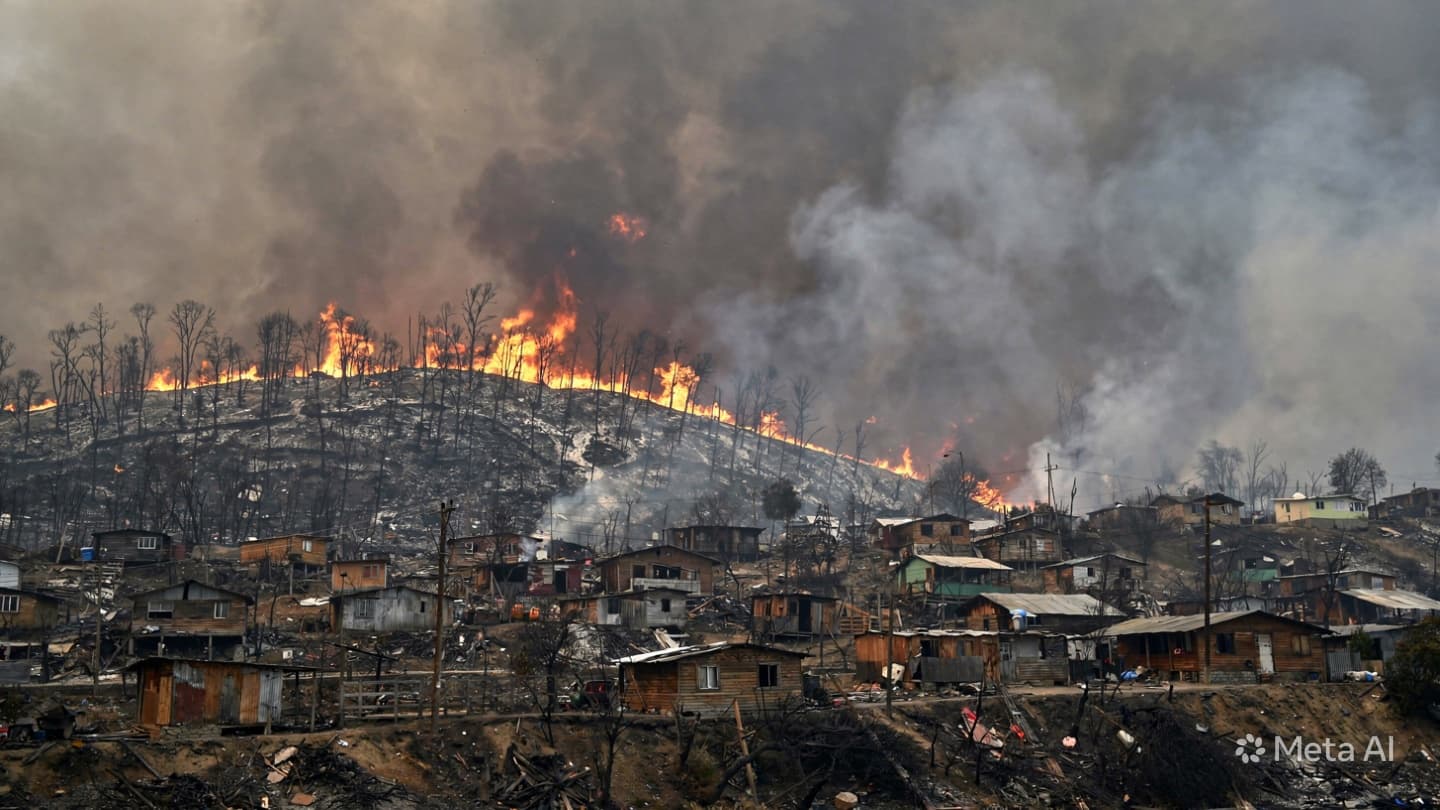
Santiago, Chile—An aggressive, fast-moving forest fire swept through a densely populated coastal settlement outside Valparaíso on June 11, 2026, killing at least seven residents and destroying an estimated eighty homes. The blaze, fueled by high maritime winds and a prolonged regional drought, skipped across defensive firebreaks shortly before noon, catching emergency dispatchers and locals off guard. Emergency crews struggled to reach the hardest-hit zones due to the steep terrain and narrow, smoke-choked access roads.
First responders discovered the victims inside their homes and vehicles along the town's northern perimeter, where the wall of fire made its initial landfall. Thick, black smoke blanketed the entire beachfront corridor, forcing maritime authorities to suspend all small boat operations in the bay due to zero visibility. Medical personnel established a temporary triage tent at a local school football field, treating dozens of survivors for severe smoke inhalation and thermal burns.
The regional director of the national disaster mitigation service stated that dry brush acted as a fuse, drawing the fire directly from the forested hillsides down to the shoreline. Evacuation alerts were broadcast via mobile networks, but the sheer speed of the front cut off the primary coastal highway within twenty minutes. Panicked families abandoned their vehicles on the tarmac, fleeing on foot toward the damp sand of the public beaches to escape the intense radiant heat.
Firefighting aircraft remained grounded for several hours during the peak of the crisis as turbulent thermal drafts over the cliffs made low-altitude water drops too dangerous. Ground crews consisting of regional volunteers and military personnel focused their limited resources on carving out dirt firebreaks around an oil storage depot located less than a mile from the active front. Municipal water trucks ran completely dry by mid-afternoon, forcing crews to pump raw saltwater directly from the ocean to wet down remaining structures.
Local neighborhood leaders expressed immediate frustration with the delayed arrival of heavy municipal machinery. They argued that the hillside vegetation had not been cleared despite repeated warnings sent to the provincial ministry over the preceding winter months. Electrical infrastructure across the entire district collapsed as wooden utility poles caught fire, cutting off power to water utility pumps and silencing local emergency sirens.
Police officials cordoned off all entry points to the seaside town, allowing only military vehicles and ambulances into the disaster zone. Reports from the scene indicated that multiple elderly residents remained unaccounted for in the historic upper neighborhood, where wooden houses stood built tightly together. Search and rescue teams paused their physical recovery operations as shifting winds threatened to blow the fire back across previously burned areas.
Meteorological sensors in the area recorded wind gusts exceeding forty-five miles per hour, pushing embers miles ahead of the main fire line. This spot-firing behavior created secondary blazes behind the defensive lines, trapping a military transport truck that was attempting to evacuate a stranded family. The soldiers and civilians managed to escape into a concrete ditch, but the vehicle was completely incinerated within minutes.
The government has declined to issue an official estimate regarding the total property damage or a final death toll. Representatives from the interior ministry stated that forensic teams will not enter the smoldering ruins of the residential quarters until hotspots are fully suppressed. Emergency shelters in the interior valleys are preparing for a long-term influx of displaced families as high temperatures are forecast to persist through the weekend.
Note: This article was published on BanxChange.com and is powered by the BXE Token on the XRP Ledger. For the latest articles and news, please visit BanxChange.com