
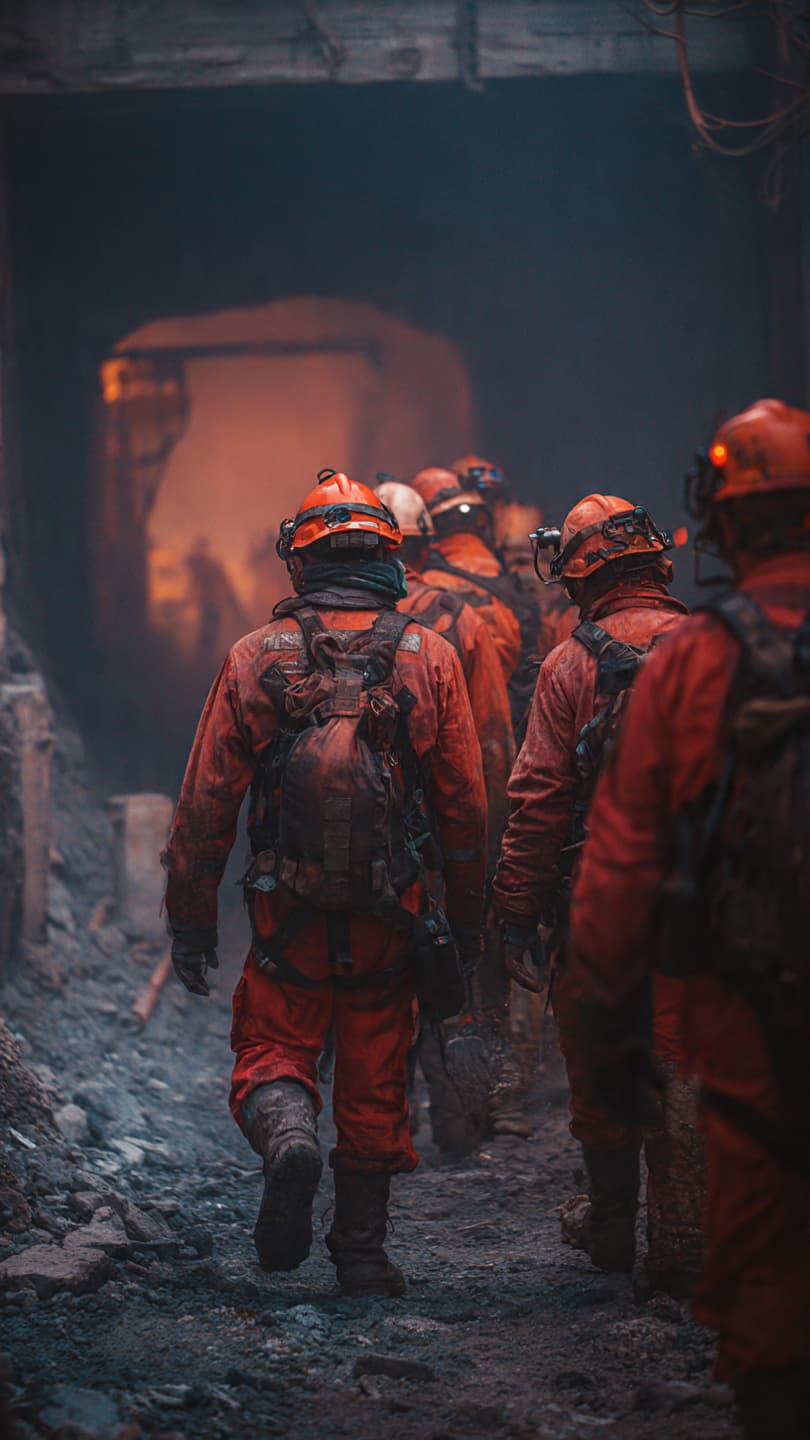
Deep underground, modern industry still depends on some of the oldest and most dangerous forms of labor on Earth.
Despite automation, advanced engineering, and decades of safety reforms, coal mining remains an environment where a single ignition, collapse, or gas buildup can turn catastrophic within seconds.
Now, authorities in are responding after a massive coal mine explosion reportedly killed at least 90 people, according to state media, marking one of the country’s deadliest mining disasters in years.
Emergency crews and rescue teams were deployed following the blast as officials attempted to:
Recover trapped workers Stabilize underground conditions Investigate the cause Assess structural damage Reports indicate the explosion occurred deep inside an operating coal mine, though authorities have not yet publicly released full technical details regarding the initial trigger.
Investigators are expected to examine factors including:
Gas accumulation Ventilation systems Equipment failures Safety compliance Underground ignition sources Why Coal Mining Remains So Dangerous Coal mines are among the most hazardous industrial environments in the world because of the conditions underground.
Major risks include:
Methane gas explosions Coal dust ignition Tunnel collapses Flooding Toxic air exposure Mechanical accidents Methane is especially dangerous because it can accumulate invisibly in confined underground spaces.
Even a small spark can trigger devastating chain reactions if ventilation systems fail or gas concentrations rise beyond safe limits.
Coal dust itself can also become explosive under certain conditions, amplifying blast pressure throughout tunnel networks.
China’s Long History With Mining Accidents remains one of the world’s largest coal producers and consumers.
Although mining safety improved significantly over recent decades, the industry still faces ongoing scrutiny because of:
Large workforce size Intense energy demand Aging infrastructure in some regions Pressure for production output China has experienced multiple major mining disasters historically, leading authorities to introduce stricter:
Safety inspections Ventilation requirements Closure policies for unsafe mines Emergency response standards However, accidents continue to occur, especially in complex underground operations.
Coal and the Global Energy Reality The disaster also highlights a broader contradiction shaping the modern global economy.
Many countries publicly discuss transitions toward:
Renewable energy Carbon reduction Cleaner infrastructure Yet coal continues powering enormous portions of global industry and electricity generation.
Coal remains deeply tied to:
Manufacturing Steel production Electrical grids Economic growth demands That dependence means millions of workers worldwide still labor in physically dangerous extraction environments largely hidden from public view.
The Human Cost Behind Energy Systems Mining disasters often reveal something modern societies rarely confront directly: the physical human risk embedded inside industrial systems people depend on every day.
Electricity, construction, transportation, and manufacturing frequently rely on labor occurring far underground and far from public visibility.
When disasters happen, attention briefly returns to the workers themselves — people operating in environments where safety depends on countless technical systems functioning correctly at all times.
A single failure can become fatal instantly.
A Wider Reflection Industrial disasters carry a particular kind of tragedy because they emerge from ordinary routine.
Workers descend underground expecting another shift. Machinery runs as it always does. Systems appear stable — until suddenly they are not.
The explosion in China is not only a story about one mine. It reflects the larger tension between economic demand and human vulnerability inside modern industrial society.
Even in an age of advanced technology, some industries still rely on dangerous labor performed in conditions most people will never personally witness.
And perhaps that is what makes mining disasters feel so haunting: they expose the hidden physical cost behind the infrastructure of modern life — the reality that beneath illuminated cities and expanding economies, people still descend every day into darkness to power the world above them.
AI Image Disclaimer Images are AI-generated illustrations and are intended for visual representation only, not real-world documentation.
Source Check State media in reported that a major coal mine explosion killed at least 90 people, making it one of the country’s deadliest mining disasters in recent years and prompting large-scale rescue and investigation efforts.
Note: This article was published on BanxChange.com and is powered by the BXE Token on the XRP Ledger. For the latest articles and news, please visit BanxChange.com