Modern economies often resemble rivers rather than roads, moving most effectively when unnecessary obstacles are cleared from their course. Governments, like careful stewards along the riverbank, periodically reshape administrative systems so that businesses and citizens can move through public services with greater clarity and fewer delays. Thailand's latest legislative reform reflects that continuing effort to modernize the relationship between the public sector and those it serves.
Thailand has enacted the Facilitation of Licensing and Public Services Consideration Act B.E. 2569 (2026), a new legal framework designed to streamline government licensing procedures and improve access to public services. The legislation replaces and significantly expands the country's 2015 licensing facilitation law, broadening its scope beyond permits to include a wider range of public administrative services.
One of the law's most notable features is the introduction of a "super license," officially referred to as a "main license." Under this approach, businesses obtaining a primary license may no longer need to apply separately for multiple related approvals issued by different government agencies. The reform is intended to reduce duplication while simplifying regulatory compliance for qualified applicants.
The legislation also promotes broader use of digital government services. Public agencies are expected to expand electronic filing systems, reduce repeated requests for the same documentation, and establish clearer processing timelines. These measures aim to improve efficiency while making administrative procedures more transparent for businesses and the public alike.
In addition, the framework introduces provisions that encourage agencies to process applications within specified timeframes. In certain situations outlined by the law, delayed responses may trigger predefined administrative outcomes, providing applicants with greater predictability while encouraging timely government decision-making. Implementation details will continue to be defined through supporting regulations.
The reform also expands the definition of government agencies covered by the legislation. Central ministries, regional authorities, local governments, state enterprises, and public organizations are expected to follow common service standards, helping create a more consistent administrative experience across different sectors.
Thai officials have presented the legislation as part of a broader effort to reduce administrative burdens, improve the country's ease of doing business, and strengthen public service delivery. Government agencies are now preparing operational manuals and digital systems ahead of the law's full implementation schedule.
As implementation moves forward, the effectiveness of the new framework will depend on coordination among public institutions and the practical adoption of its digital and procedural reforms. The legislation represents another step in Thailand's ongoing modernization of public administration, with the goal of making licensing and government services more accessible, efficient, and predictable for businesses and citizens.
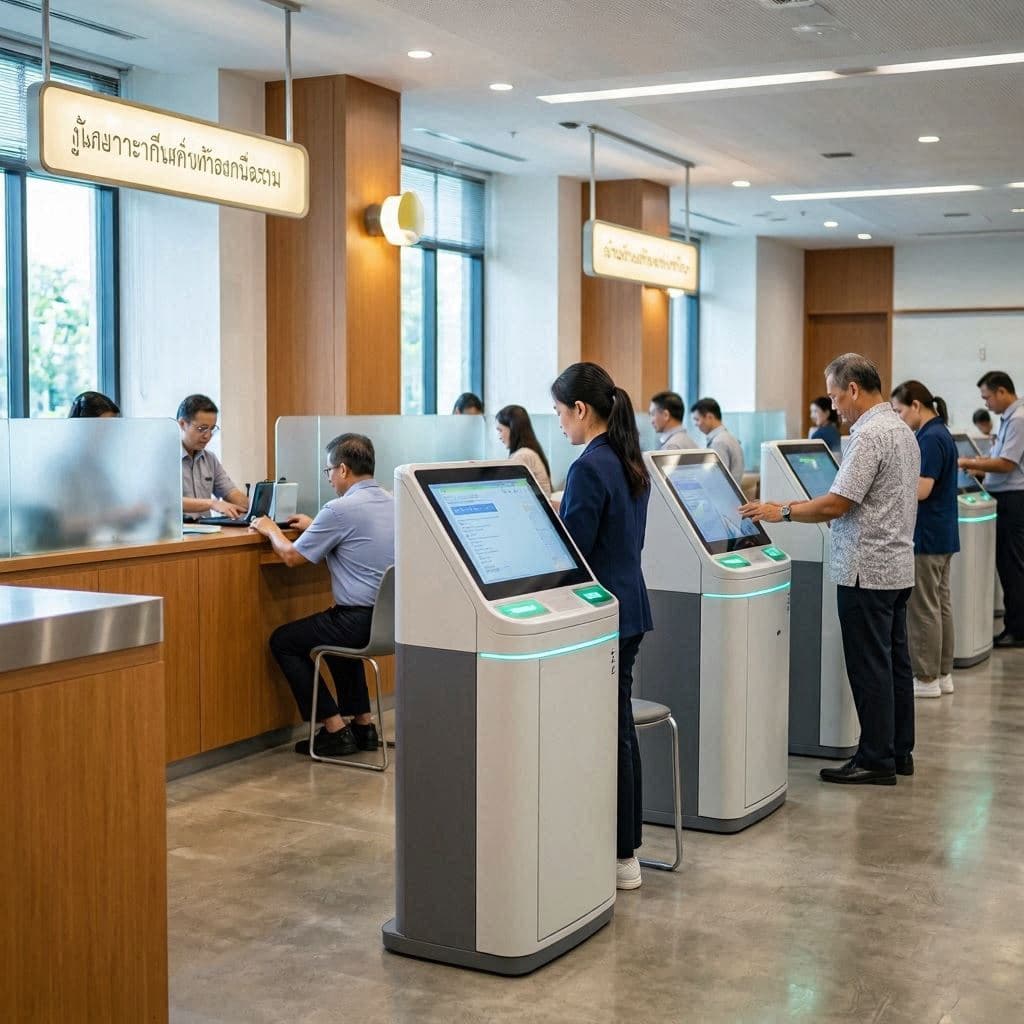
AI Image Disclaimer: This illustration is AI-generated for news visualization purposes and does not depict an actual government office or event.
Sources (verification completed):
Royal Thai Government Tilleke & Gibbins Nation Thailand
Published by Banx Network. This article is part of the Banx decentralized media programme, powered by the BXE token on the XRP Ledger.