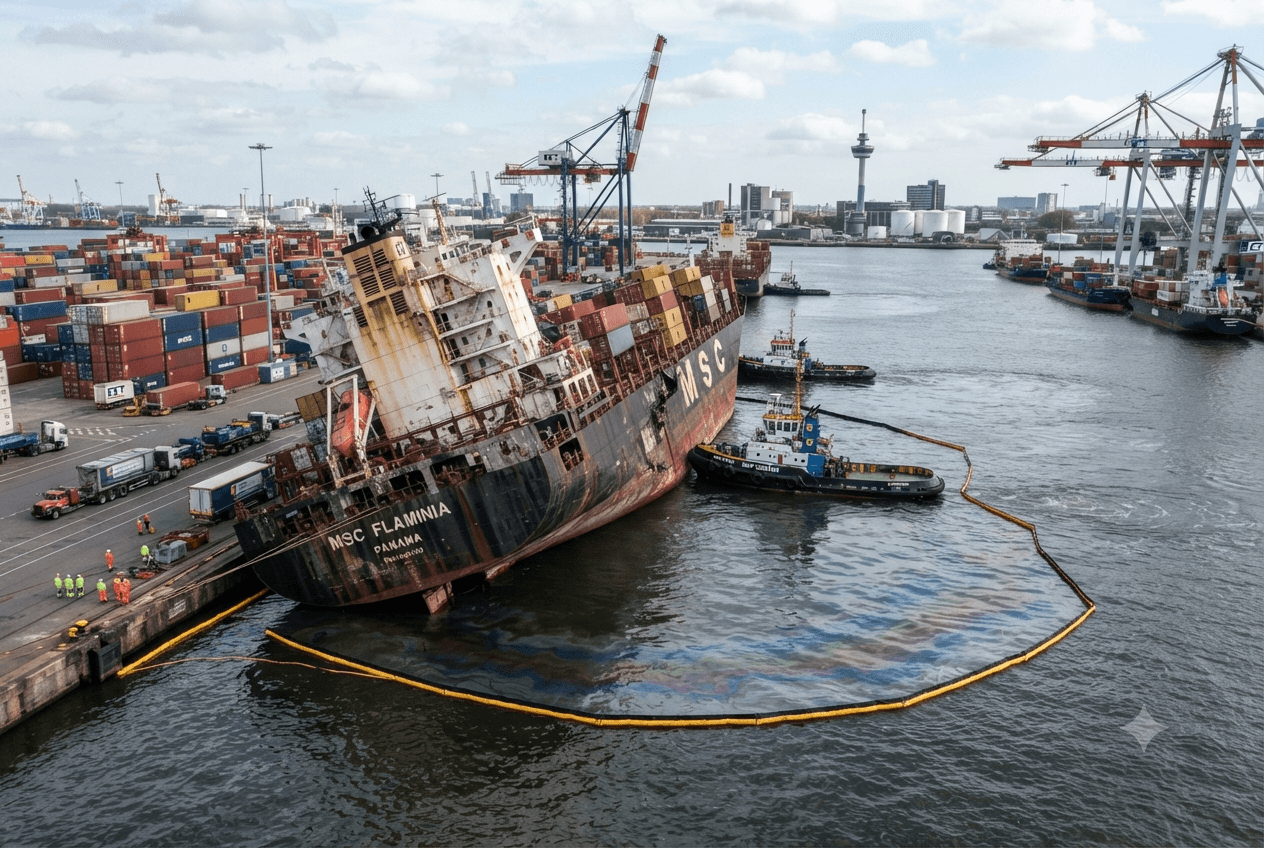
Rotterdam, Netherlands—Two container ships collided in the main harbor channel early Tuesday morning, sending twisted steel into the water and halting all vessel traffic through Europe's busiest port. The crash occurred just past dawn when a Liberia-flagged cargo carrier suffered a steering failure and struck a stationary docking vessel. No injuries were reported among the crew members, but the impact ruptured a fuel bunker on the moving ship. Heavy fuel oil began leaking into the harbor basin within minutes of the impact. Port authorities scrambled emergency response vessels to deploy containment booms around the stricken hulls.
Harbor master Jan van de Velde confirmed that all incoming and outgoing shipping movements were suspended indefinitely. Commercial vessels dropped anchor miles offshore, stacking up in the North Sea as the queue grew by the hour. Tugs surrounded the wreckage to stabilize the listing carriers before salvage divers went down to inspect the damage. Initial reports from the scene indicated that the hull breach was severe enough to keep the channel blocked for at least forty-eight hours. Crane operators and salvage crews worked against an incoming tide to secure loose containers hanging precariously over the water.
Local environmental agencies monitored the spill as cleanup teams sprayed dispersants along the shoreline to protect nearby wildlife reserves. Port officials faced immediate pressure from logistics associations as the shutdown threatened to strand thousands of shipping containers. Shippers diverted vessels toward smaller regional ports, but those facilities lacked the crane capacity to handle ultra-large container ships. Industry analysts predicted that the disruption would ripple through European manufacturing supply chains within days.
Insurance investigators arrived at the harbor office by midday to begin subpoenaing voyage data recorders and radio logs. Port police detained the pilot and master of the inbound vessel for mandatory drug and alcohol screenings. Harbor authorities stated that navigation clearance would not be granted until the wreckage was completely towed out of the turning basin. Salvage engineers spent the afternoon calculating weight distributions to prevent the damaged ships from capsizing during the extraction process. Heavy-lift floating cranes moved into position as evening approached, preparing for a delicate overnight recovery operation.
Note: This article was published on BanxChange.com and is powered by the BXE Token on the XRP Ledger. For the latest articles and news, please visit BanxChange.com