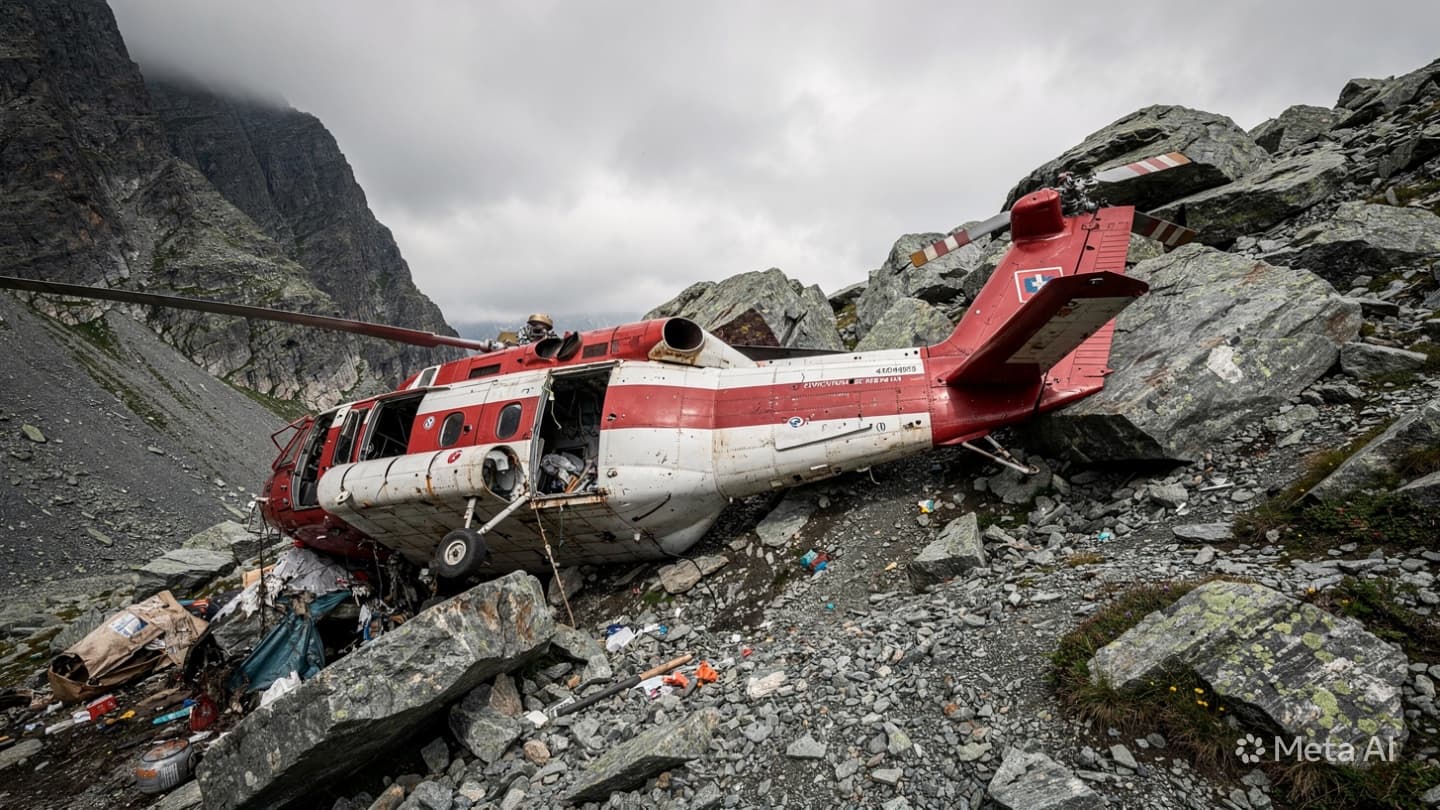
Ottawa, Canada—A specialized air ambulance helicopter operating a critical patient transfer route crashed into a rugged, high-altitude mountain range Thursday afternoon, leaving four dead. The aircraft, a twin-engine medical transport model, vanished from regional tracking screens at 1:50 p.m. while navigating an isolated valley corridor. Search and rescue tracking platforms picked up a sudden emergency locator beacon shorty after the radar contact dissolved, prompting an immediate mobilization of military aviation assets.
Royal Canadian Air Force search-and-rescue teams, backed by regional mountain rescue specialists, deployed via high-performance utility helicopters to locate the crash site. The extraction crews faced extreme environmental friction, including high-velocity alpine wind gusts and sheer granite cliff faces that made landing impossible. Rescue technicians were forced to winched down onto a steep boulder field several hundred meters below the main impact point to reach the site on foot.
Upon breaching the heavily forested debris zone, emergency personnel discovered that the aircraft had suffered catastrophic structural fragmentation upon striking the rocky slope. A localized fire fueled by ruptured aviation gas had swept through the main cabin assembly, scorching the surrounding alpine brush. On-site medical teams confirmed that the pilot, two flight paramedics, and the patient being transported had all sustained fatal impact trauma.
A representative from the federal transportation safety board addressed the public from a logistics command post established at a regional airfield. He stated that the flight was returning from an isolated rural community and was attempting to navigate a narrow pass to reach a trauma center. Preliminary data indicates the weather inside the gap was deteriorating rapidly, with dense mountain fog reducing horizontal visibility to near zero at the time of the impact.
Local wilderness guides assisted alpine rangers in establishing a secure containment line around the wreckage using high-tensile safety ropes to prevent pieces from sliding down the scree slope. The loose, gravelly terrain presented an immediate danger to the recovery teams, who had to carefully balance heavy mechanical extraction gear on shifting ground. Supervisors halted all lower-slope movements for an hour when a series of minor rockfalls rattled the valley walls.
Anxious colleagues and hospital administrators gathered at the destination medical center's heliport facility, waiting for official word from the air charter registry. Hospital staff noted that rural air medical services have faced mounting operational pressure over the past year due to a growing shortage of experienced winter-certified pilots capable of handling sudden, low-visibility weather shifts across the northern interior.
The Transportation Safety Board of Canada launched an immediate safety investigation into the helicopter's historical maintenance records. Preliminary documentation shows the airframe had received a comprehensive rotor assembly inspection last month, though ground logs indicated a minor glitch in the automated altitude-warning system had been repaired by regional mechanics just five days prior to the flight.
National park rangers closed off three primary backcountry hiking trails running beneath the mountain peak to ensure civilian safety during the active aerial recovery effort. The trail closures blocked access for dozens of wilderness excursion groups, causing minor booking backlogs across local eco-tourism operations. Investigators are deploying specialized drone units to capture high-definition, three-dimensional maps of the impact path along the mountain wall.
Recovery crews are currently trying to clear twisted structural framework using portable hydraulic cutters to access the flight data recorders located in the rear bulkhead. Looming evening cloud banks and freezing temperatures are introducing additional hazards for the recovery teams, who plan to stabilize the heavy tail section with steel cables before nightfall sets in.
Published by Banx Network. This article is part of the Banx decentralized media programme, powered by the BXE token on the XRP Ledger.