
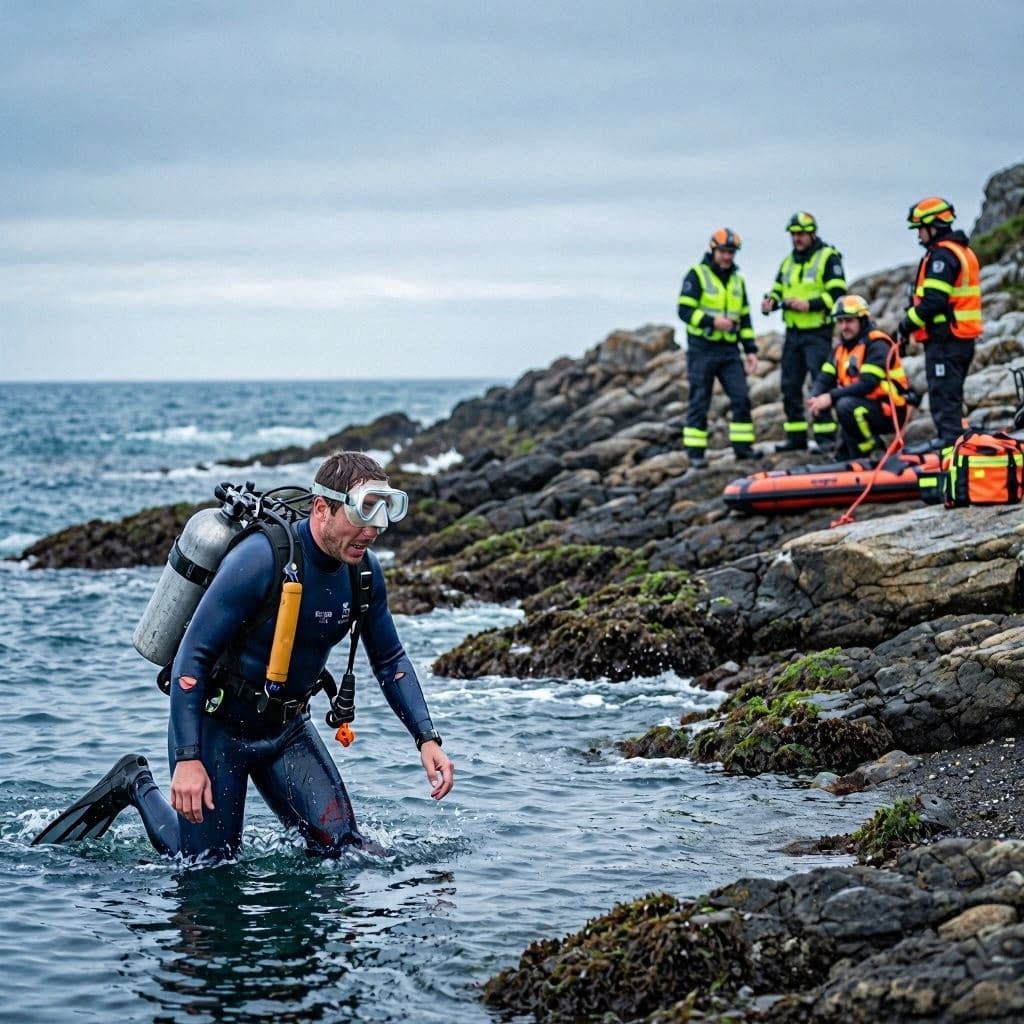
The sea often invites people with a promise of calm horizons and quiet adventure. Yet beneath its surface lies a world that follows its own rhythms, where encounters between humans and wildlife remain rare but can unfold without warning. Such a moment occurred off Tasmania's southern coast, where preparation, composure, and quick assistance helped prevent a more serious outcome.
A 31-year-old recreational diver survived a shark attack near Coal Point in Adventure Bay on Bruny Island, Tasmania, after managing to swim back to shore despite suffering a deep bite wound to his lower forearm. The incident occurred while he was diving with two companions approximately eight meters below the surface and about 50 meters offshore. Authorities believe the shark involved was a two-meter broadnose sevengill shark.
According to Tasmania Police, the diver had been spearfishing when the attack occurred. A witness familiar with the area said the diver was retrieving a speared fish when the shark bit him. The presence of an injured fish is considered a possible factor, as broadnose sevengill sharks are known to investigate feeding opportunities when fish blood is present.
Despite what witnesses described as a "quite deep" wound, the diver remained conscious and was able to make his way back to shore with assistance from fellow divers. Emergency services were contacted shortly after 9:10 a.m., and the injured man was flown by the Westpac Rescue Helicopter to Royal Hobart Hospital, where he was reported to be in stable condition with non-life-threatening injuries.
Police patrolled the surrounding waters following the incident but reported no additional shark sightings. Officials characterized the attack as an isolated event while reminding swimmers, surfers, and divers to remain alert, follow local safety advice, and report shark sightings if they pose an immediate risk to public safety.
Marine experts note that broadnose sevengill sharks are commonly found in Tasmania's coastal waters and generally avoid people. Although they are capable predators, attacks on humans remain uncommon. Researchers say interactions are more likely when sharks are attracted to struggling fish or other food sources in the water.
Tasmania has experienced relatively few shark attacks compared with other Australian states, making the incident noteworthy for local authorities and coastal communities. Emergency responders and fellow divers were credited with providing swift assistance that helped ensure the diver received prompt medical care.
As investigations conclude and the diver continues his recovery, the event serves as a reminder that Australia's coastal waters remain shared habitats between people and marine wildlife. Respecting local conditions, following safety guidance, and remaining aware of one's surroundings continue to be the most practical measures for those enjoying the ocean.
AI Image Disclaimer: The illustrations accompanying this article are AI-generated visual representations based on verified news reports and are not photographs from the incident.
Sources (verified):
Tasmania Police ABC News Australia The Australian People 7NEWS Australia
Note: This article was published on BanxChange.com and is powered by the BXE Token on the XRP Ledger. For the latest articles and news, please visit BanxChange.com