
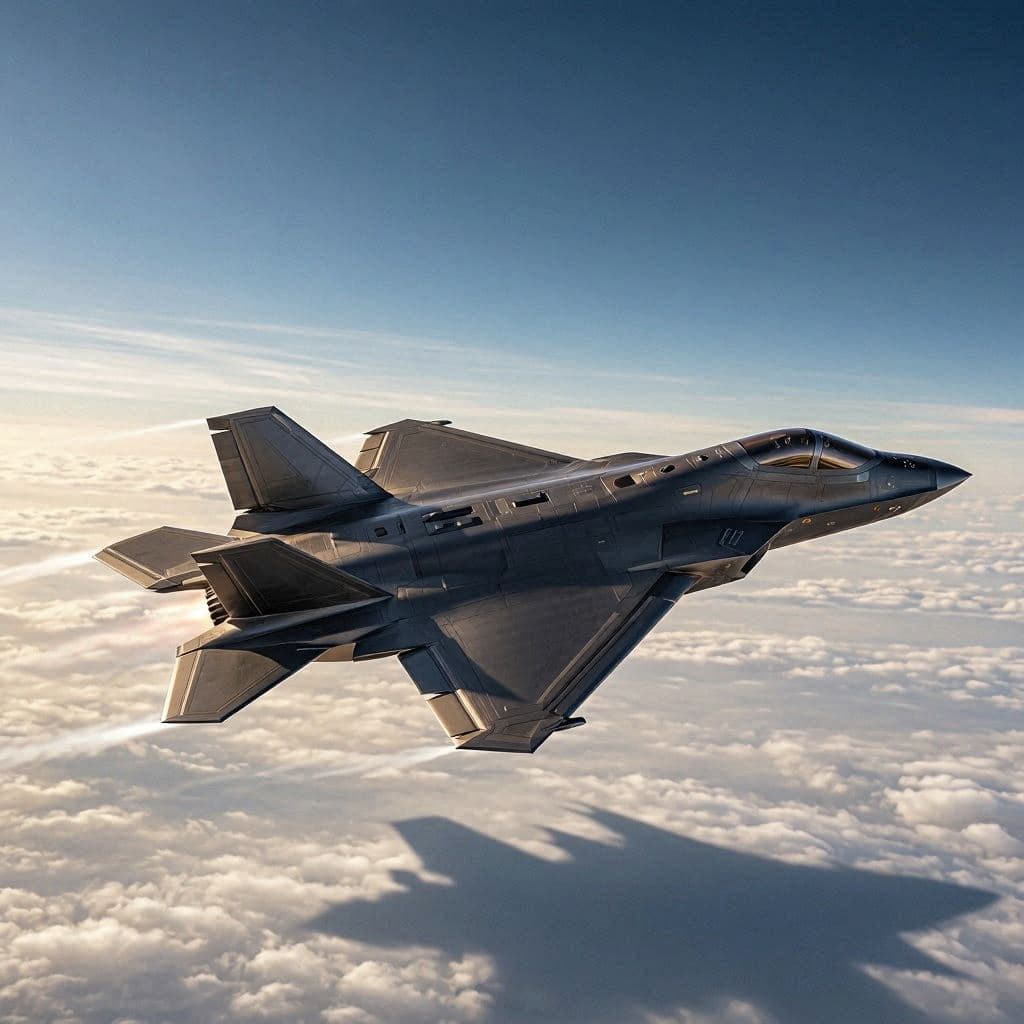
Opening: In the realm of defense, innovation is not just a luxury but a necessity. As threats evolve and technologies advance, nations must look to the horizon to ensure their security. Recently, Britain, Italy, and Japan took a monumental step forward by awarding a £4.6 billion contract for the development of next-generation fighter jets. This collaboration, known as the Global Combat Air Programme (GCAP), represents more than just a procurement decision; it is a fusion of engineering excellence and strategic alliance, aiming to define the future of aerial warfare.
Body: The contract marks a significant milestone in the GCAP initiative, which seeks to replace the current generation of fighter aircraft with a sixth-generation platform. This new jet will feature advanced stealth capabilities, artificial intelligence integration, and superior sensor fusion. By pooling resources and expertise, the three nations aim to create a aircraft that is not only technologically superior but also cost-effective compared to developing independent systems.
Britain’s BAE Systems, Italy’s Leonardo, and Japan’s Mitsubishi Heavy Industries are the primary industrial partners in this venture. Each brings unique strengths to the table, from aerodynamics and avionics to software and manufacturing precision. The collaboration allows for the sharing of risks and rewards, fostering a deeper industrial integration that extends beyond mere assembly. It is a testament to the power of international cooperation in tackling complex technological challenges.
The £4.6 billion investment is directed toward the initial design and development phase, covering everything from concept validation to prototype testing. This funding ensures that the project maintains momentum, moving from theoretical models to tangible hardware. The timeline is ambitious, with the goal of having the first aircraft operational by the early 2030s. This urgency reflects the rapidly changing nature of global security threats.
Strategically, the partnership strengthens ties between Europe and Asia. Japan’s involvement brings a new dimension to European defense collaborations, aligning with broader efforts to enhance security in the Indo-Pacific region. For Britain and Italy, it reinforces their commitment to maintaining a credible air power capability in an era of great power competition. The jet will serve as a symbol of this unified front, projecting strength and technological prowess.
The technology embedded in the new fighter will likely influence civilian applications as well. Advances in materials science, computing, and autonomous systems often spill over into other sectors, driving innovation in aerospace, automotive, and telecommunications. Thus, the investment in defense technology also serves as an investment in broader industrial competitiveness, creating jobs and fostering skills development.
Challenges remain, including the integration of different national standards and the management of intellectual property rights. However, the partners have established robust governance structures to address these issues. Regular dialogue and joint decision-making processes are designed to ensure that the project stays on track and meets the needs of all three nations. Trust and transparency are the foundations of this complex endeavor.
As the contract is executed, the eyes of the defense world will be on the progress of GCAP. Success could set a new standard for multinational military projects, demonstrating that collaboration can yield superior results. The new fighter jet will not just be a machine of war but a monument to international partnership and shared vision.
Closing: The awarding of the £4.6 billion contract for the GCAP fighter jet marks a major advancement for Britain, Italy, and Japan. By combining their technological strengths, the nations aim to produce a sixth-generation aircraft that ensures future air superiority. This partnership highlights the strategic and industrial benefits of collaborative defense innovation.
AI Image Disclaimer: Please be aware that the visual aids in this piece are AI-generated interpretations designed to support the narrative of advanced aerospace technology.
Sources: BBC News Reuters The Guardian Financial Times
Note: This article was published on BanxChange.com and is powered by the BXE Token on the XRP Ledger. For the latest articles and news, please visit BanxChange.com