
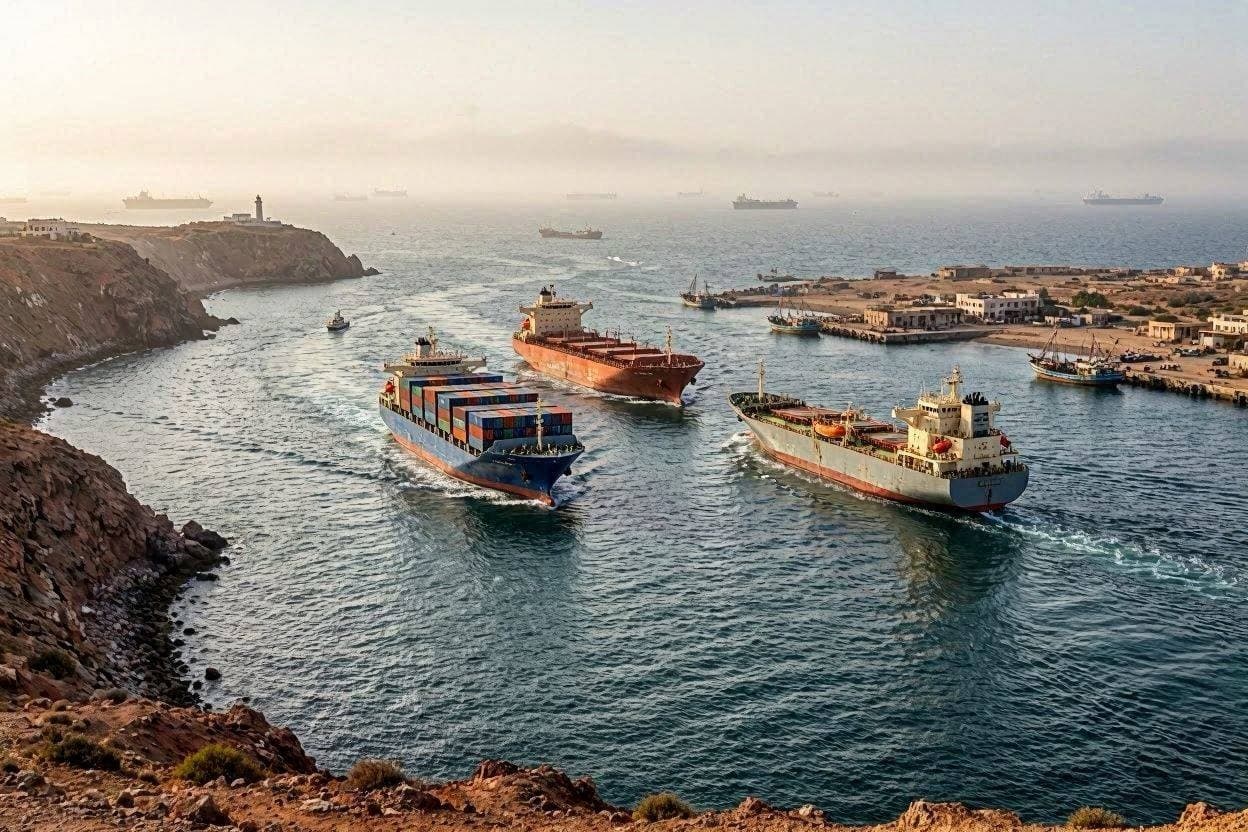
The waters of the Red Sea have long served as a vital artery for global commerce, connecting markets and cultures across continents. Yet, this strategic passage has recently become a stage for renewed tension as Yemen’s Houthi movement declared a naval blockade against Saudi Arabia. This announcement marks a significant escalation in the regional conflict, threatening to disrupt the flow of energy and goods that underpin the global economy. It is a moment that invites reflection on the fragility of international supply chains and the enduring complexities of Middle Eastern geopolitics.
Body: The Houthi declaration cites an "eye for an eye" policy, framing the blockade as a retaliatory measure against Saudi-led actions in the region. By targeting ships carrying Saudi exports, particularly those transiting through the Bab el-Mandeb strait, the group aims to exert economic pressure on its neighbor. This strategy leverages the geographical chokepoint that controls access to the Red Sea, a route through which millions of barrels of oil pass daily. The potential disruption raises concerns among global markets, already sensitive to shifts in energy availability.
Saudi Arabia has responded by reinforcing its naval defenses and coordinating with international partners to ensure the safety of maritime traffic. The kingdom’s reliance on stable export routes makes it vulnerable to such threats, prompting a heightened state of alert along its coastal infrastructure. For Riyadh, maintaining the free flow of trade is not just an economic imperative but a matter of national security. The blockade challenges this stability, forcing a recalibration of defensive strategies.
The international community watches with apprehension, aware that any sustained disruption could have ripple effects far beyond the region. Major economies dependent on Middle Eastern oil face the prospect of higher prices and supply shortages. Diplomatic efforts are underway to de-escalate the situation, with mediators urging restraint from both sides. However, the deep-seated grievances driving the conflict make immediate resolution difficult.
For the people of Yemen, the blockade represents another chapter in a prolonged struggle marked by hardship and uncertainty. While the Houthi leadership frames the move as a act of resistance, the civilian population often bears the brunt of the resulting economic isolation. Humanitarian organizations warn that further restrictions could exacerbate an already dire situation, limiting access to essential goods and aid.
Global shipping companies are adjusting their routes, some opting for longer, safer paths around Africa to avoid the risk zone. These detours increase costs and delivery times, impacting consumers worldwide. The logistics industry, always adaptive, faces new challenges in balancing efficiency with safety. The blockade serves as a reminder of how local conflicts can impose global taxes in the form of delayed goods and higher prices.
As tensions rise, the focus shifts to the resilience of international maritime law and the capacity of naval forces to protect commercial vessels. The situation tests the commitment of global powers to maintain open sea lanes, a cornerstone of international trade. Whether through diplomatic negotiation or military deterrence, the response will shape the future of security in the Red Sea.
Closing: The Houthi declaration of a naval blockade against Saudi Arabia underscores the volatile nature of regional politics. While the immediate impact remains to be fully realized, the threat to global supply chains is clear. Diplomacy and vigilance will be key to navigating this challenging period, ensuring that the seas remain open for commerce and peace.
AI Image Disclaimer: Please note that any accompanying visuals for this article are AI-generated representations intended for illustrative purposes only.
Sources: NBC News Bloomberg ABC News Australia Channel News Asia
Note: This article was published on BanxChange.com and is powered by the BXE Token on the XRP Ledger. For the latest articles and news, please visit BanxChange.com