
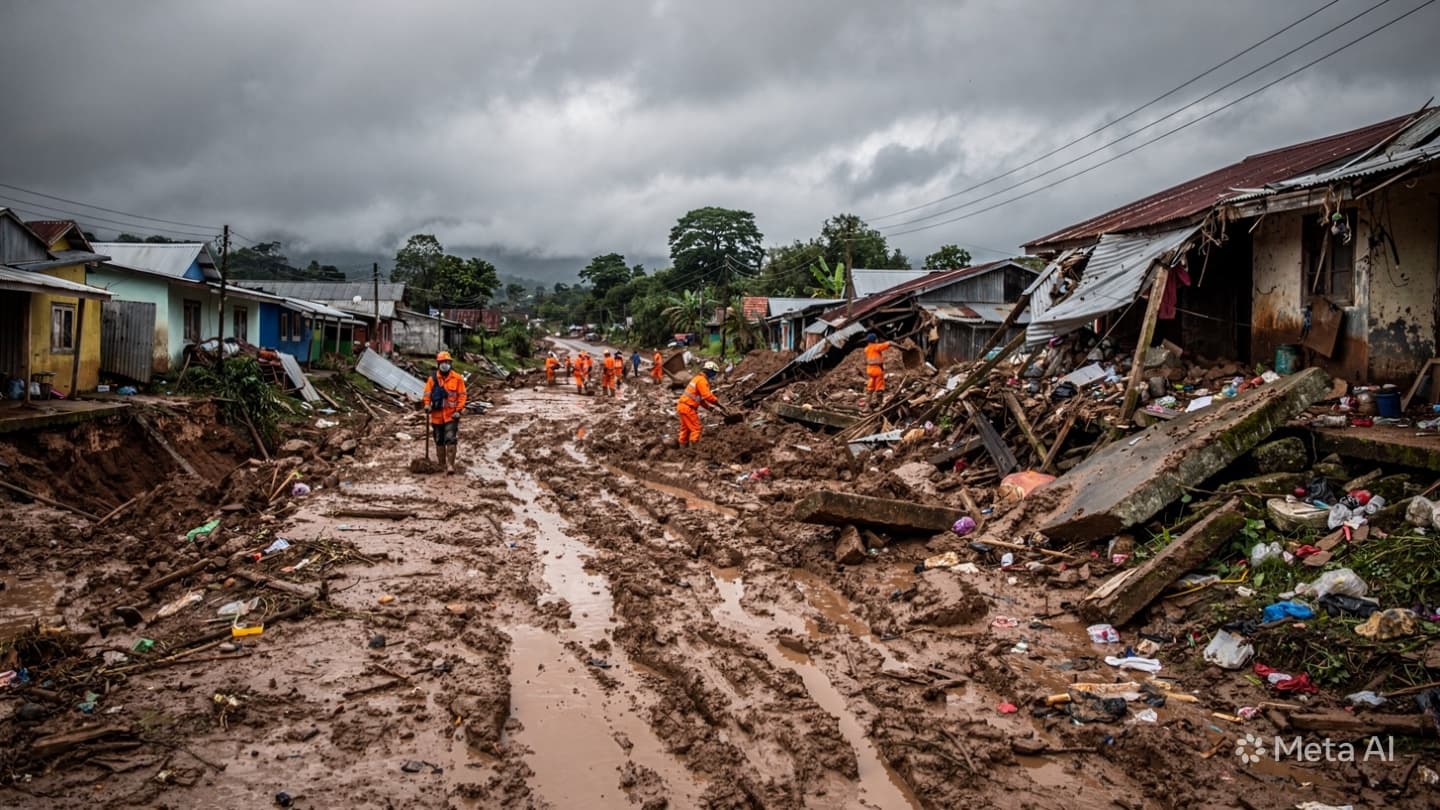
Legazpi, Philippines—The regional death toll climbed significantly this morning as disaster response teams reached isolated villages previously cut off by severe tropical storm landslides and waist-deep flooding. Emergency operations center officials confirmed that intense precipitation overnight triggered massive mudflows along the volcanic slopes, burying residential structures under heavy silt. Rescue units are currently extracting casualties from collapsed concrete frameworks using manual tools.
Torrential downpours over consecutive days completely overwhelmed local river systems, breaching protective dikes and inundating thousands of hectares of low-lying agricultural land. Major highways connecting provincial hubs remain impassable due to deep water accumulations and displaced boulders blocking primary transit lanes. Local government personnel are utilizing motorized rubber boats to evacuate stranded families from the rooftops of submerged households.
The Office of Civil Defense released an updated casualty manifest indicating that multiple bodies were recovered from landslide sites in rural Camarines Sur. Disaster managers noted that many individuals initial reported missing are now confirmed fatalities due to rapid-onset mudflows. Emergency shelters are operating at maximum capacity, struggling to house over thirty thousand displaced residents seeking clean water.
Power transmission networks failed entirely across three provinces early yesterday evening as strong wind gusts toppled main utility poles. Telecommunication providers reported widespread signal blackouts, hampering real-time coordination between field rescue squads and regional headquarters. Technicians are waiting for floodwaters to recede before attempting to deploy portable generator units to critical cell towers.
The state weather bureau warned that while the eye of the typhoon has drifted toward northern waters, the trailing southwest monsoon will continue to drop heavy rain over the saturated peninsula. Ground conditions remain highly unstable, prompting mandatory evacuation orders for mountain settlements prone to secondary slope failure. Geological experts are monitoring active fissures along hillcrests for immediate signs of shifting soil.
Local health offices deployed medical tracking teams to crowded evacuation centers to counter potential outbreaks of waterborne illnesses. Shortages of bottled drinking water and infant supplies are causing severe friction among displaced groups at regional schools. Non-governmental aid convoys remain jammed on blocked highways hours away from distribution points.
Provincial administrators declared a formal state of calamity to unlock emergency reserve funds for immediate food acquisition and debris clearing. Local storage facilities lost significant stockpiles of rice when rising water breached town warehouse doors at midnight. Officials estimate it will take weeks to fully document the structural damage sustained by public bridges.
Airports across the region suspended all commercial flight operations as low visibility prevented safe approach paths. Coast Guard units maintained a strict ban on maritime transit, stranding hundreds of commercial cargo vessels and passenger ferries at regional ports.
Grieving relatives gathered outside municipal halls this afternoon to check the verified identity boards maintained by social welfare teams. Police personnel are managing crowds at emergency hubs while supply trucks attempt to negotiate damaged backroads.
Search operations are scheduled to suspend at nightfall due to hazardous terrain conditions and a total lack of functional municipal lighting. The official casualty count is widely expected to rise as remote mountain hamlets restore basic radio link capabilities.
Note: This article was published on BanxChange.com and is powered by the BXE Token on the XRP Ledger. For the latest articles and news, please visit BanxChange.com