
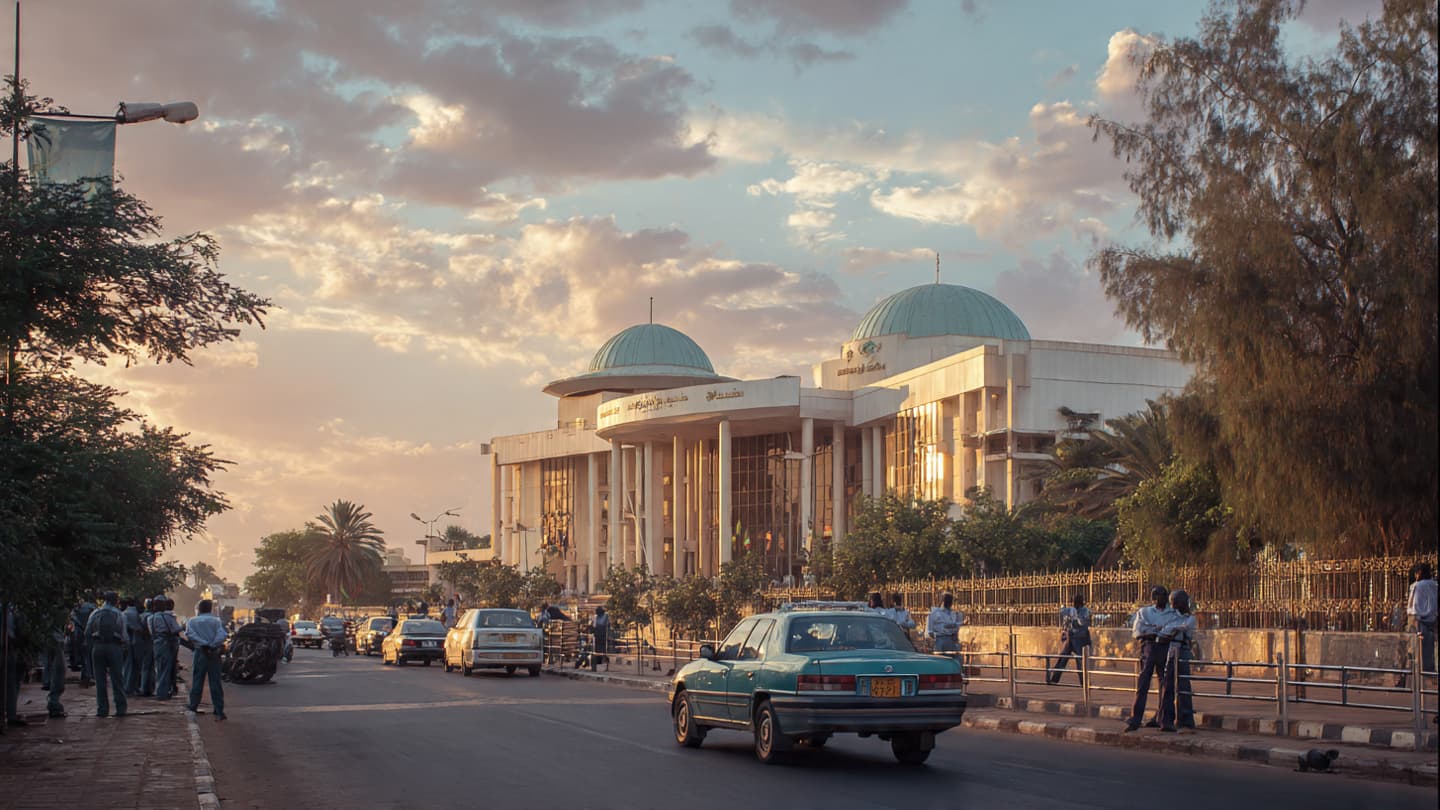
In Dakar, politics often moves with the rhythm of the sea — sometimes calm beneath the Atlantic light, sometimes turbulent enough to reshape the shoreline itself. Along crowded avenues lined with street vendors, motorbikes, and fading colonial facades, conversations drift easily from football and rising food prices to the future of the nation. In cafés and market stalls, radios carry parliamentary debates into the afternoon heat, where the language of power blends with the ordinary cadence of city life.
This week, Ousmane Sonko, the recently dismissed prime minister and one of Senegal’s most influential opposition figures, was elected speaker of parliament in a development widely viewed as a direct challenge to President Bassirou Diomaye Faye and the country’s evolving political balance. The vote marks another dramatic turn in Senegal’s rapidly shifting leadership landscape, where alliances formed during a wave of political change are beginning to show visible strains.
Sonko’s political trajectory has long been intertwined with the frustrations and aspirations of Senegal’s younger generation. Known for his populist rhetoric and criticism of political elites, he rose to prominence through anti-establishment campaigns that resonated strongly among urban youth facing unemployment, economic uncertainty, and disillusionment with traditional political structures. His speeches often framed politics not only as governance, but as a broader struggle over dignity, sovereignty, and opportunity.
Earlier this year, the alliance between Sonko and Faye helped reshape Senegalese politics after a period of protests, legal battles, and public unrest that drew international attention. Faye, a close political ally of Sonko, secured the presidency following a turbulent electoral period marked by delays and controversy. Many supporters viewed their movement as representing generational renewal and democratic change after years of political tension.
Yet political alliances forged in moments of upheaval can become more fragile once power itself must be managed. Sonko’s dismissal as prime minister signaled growing differences within the ruling coalition, and his election as parliamentary speaker now positions him at the center of a potentially significant institutional counterweight to the presidency.
Inside Senegal’s National Assembly, the vote carried symbolic importance beyond procedural politics. Parliament itself has increasingly become a stage where broader national debates over authority, reform, and democratic accountability are unfolding. Sonko’s return to a position of influence suggests that internal divisions within the governing camp may continue shaping the country’s political direction in the months ahead.
For many Senegalese citizens, however, daily concerns remain grounded less in parliamentary maneuvering than in economic realities. Inflation, employment, energy costs, and public services continue dominating conversations across Dakar and beyond. Fishermen along the coast worry about shrinking catches. Young graduates search for stable work in crowded urban neighborhoods. Rural communities remain attentive to promises of infrastructure and agricultural investment that often arrive more slowly than campaign speeches.
Still, politics in Senegal carries emotional resonance far beyond institutional offices. The country has long been regarded as one of West Africa’s more stable democracies, though recent years tested that reputation through protests, arrests, and episodes of unrest linked to Sonko’s earlier legal disputes and political exclusion. The tensions revealed deeper generational frustrations and a growing impatience among citizens seeking economic and political transformation.
Now, Sonko’s election as speaker introduces another layer to an already complex relationship between leadership, popularity, and institutional authority. The role itself carries significant visibility and influence within legislative affairs, potentially allowing Sonko to shape national debates even after his removal from the premiership.
Observers across Africa are watching closely. Senegal occupies an important place within West African diplomacy and regional economic cooperation, particularly at a time when neighboring countries face coups, political instability, and shifting international alliances. Developments in Dakar therefore resonate beyond national borders, reflecting broader questions about democratic transitions and governance across the region.
As evening settles over the capital, the city continues moving through its familiar rhythms. Ferries cross the harbor beneath fading sunlight. Music drifts from roadside cafés while parliament buildings remain illuminated against the darkening sky. Inside those chambers, political rivalries continue unfolding through speeches, negotiations, and carefully measured public statements.
For now, Sonko’s election does not resolve Senegal’s political tensions; it reshapes them. The alliance that once symbolized unity now appears more layered and uncertain, suspended between cooperation and competition. Yet in Senegal, where political memory runs deep and public engagement remains intensely alive, the meaning of power is rarely fixed for long.
And so Dakar watches another chapter unfold — not with sudden rupture, but with the steady awareness that the country’s future continues to be written through the uneasy balance between institutions, personalities, and the enduring expectations of its people.
AI Image Disclaimer Illustrative visuals accompanying this article were generated using AI and are intended as conceptual representations of the events described.
Sources
Reuters Associated Press BBC News France 24 Al Jazeera
Published by Banx Network. This article is part of the Banx decentralized media programme, powered by the BXE token on the XRP Ledger.



