
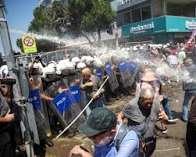
protests erupted across Turkey following the controversial removal of an opposition leader from his position. Demonstrators took to the streets in cities like Istanbul and Ankara, rallying against what they see as increasing authoritarianism and a suppression of democratic ideals.
In response to the escalating unrest, Turkish police deployed tear gas to disperse crowds, leading to confrontations between law enforcement and protesters. Witnesses reported chaotic scenes as tensions flared, with many protesters expressing their discontent not only over the ousting but also broader issues related to governance and civil rights.
The opposition leader, who had been a significant figure in the political arena, was dismissed amid allegations of misconduct, which his supporters describe as politically motivated. This development has ignited further grievances among citizens who feel their democratic rights are under threat.
Human rights organizations condemned the government's heavy-handed approach to managing the protests, calling for restraint and respect for citizens' freedoms. As the situation continues to unfold, calls for solidarity and wider demonstrations are anticipated.
The political landscape in Turkey is increasingly polarized, with many citizens demanding accountability and transparency from their leaders. The government's crackdown on dissent is raising alarms over the potential ramifications for democratic processes in the country.
As both sides brace for potential escalation, the events surrounding the protest are likely to impact Turkey's political future and highlight the ongoing struggle for democratic rights amid growing authoritarian tendencies.
Note: This article was published on BanxChange.com and is powered by the BXE Token on the XRP Ledger. For the latest articles and news, please visit BanxChange.com